Baked Salmon with Lemon and Sweet Potato (GLP-1 Dinner)
- January 9, 2026
- 0
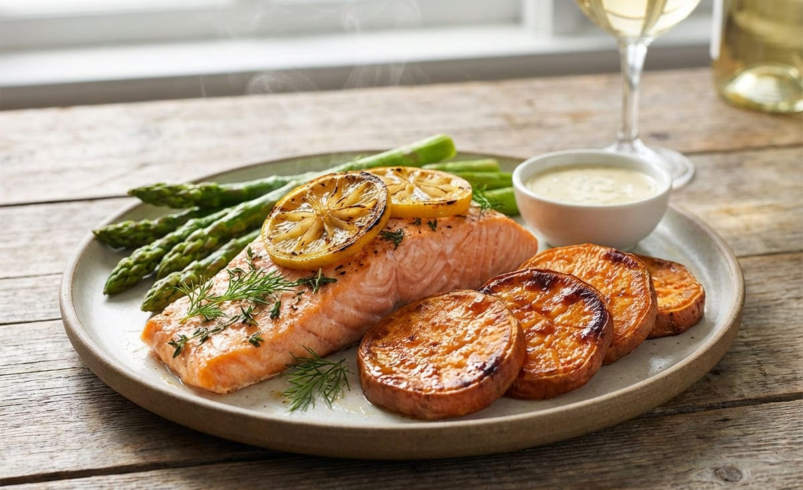
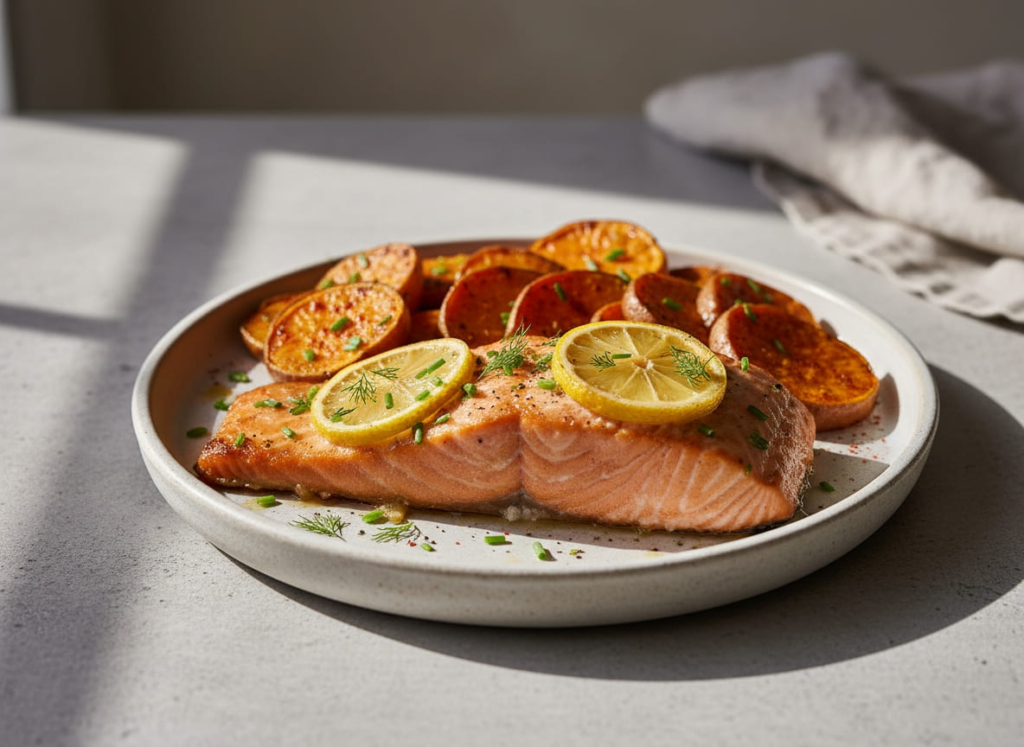
This GLP-1 dinner recipe of baked salmon with lemon and roasted sweet potatoes is the perfect balance of protein and carbs.
What’s the best dinner for muscle preservation on GLP-1 medication? This baked salmon and sweet potato sheet pan meal delivers 35g of protein plus 2,000mg of anti-inflammatory omega-3s with just 10 minutes of hands-on prep. The oven handles the rest, and everything reheats beautifully for easy dinners all week.
Quick Recipe Info:
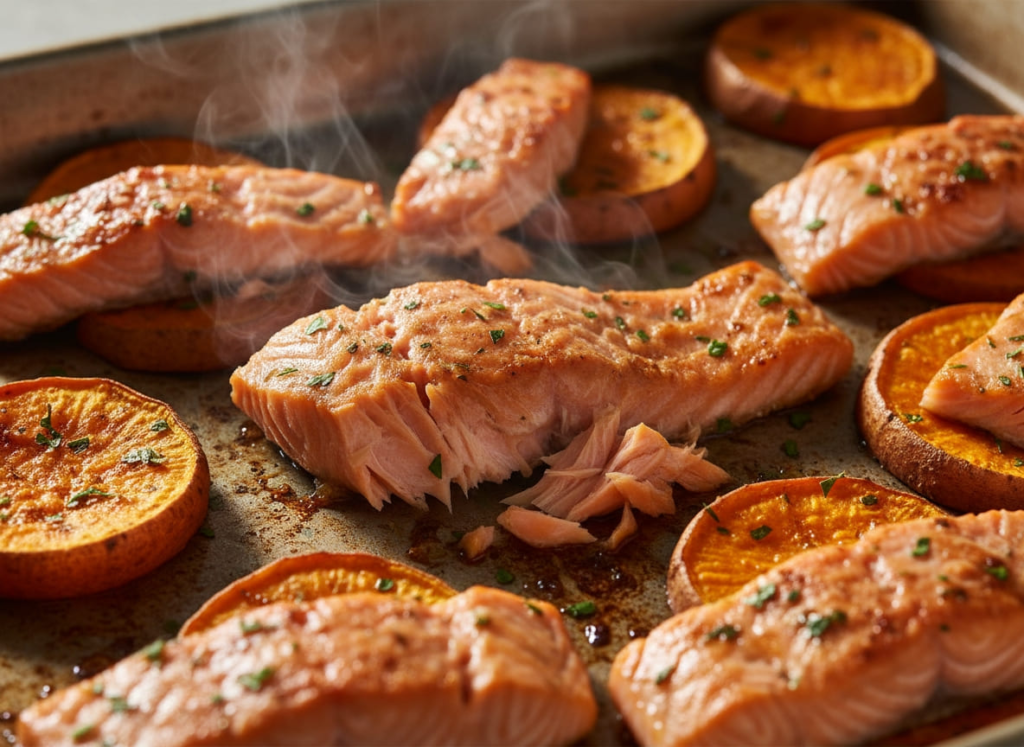
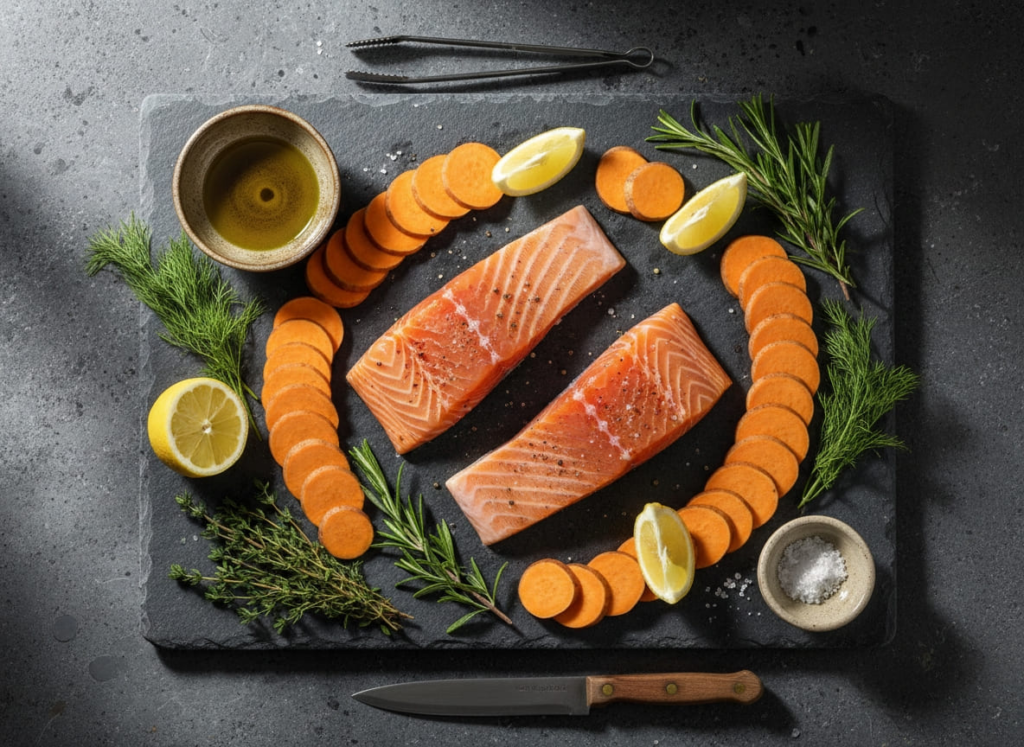
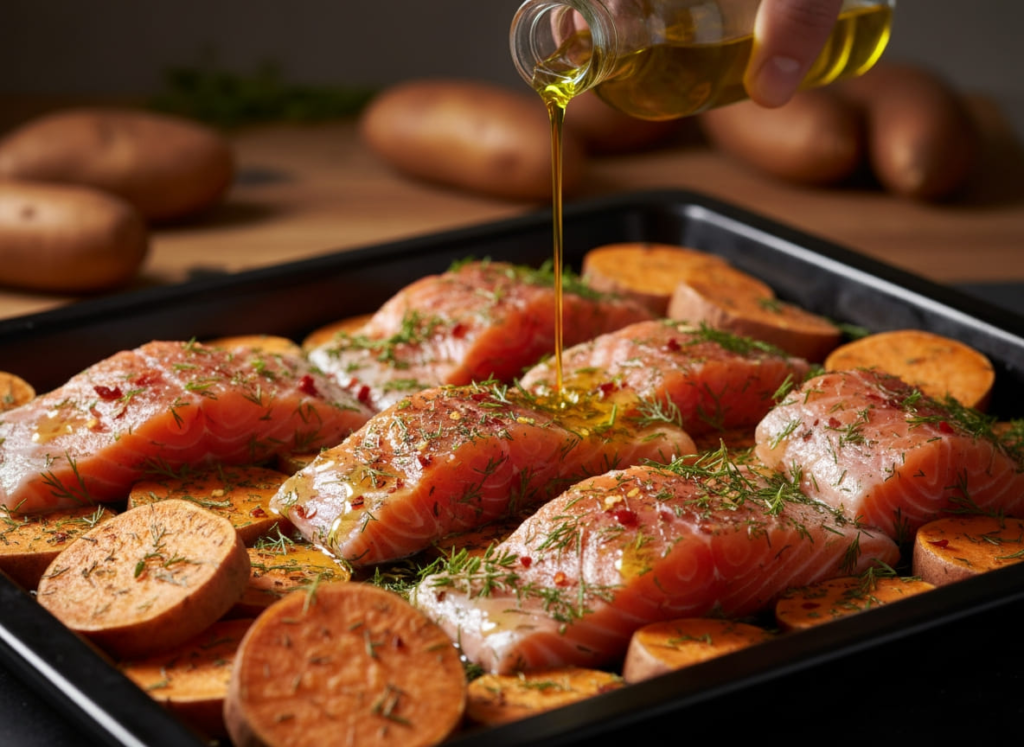
Sheet pan dinners are a lifesaver when you’re managing low energy and other side effects on GLP-1 medications. This recipe takes 10 minutes of prep, then the oven does all the work. No stirring, no monitoring, no standing over a hot stove. The sweet potatoes get a 15-minute head start since they take longer to cook, then the salmon joins them for the final stretch.
What makes this combination so effective is the nutritional balance. Salmon delivers 35 grams of protein plus those omega-3s your body needs during weight loss. Sweet potatoes provide complex carbs for steady energy without blood sugar spikes. Together, they create a complete meal that supports weight loss while preventing muscle loss. Plus, everything reheats well, so you can prep multiple servings and have dinner ready for the week on your GLP-1 meal plan.
Table of Contents
Toggle
Per Serving
Calories: 480
Protein: 35g
Carbohydrates: 32g
Fat: 24g
Fiber: 5g
Sugar: 7g (naturally occurring)
Omega-3 fatty acids: ~2,000mg
Salmon stands apart from other proteins because of its omega-3 fatty acid content. These essential fats reduce systemic inflammation, which increases during weight loss as fat cells shrink. Lower inflammation supports better overall health and may reduce joint pain. The omega-3s also support heart health by improving cholesterol profiles and reducing triglycerides.
The fat in salmon creates genuine satiety that keeps you full for hours. Unlike carbohydrates that digest quickly, fats slow gastric emptying and trigger satiety hormones. When your appetite is already reduced from medication, eating fats that truly satisfy means you can consume smaller portions while feeling nourished.
Six ounces of salmon provides 35 grams of complete protein with all essential amino acids. This supports muscle maintenance during caloric restriction. The protein in fish is also easier to digest than red meat for many people, making it ideal when your digestive system is sensitive.
Sweet potatoes sometimes get skipped on GLP-1 medications, but they shouldn’t be. They have a lower glycemic index than white potatoes, meaning they raise blood sugar gradually. The fiber slows digestion, providing sustained energy without spikes and crashes. This steady energy matters when you’re eating less overall. Each sweet potato provides about 4 grams of fiber, supporting digestive health and regularity. The natural sweetness also satisfies cravings without added sugars.
Wild-caught salmon generally has superior flavor and texture compared to farmed, though both are nutritious. Atlantic salmon (usually farmed) is milder and more affordable. Sockeye, coho, and king salmon (usually wild) have richer flavor and deeper color. Frozen salmon works perfectly and is often more affordable. Just thaw overnight in the refrigerator and pat very dry before seasoning.
Skin-on salmon stays moister during cooking as the skin provides a barrier. It also crisps nicely, adding texture. If you don’t want to eat the skin, leave it on during cooking and remove it before eating. Skinless works fine but may dry out slightly more.
Fresh dill and parsley provide bright, vibrant flavor that dried herbs can’t match. If using dried herbs, use about 1/3 the amount. Dried dill would be 1 teaspoon, dried parsley would be 1 teaspoon.
The skin contains much of the fiber, so leave it on to maximize nutritional benefit. The skin also crisps nicely when roasted. Just scrub it well before cooking. Sweet potatoes are exceptional sources of vitamin A (as beta-carotene), vitamin C, potassium, and manganese.
Adjust portions based on appetite. If 6 ounces of salmon feels too large, use 4-ounce fillets. Four ounces still provides about 23 grams of protein. Similarly, one small sweet potato instead of medium reduces carbs to about 20g.
Temperature flexibility matters. Salmon is delicious hot, warm, or even cold. If hot food doesn’t appeal, let the salmon cool to room temperature or refrigerate and serve chilled with the sweet potatoes at room temperature.
Reduce strong flavors if needed. If fish taste has become overwhelming, reduce the lemon juice by half. Dill has a strong flavor, so start with just 1 teaspoon fresh or 1/4 teaspoon dried if you’re uncertain.
Add extra vegetables freely. Include asparagus, green beans, or broccoli on the baking sheet. Add them when you add the salmon so they don’t overcook. Extra vegetables increase nutrients and fiber without many calories.
Watch the fat content. If 24 grams of fat per serving feels too rich, use just 1.5 tablespoons olive oil total. You could also choose a leaner fish like cod or halibut, though you’ll lose some omega-3 benefits and satiety.
Use quality olive oil. Three tablespoons total for the entire recipe provides healthy monounsaturated fats that help your body absorb fat-soluble vitamins from the sweet potatoes. Extra virgin has the best flavor, but regular olive oil works fine for roasting at 400°F.
Refrigerator storage: Cool completely before storing. Salmon and sweet potatoes keep separately in airtight containers for 3-4 days. Store separately to maintain best texture.
Freezing: Cooked salmon freezes for up to 2 months, though the texture becomes slightly drier. Freeze in individual portions and thaw overnight in refrigerator. Roasted sweet potatoes don’t freeze well because they become mealy.
Reheating salmon: Gentle reheating prevents drying. Use the oven at 275°F for 10-15 minutes or microwave at 50% power in 30-second intervals. Salmon is also excellent cold.
Reheating sweet potatoes: Oven at 350°F for 10 minutes restores some crispness. Microwave makes them soft but works if texture isn’t a priority.
Advance preparation: Cut sweet potatoes and store in water in the refrigerator up to 24 hours ahead. Mix the lemon-herb mixture up to 4 hours ahead. This reduces active cooking time to just 5 minutes.
Meal prep strategy: Bake multiple salmon fillets and several sweet potatoes at once. Mix and match throughout the week with different sides for variety.
Can I use a different type of fish for this GLP-1 dinner recipe?
Yes. Cod, halibut, mahi-mahi, or arctic char all work. Adjust cooking time based on thickness. Thinner fillets need 8-10 minutes, thicker ones need 12-15 minutes.
Is this recipe appropriate for Mounjaro and other tirzepatide users?
Yes. The balanced combination of protein, healthy fats, and complex carbohydrates works excellently for anyone on tirzepatide managing their weight. The omega-3s provide additional anti-inflammatory benefits.
What if I don’t like sweet potatoes?
Substitute butternut squash, regular potatoes, or simply increase the portion of green vegetables. You’ll miss out on the beta-carotene, but the meal still works.
How do I know when salmon is done?
The fish should be opaque throughout and flake easily when pressed with a fork. An instant-read thermometer should read 145°F in the thickest part. The center can be slightly translucent if you prefer salmon medium rather than fully cooked.
Can I use frozen sweet potatoes in this GLP-1 dinner?
Pre-cut frozen sweet potatoes work but won’t get as crispy. They also may cook faster, so watch them closely. Fresh sweet potatoes provide better texture and flavor.
Is the skin on sweet potatoes edible?
Absolutely. The skin is nutritious and contains fiber. Scrub it well before cooking. It crisps nicely when roasted and adds texture.
Have you tried this recipe? Share your experience in the comments below and let us know how it worked with your GLP-1 journey!