Caprese Chicken Salad (GLP-1 High-Protein Lunch)
- December 20, 2025
- 0
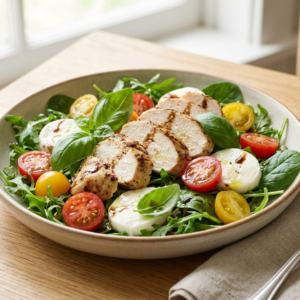
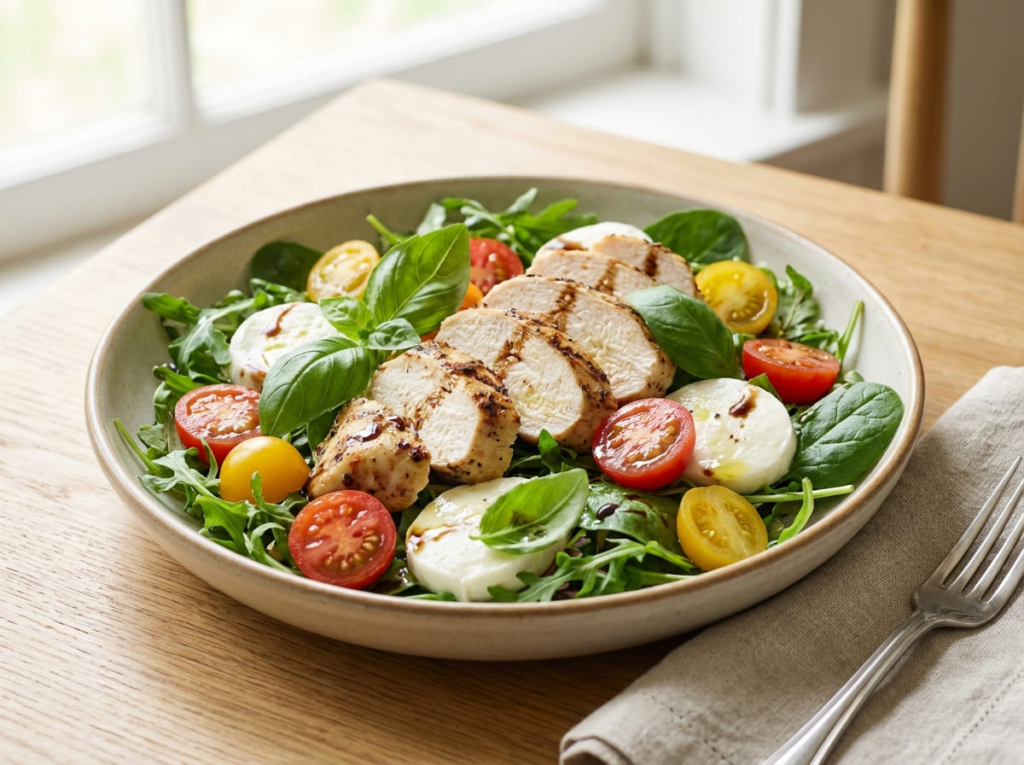
This Caprese chicken salad is ideal for GLP-1 users who want a high-protein lunch that feels fresh, light, and appealing.
Looking for a light, high-protein meal that won’t sit heavy on your stomach when you’re on GLP-1s? This Caprese chicken salad packs 36g of protein from chicken and fresh mozzarella in a fresh, colorful format that’s actually appealing when your appetite is low. Serve it cold, warm, or at room temperature depending on what your body tolerates best that day.
Quick Recipe Info:
This Caprese chicken salad delivers 36 grams of protein in a meal that looks substantial but feels light. The familiar flavors of tomato, mozzarella, and basil create something that actually sounds appealing even when your appetite is gone. Everything can be served at room temperature, making this perfect for meal prep or days when hot food sounds terrible. The components keep well separately, so you can adjust portions daily based on how you’re feeling.
Table of Contents
Toggle
Per Serving
Salads get a bad reputation as unsatisfying diet food, but this Caprese chicken salad is genuinely filling and nutritious. The high protein content and healthy fats create real satiety without heaviness.
Thirty-six grams of protein per serving comes from both chicken and mozzarella. This is roughly half of what most people need daily, delivered in a light meal that doesn’t feel heavy or overwhelming. The combination of animal proteins provides all essential amino acids needed for muscle maintenance during weight loss.
Raw vegetables require minimal digestion and sit lightly in your stomach. The crisp greens, juicy tomatoes, and fresh basil create a meal that feels refreshing rather than uncomfortably filling. Many people on GLP-1 medications dealing with nausea find that fresh, cold foods are easier to tolerate than hot, cooked meals. This salad works perfectly for that preference.
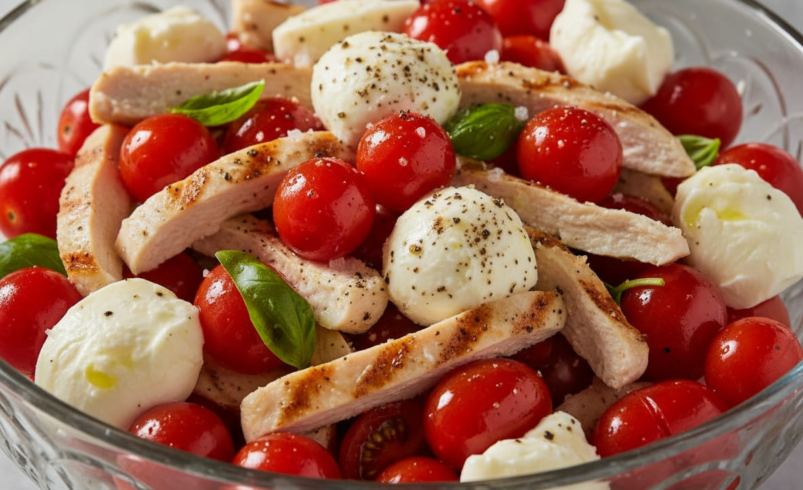
The red tomatoes, white mozzarella, and green basil create visual appeal that matters when your appetite is reduced and you need food to look enticing. Beautiful food is more appetizing, increasing the likelihood that you’ll actually eat the meal rather than skipping it.
This salad doesn’t require specific serving temperature. Slightly warm chicken with cool vegetables works great. Fully room temperature is fine. Cold from the refrigerator is also good. This flexibility helps when hot food triggers GLP-1 nausea.
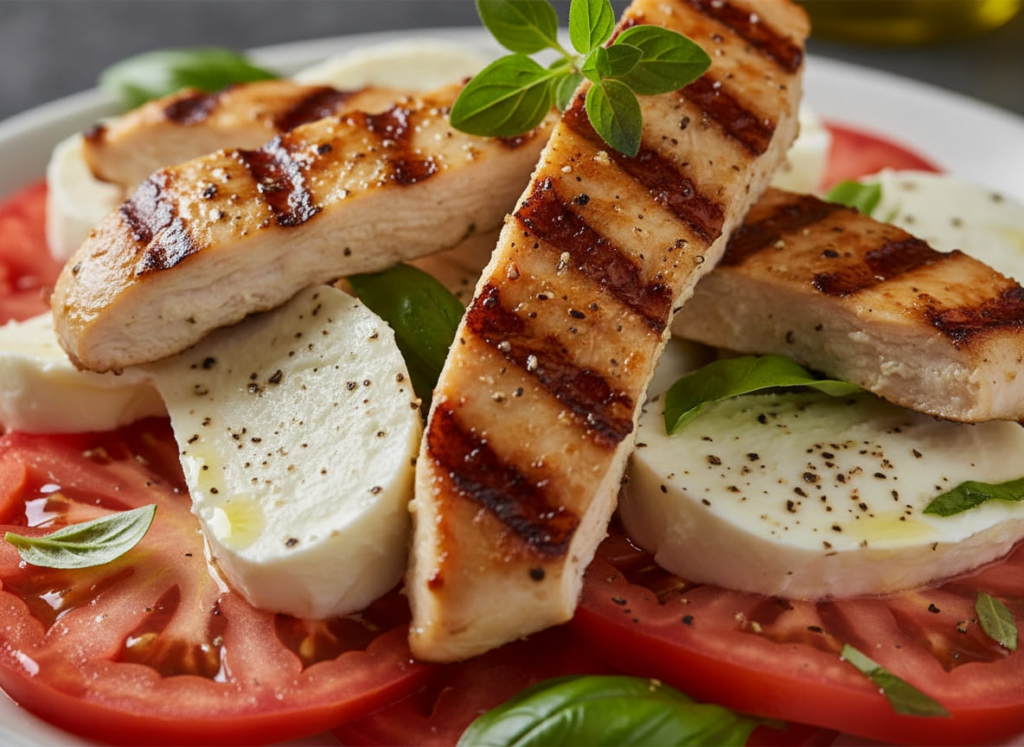
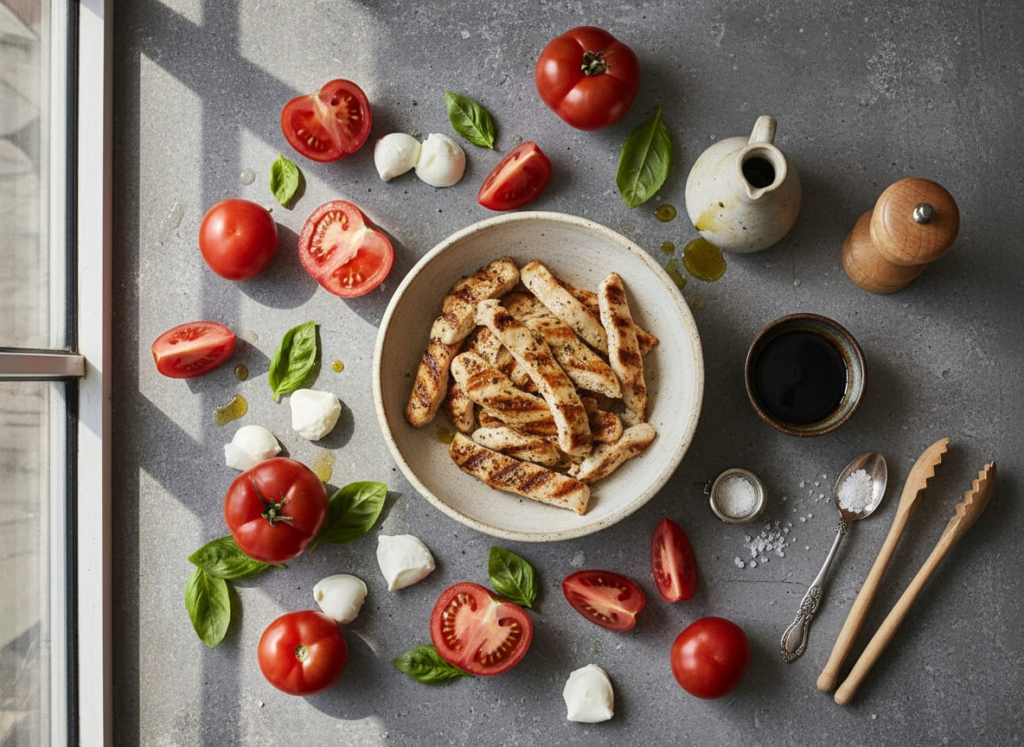
Chicken breast provides lean, high-quality protein with minimal fat. Six ounces of cooked chicken breast delivers between 50 grams of protein with only 3-4 grams of fat. The neutral flavor accepts seasonings well and pairs beautifully with Italian ingredients. Properly cooked chicken is tender and easy to chew, important when eating feels challenging. Chicken also provides B vitamins, particularly niacin, which supports energy metabolism during caloric restriction.
Fresh mozzarella is softer and moister than aged mozzarella. It provides protein and calcium without the sharpness of aged cheeses. The mild, creamy flavor pairs perfectly with tomatoes and basil. The soft texture is easy to chew and digest, even when your appetite is reduced. Mozzarella supplies calcium for bone health, important during significant weight loss when bone density can be a concern.
Cherry tomatoes are sweeter and less acidic than large tomatoes. They provide lycopene, vitamin C, and visual appeal with minimal calories. The small size makes them easy to eat in the salad without needing to cut around cores or deal with excess liquid. Their burst-in-your-mouth quality adds textural interest. High water content contributes to hydration, and the natural sweetness balances the peppery arugula and tangy balsamic.
Fresh basil is aromatic and flavorful, transforming this from a basic salad into something special. Basil contains antioxidants and has anti-inflammatory properties. The bright, slightly sweet flavor complements tomatoes and mozzarella perfectly. Tearing the leaves rather than cutting them releases more of their essential oils and flavor. Basil also aids digestion for some people, though individual responses vary.
Start with Protein
Eat the chicken first before filling up on greens. This ensures you get adequate protein even if you can’t finish the entire salad. Protein is the priority for muscle maintenance.
Adjust Cheese Portions
Eight ounces of mozzarella between two servings is generous. If dairy feels too rich, reduce to 4-6 ounces total. The chicken provides plenty of protein without the cheese.
Make It Easier to Eat
Cut the chicken into smaller pieces rather than strips if chewing feels tiring. Smaller pieces are easier to manage when your appetite is low or you’re eating slowly.
Skip Ingredients That Don’t Appeal
If tomatoes trigger acid reflux, reduce them or omit entirely. If basil tastes too strong, use less. If arugula is too peppery, use butter lettuce instead.
Serve at Your Preferred Temperature
Let the chicken cool completely for a fully cold salad, or serve it slightly warm if that sounds better. Both versions taste good.
Add Healthy Fats If Needed
If the salad doesn’t feel satisfying enough, add sliced avocado or a few nuts. The additional healthy fats will increase satiety without making the meal heavy.
Component Storage: Store cooked chicken, mozzarella, vegetables, and greens separately in airtight containers. This prevents wilting and keeps everything fresh.
Chicken Prep: Cook 3-4 chicken breasts at once. Use one immediately and refrigerate the others for quick salad assembly throughout the week. Cooked chicken keeps 4 days.
Assembled Salad: If you must assemble ahead, keep dressing separate until ready to eat. Dressed greens wilt quickly. Undressed salad keeps for 2-3 days refrigerated.
Greens Prep: Wash and thoroughly dry greens, then store in containers lined with paper towels. Dry greens stay fresh longer.
Mozzarella Storage: Fresh mozzarella should be stored in its liquid or wrapped tightly. Use within 3-4 days of opening for best quality.
Dressing: Balsamic glaze keeps at room temperature for months. Olive oil keeps for several months in a cool, dark place.
Is Caprese salad good for weight loss on Ozempic?
Yes. This version with added chicken provides substantial protein while being relatively low in calories. The fresh vegetables and lean protein create satiety without heaviness. The portion is visually large but manageable in terms of stomach capacity.
Can I use rotisserie chicken for this salad recipe instead?
Absolutely. Rotisserie chicken is a time-saver and tastes great. Remove the skin to keep it lean. One rotisserie chicken provides enough meat for 3-4 salads.
What if I don’t like arugula?
Use any greens you prefer. Spinach, butter lettuce, romaine, or spring mix all work well. Choose based on your taste preferences and what sounds appealing that day.
Is fresh mozzarella necessary?
Fresh mozzarella has the best texture and flavor for Caprese, but regular mozzarella works if that’s what you have. Shredded mozzarella will change the presentation but still tastes good.
Can I make this ahead for meal prep?
Yes, but store all components separately and assemble just before eating. Dressed greens wilt and become unappetizing quickly. The components keep well for 3-4 days when stored separately.
How can I add more vegetables?
Add roasted red peppers, cucumber slices, artichoke hearts, or grilled zucchini. All work well with Italian flavors. More vegetables increase volume and nutrients without many calories.

Have you tried this recipe? Share your experience in the comments below and let us know how it worked with your GLP-1 journey!