Cinnamon Apple Overnight Oats (GLP-1 No-Cook Breakfast Idea)
- December 29, 2025
- 0
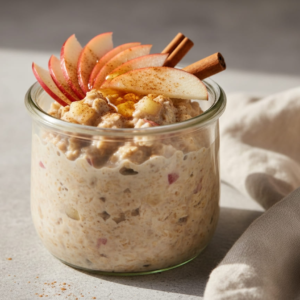
These cinnamon apple overnight oats are perfect for GLP-1 users who want a no-cook, gentle breakfast with balanced protein and fiber.
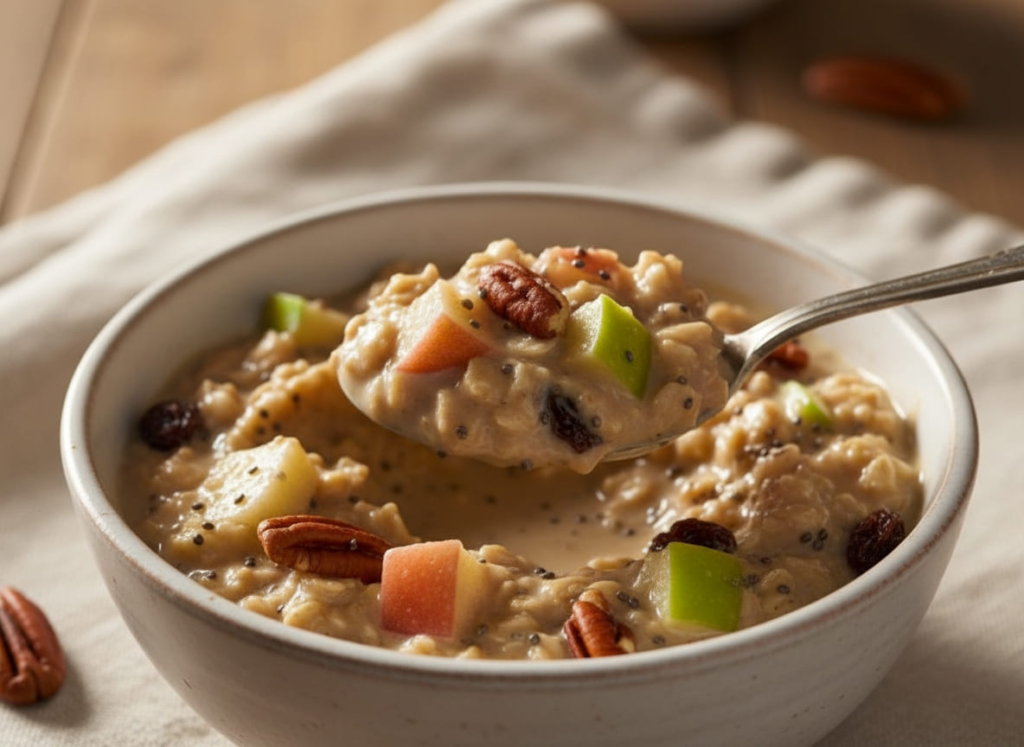
Need a no-cook breakfast that works with your GLP-1 medication routine? These cinnamon apple overnight oats deliver 20g of protein and 10g of fiber with zero morning effort. Mix everything the night before, and you wake up to a cold, creamy breakfast that’s gentle on nausea and keeps you fueled through the morning.
Quick Recipe Info:
When you’re on GLP-1 medication and the thought of cooking breakfast feels overwhelming, overnight oats solve the problem by requiring zero morning effort. Mix everything the night before, and breakfast is ready when you wake up. No decisions, no cooking, no energy required when you’re feeling nauseous or fatigued.
Table of Contents
ToggleThese cinnamon apple overnight oats pack 20 grams of protein per serving while being incredibly gentle on sensitive stomachs. The cool temperature makes them ideal for mornings when hot food sounds unappealing, the soft texture requires minimal chewing, and you can eat half a portion if that’s all you can manage and save the rest for later.

Per Serving
Cold, creamy foods are often easier to tolerate than hot meals when you’re dealing with GLP-1 side effects. These overnight oats check every box for what your body needs during treatment: high protein without heaviness, sustained energy without blood sugar spikes, and zero morning effort!
Getting 20 grams of protein from a breakfast that doesn’t feel heavy is challenging when you don’t have much of an appetite. The Greek yogurt base delivers high-quality protein that supports muscle maintenance during weight loss. Unlike protein shakes that can feel too sweet or artificial, this tastes like a natural, wholesome breakfast.
Oats are considered a bland food in the best possible way — they’re easy to digest and rarely trigger nausea. The cool temperature is soothing rather than overwhelming. The combination of oats, chia seeds, and protein creates a slow-release energy source that prevents crashes, so you won’t feel shaky or depleted mid-morning even though you’re eating less overall.
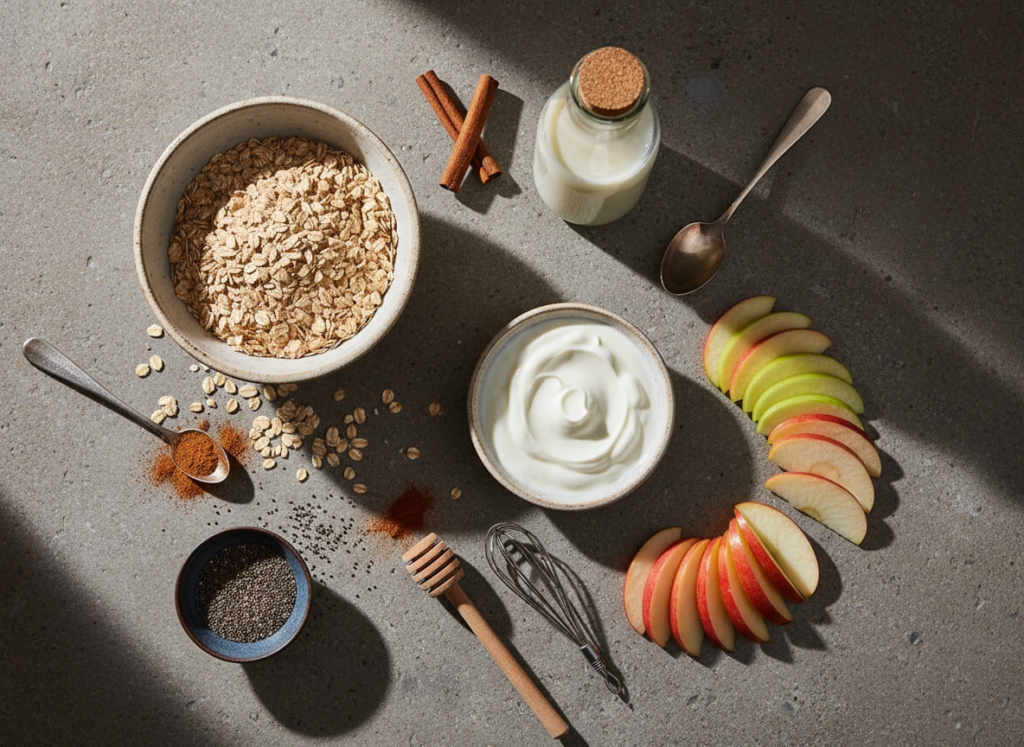
One cup of plain Greek yogurt delivers approximately 15-20 grams of protein, making it the protein powerhouse of this recipe. The probiotics support gut health, which can be beneficial when GLP-1 medications are altering your digestion. The cool, creamy texture is soothing and easy to swallow when you’re not feeling well. Choose plain, unsweetened Greek yogurt to avoid added sugar. The natural tang balances the sweetness of the apples and cinnamon perfectly.
Oats provide complex carbohydrates that digest slowly, preventing blood sugar spikes. They contain beta-glucan, a type of soluble fiber that supports heart health and helps you feel full longer. When you’re on GLP-1s, oats are naturally bland and soothing to the digestive system, and they help with constipation, a common side effect of medications that slow gastric emptying.
Two tablespoons add 4 grams of protein, 8 grams of fiber, and omega-3 fatty acids. When chia seeds absorb liquid, they form a gel-like consistency that makes overnight oats creamier and more satisfying. The fiber helps with satiety and digestive regularity, while the omega-3s support overall health during weight loss.
One medium diced apple adds natural sweetness, fiber, and vitamin C without significant calories. Apples are approximately 85% water, which helps with hydration when you might not be drinking enough fluids. They’re universally well-tolerated, rarely trigger nausea, and their mild flavor works with altered taste preferences that some people experience on medication.
Start with a Smaller Portion
If a full serving feels like too much, eat half and save the rest for a few hours later. The beauty of overnight oats is they keep perfectly in the refrigerator. Listen to your fullness cues.
Adjust the Texture
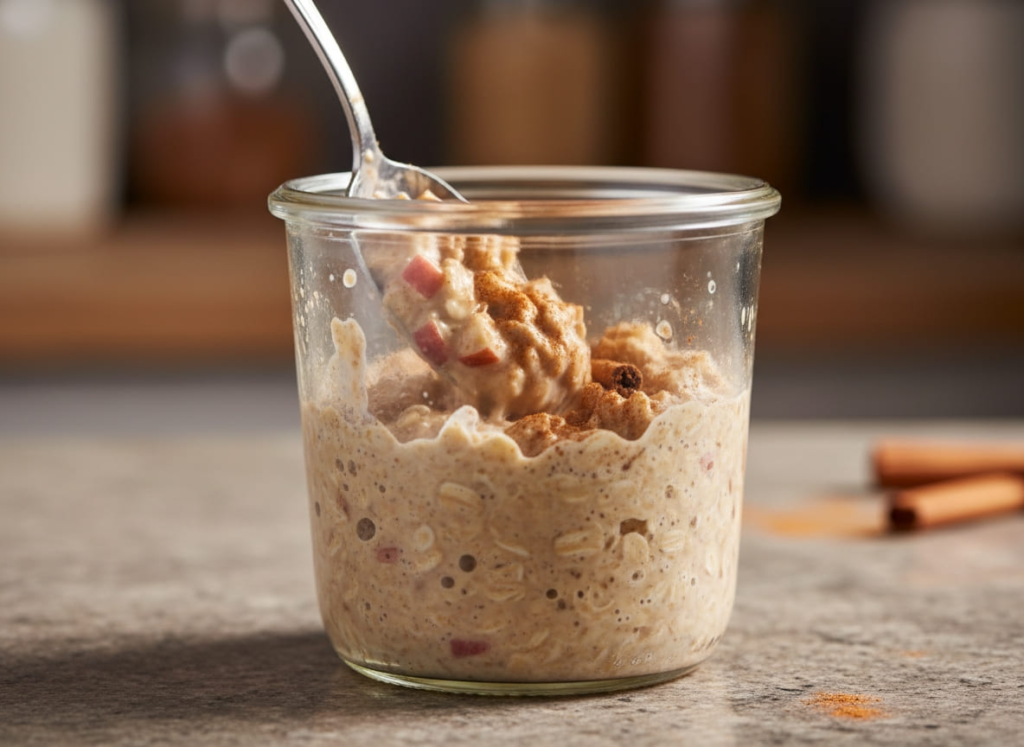
Some people prefer thicker oats, others like them thinner. Add more almond milk in the morning if you want a looser consistency. If they’re too thin, add a tablespoon of oats or Greek yogurt.
Temperature Matters
These are designed to be eaten cold, but if you prefer them slightly less cold, let them sit at room temperature for 15-20 minutes before eating. Avoid microwaving as it changes the texture and defeats the purpose of the cool, soothing quality.
Make Multiple Portions
Double or triple this recipe on Sunday to have breakfast ready for several days. Store in individual containers so you can grab one each morning. They keep well for up to 4 days in the refrigerator.
Skip Sweet Toppings Initially
While honey or maple syrup can be added, try these without added sweetener first. Many people find their taste preferences change on GLP-1 medications, and you might not need the extra sweetness.
Eat Slowly
Take your time with this breakfast. Put your spoon down between bites. Eating too quickly can overwhelm your slowed digestive system and trigger discomfort.
Refrigerator: Store in airtight containers for up to 4 days. The oats will continue to soften over time, which many people prefer.
Freezer: Not recommended. Freezing changes the texture of the yogurt and oats, making them grainy and unpleasant when thawed.
Prep Strategy: Make 3-4 servings at once in individual mason jars or containers. Label each with the day of the week. This gives you grab-and-go breakfast with zero morning effort.
Texture Changes: Oats will thicken as they sit. If they become too thick, simply stir in a tablespoon or two of almond milk before eating.
Add-Ins Timing: Add fresh apple and any nuts or toppings right before eating rather than storing them with the oats. This keeps the apples from browning and nuts from getting soggy.
Can I eat oatmeal on Ozempic or other GLP-1s?
Yes. Oatmeal is actually one of the best breakfast options for people on GLP-1 medications. It’s gentle on the stomach, provides sustained energy, and the fiber helps with digestive regularity. Overnight oats are particularly good because they require no cooking and can be eaten cold when hot food sounds unappealing.
How much fiber should I eat on semaglutide?
Most people should aim for 25-35 grams of fiber daily. This recipe provides 10 grams per serving, which is about one-third of your daily needs. Adequate fiber helps prevent constipation, a common side effect of GLP-1 medications that slow gastric emptying.
Can I use instant oats instead of rolled oats?
Instant oats will work but the texture will be mushier and less satisfying. Rolled oats maintain better texture and provide more sustained energy release. Steel-cut oats are too hard for overnight preparation and won’t soften properly without cooking.
What if I’m lactose intolerant?
Use lactose-free Greek yogurt or substitute with a plant-based yogurt alternative. Look for brands with at least 10-15 grams of protein per cup to maintain the protein content. Coconut yogurt or almond yogurt work well, though they have less protein.
Can I warm these up?
You can, but they’re designed to be eaten cold. If you prefer them warm, microwave for 30-45 seconds. Be aware that heating changes the texture and some people find warm oats trigger nausea more than cold oats.
Why are my oats too watery?
You may have added too much liquid or not let them sit long enough. Make sure you’re measuring accurately and letting them refrigerate for at least 4 hours. If they’re still watery, stir in an extra tablespoon of oats or chia seeds and refrigerate for another hour.

Have you tried this recipe? Share your experience in the comments below and let us know how it worked with your GLP-1 journey!