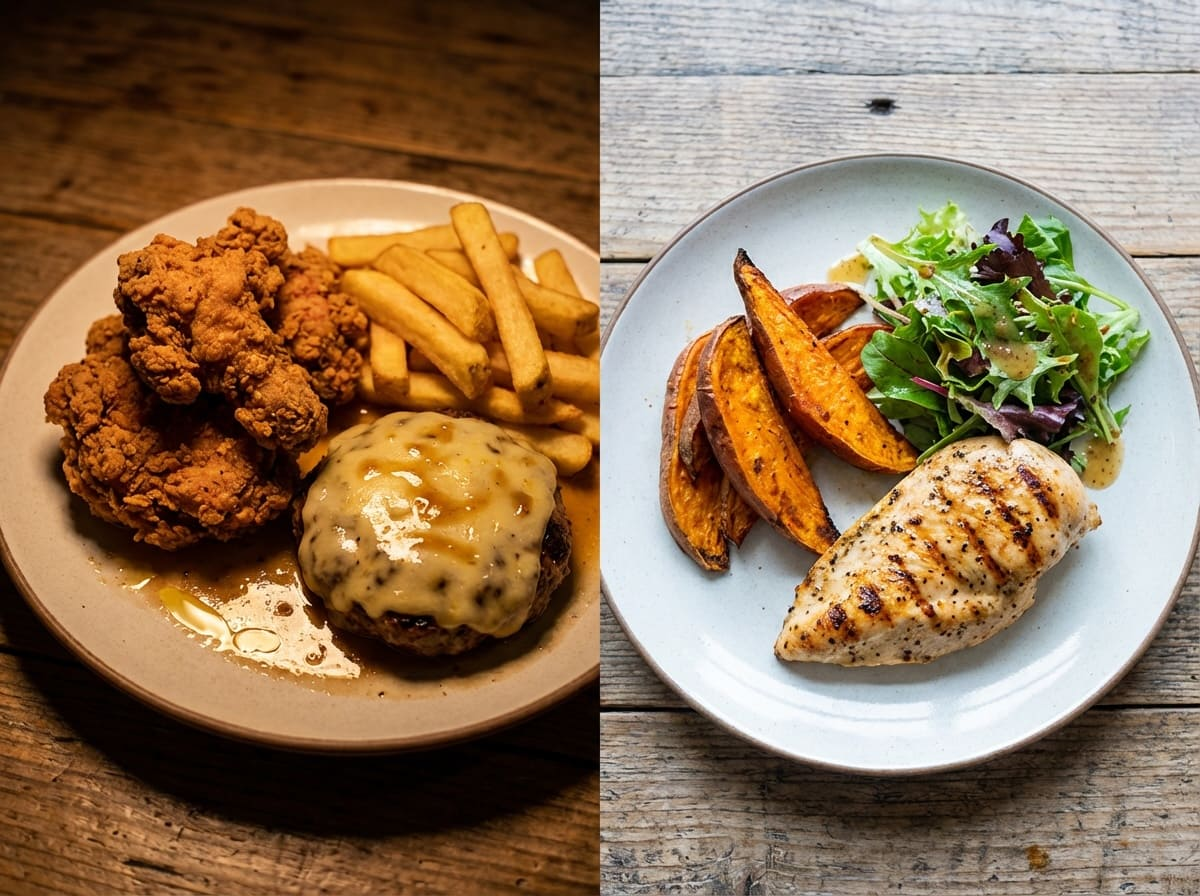
Why Portions Matter While on GLP-1 Medications
Your stomach empties way slower on GLP-1 medications than it did before. Food sits there for hours instead of moving through your digestive system at a normal pace. This is exactly how the medication creates feelings of fullness and reduces appetite, but it also means your stomach can only handle much smaller amounts at once.
What happens when portions are wrong:
Too much food: You’ll feel uncomfortably full, nauseated, and possibly experience acid reflux. That overstuffed feeling can last 4-6 hours. You might skip your next meal because you still feel full, which throws off your eating schedule and can leave you short on protein and nutrients for the day.
Too little food: You won’t meet your nutritional needs, especially protein requirements. This leads to excessive muscle loss during weight loss, fatigue, potential nutrient deficiencies, and metabolic slowdown. Eating too little also often makes nausea worse because an empty stomach triggers queasiness.
The right balance: Small portions eaten consistently throughout the day keep you nourished without overwhelming your slow digestive system. You get adequate protein and nutrients, maintain energy, and avoid the discomfort of overeating.
Visual Plate Method for Managing Portions on GLP-1s
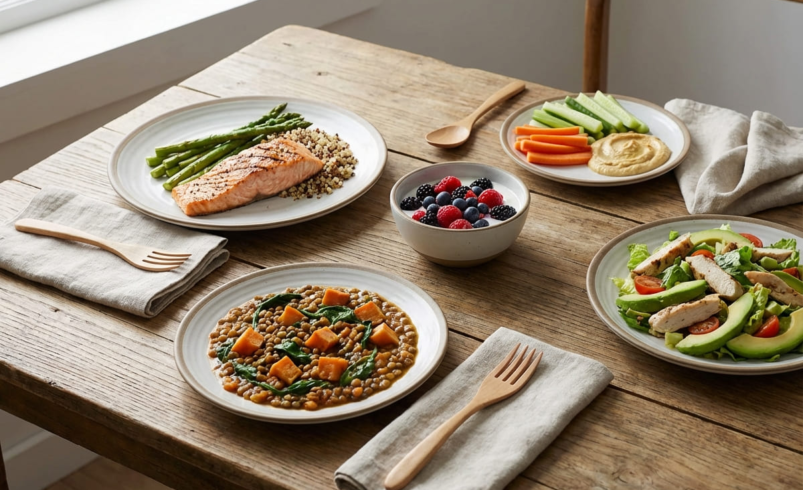
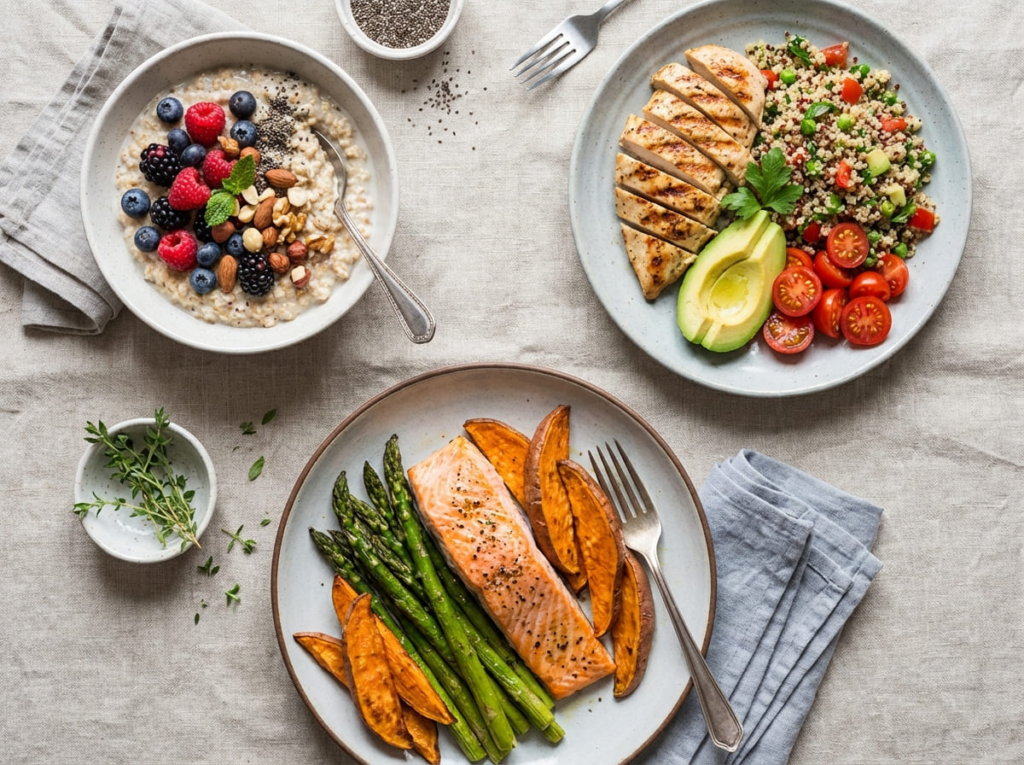
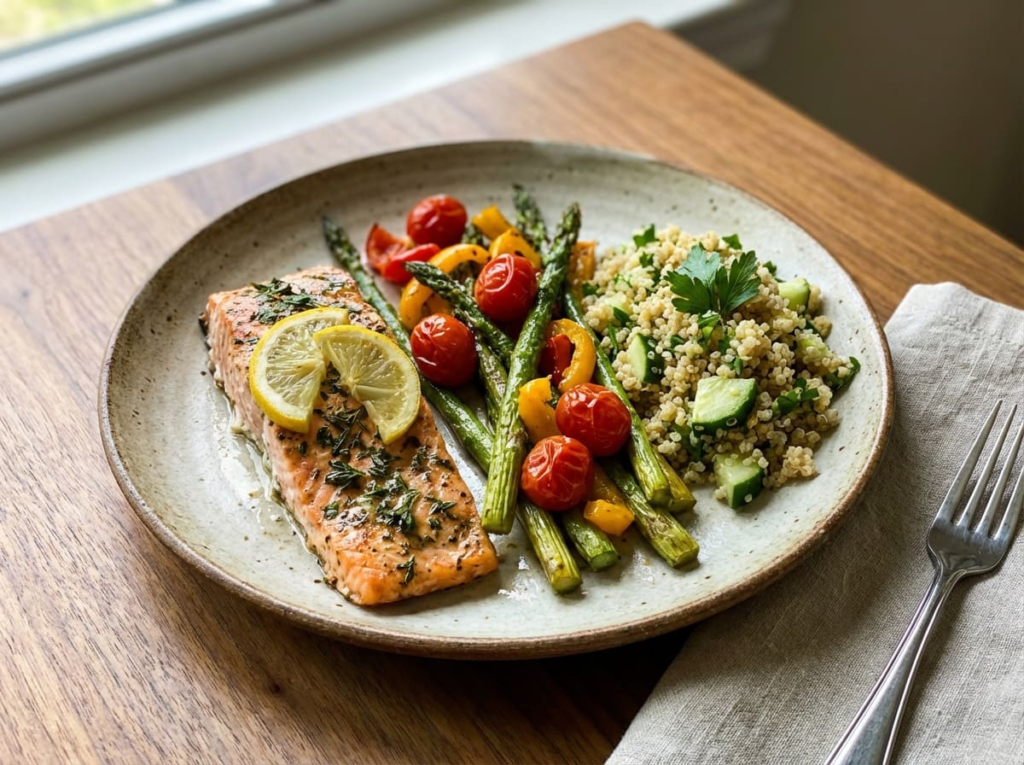
The plate method gives you an easy visual guide for balanced meals without measuring everything. Use a small plate (salad plate size, not dinner plate) to make appropriate portions look more satisfying.
¼ Plate Protein
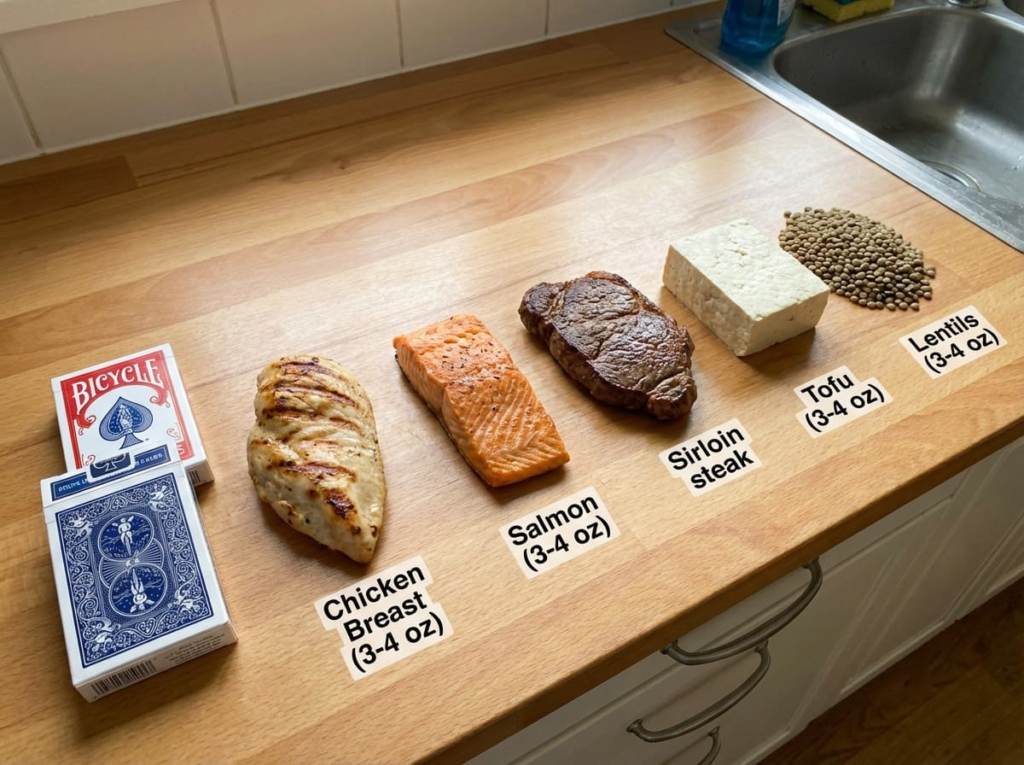
Protein should take up about one quarter of your small plate. This translates to roughly 3-4 ounces of cooked protein, about the size of a deck of cards or the palm of your hand.
Protein portion examples:
- 3-4 oz grilled chicken breast (size of your palm)
- 3-4 oz baked fish
- 3-4 oz lean ground turkey
- 2-3 eggs
- 3/4 cup Greek yogurt
- 1/2 cup cottage cheese
- 3-4 oz tofu or tempeh
Why protein comes first: Eat your protein before anything else on your plate. With limited stomach capacity, you need to prioritize the nutrient that preserves muscle mass and provides sustained energy. If you fill up before finishing your meal, at least you got your protein in.
½ Plate Vegetables
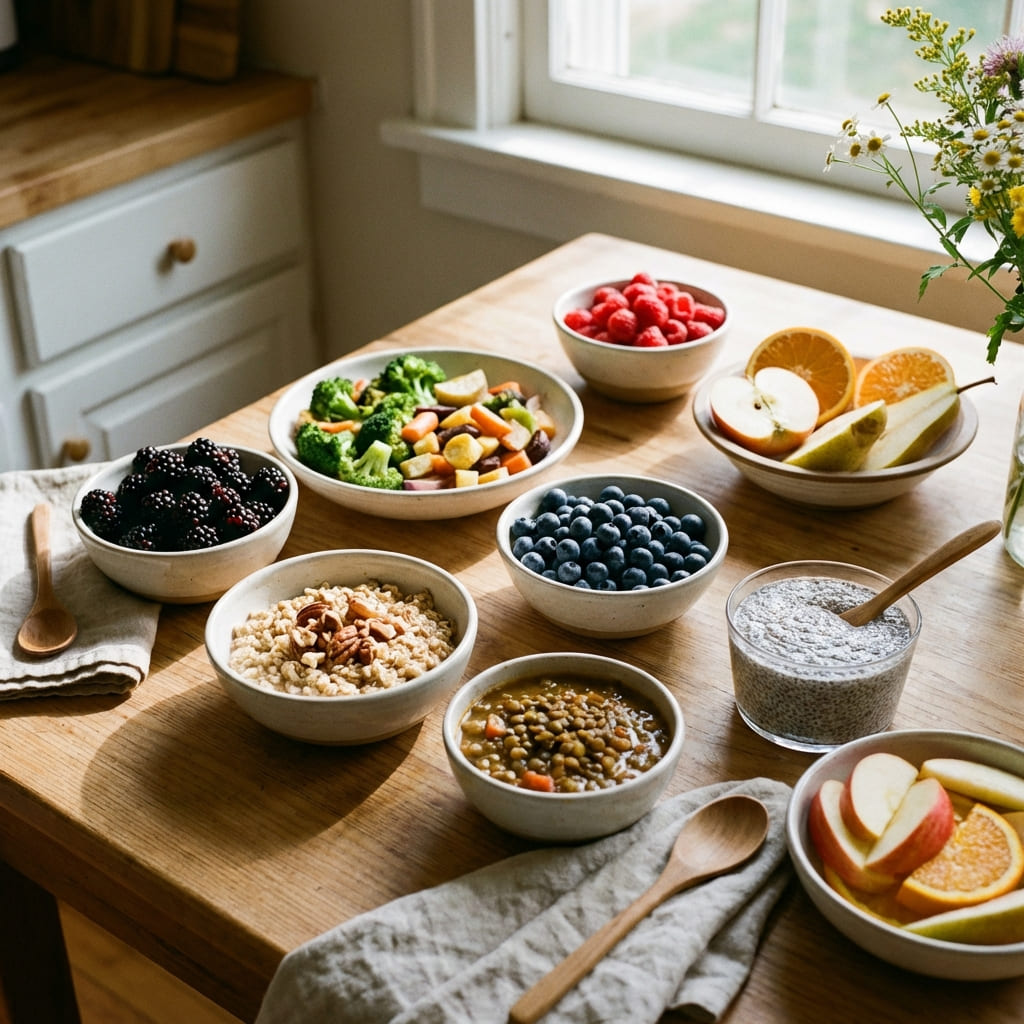
Non-starchy vegetables should fill about half your small plate. They provide volume, fiber, vitamins, and minerals without many calories.
Vegetable portion examples (½ plate or about 1 cup):
- Mixed green salad with cucumbers, tomatoes, peppers
- 1 cup steamed broccoli
- 1 cup roasted Brussels sprouts
- 1 cup sautéed zucchini
- 1 cup cooked spinach
- 1 cup green beans
- 1 cup cauliflower rice
- Mix of roasted vegetables (bell peppers, asparagus, mushrooms)
Cooked vs raw: Cooked vegetables are generally easier to digest when you’re dealing with GLP-1 side effects. Steaming, roasting, or sautéing breaks down fiber and makes vegetables gentler on your stomach than raw salads.
¼ Plate Smart Carbs
The final quarter of your plate is for carbohydrates. Choose complex carbs that provide fiber, nutrients, and sustained energy rather than simple sugars.
Smart carb portion examples (¼ plate):
- 1/2 cup cooked quinoa
- 1/2 cup brown rice
- 1 small sweet potato (about the size of your fist)
- 1/2 cup cooked oatmeal
- 1 slice whole grain bread
- 1/2 cup beans or lentils (these also count as protein)
- 1/2 cup pasta
Why the smallest portion: Carbs aren’t bad, but they’re less critical than protein when you’re eating limited amounts. Your body can function with moderate carbs, but it absolutely needs adequate protein.
Sample Portions of GLP-1 Friendly Foods By Meal
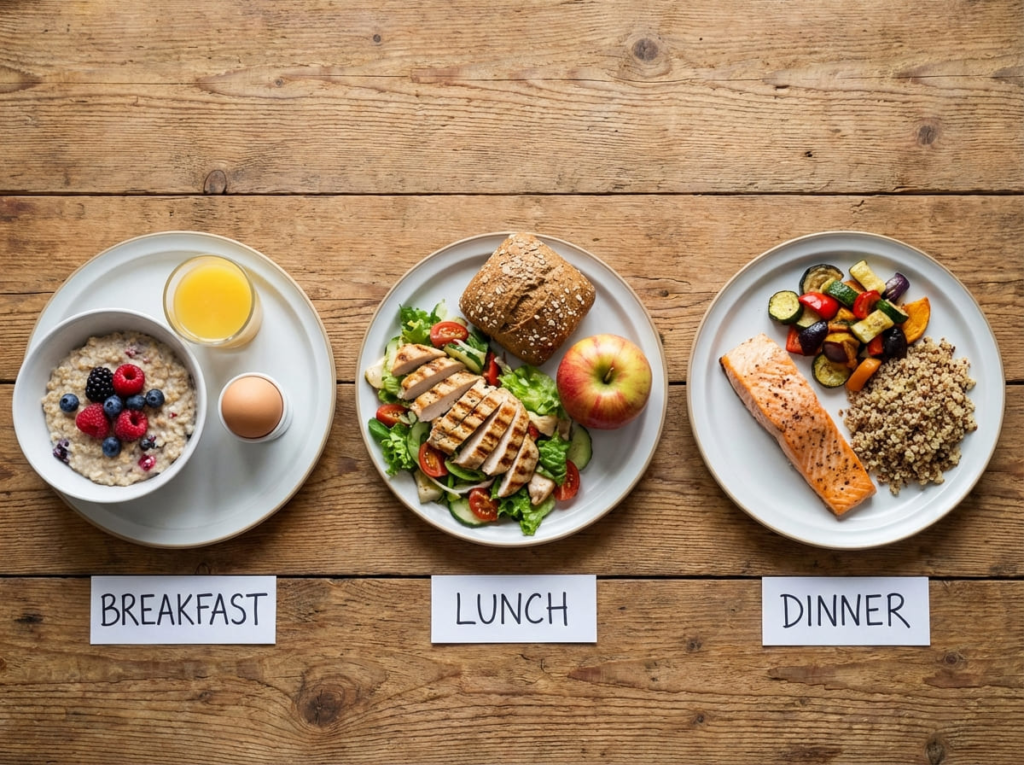
Here’s what realistic portions look like throughout the day on GLP-1 medications. These are guidelines, not strict rules. Individual tolerance varies.
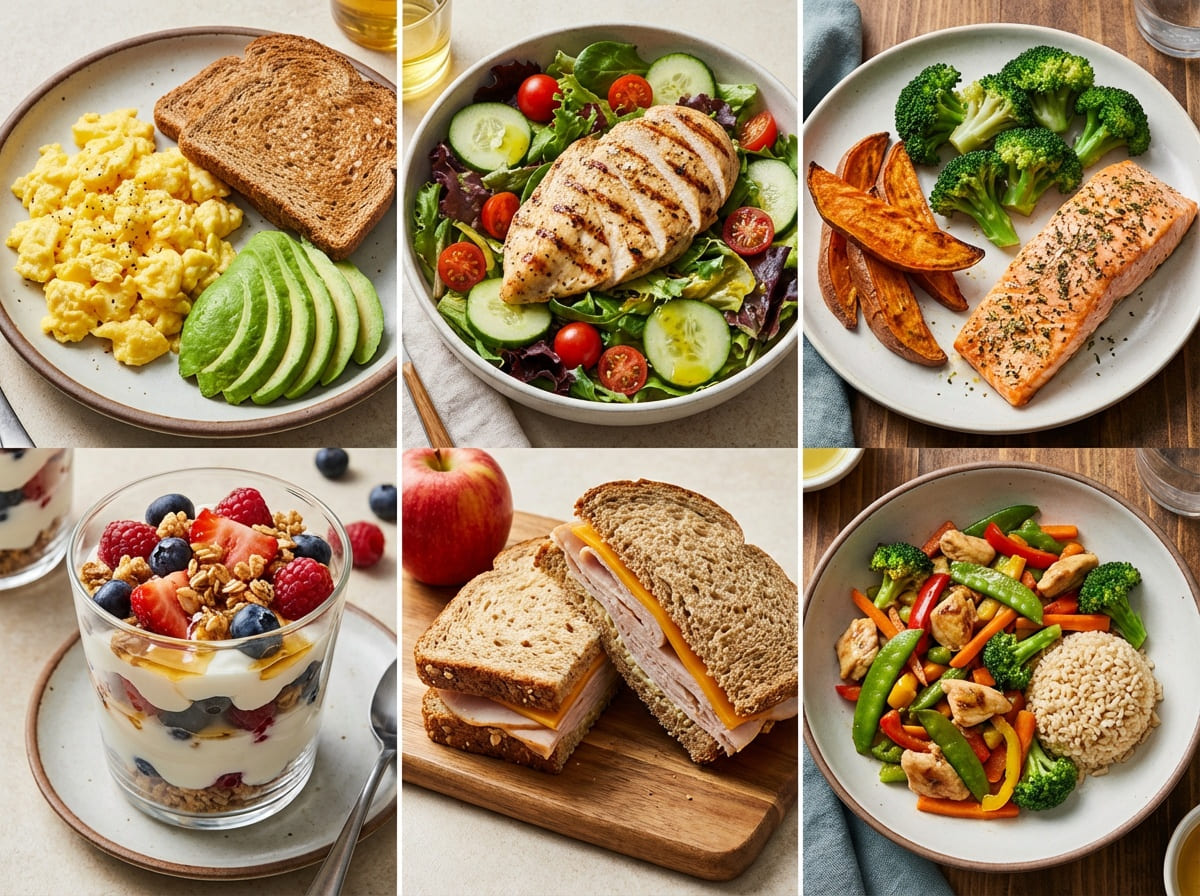
Breakfast Portions
Option 1: Protein-focused
- 2-3 scrambled eggs (protein)
- 1 slice whole wheat toast (carb)
- 1/2 cup sautéed spinach (vegetable)
- Total: Fits on small plate, about 1-1.5 cups food
Option 2: Yogurt-based
- 3/4 cup plain Greek yogurt (protein)
- 1/4 cup berries (carb/vegetable)
- 1 tablespoon chopped nuts (healthy fat)
- Total: About 1 cup
Option 3: Oatmeal
- 1/2 cup cooked oatmeal (carb)
- 1 scoop protein powder mixed in (protein)
- 1/2 sliced banana (carb)
- Total: About 1 cup
Lunch Portions
Option 1: Salad-based
- 2 cups mixed greens (vegetable)
- 3-4 oz grilled chicken (protein)
- 1/4 cup chickpeas (protein/carb)
- 2 tablespoons light dressing
- Total: Fits in a medium bowl, about 2 cups
Option 2: Sandwich
- 1/2 sandwich on whole wheat (carb + protein)
- 2-3 oz turkey or chicken (protein)
- Lettuce, tomato, cucumber (vegetable)
- Side of baby carrots (vegetable)
- Total: About 1.5 cups food
Option 3: Bowl-style
- 1/2 cup quinoa or brown rice (carb)
- 3 oz baked salmon (protein)
- 1 cup roasted vegetables (vegetable)
- Total: Fits on small plate, about 1.5-2 cups
Dinner Portions
Option 1: Traditional plate
- 3-4 oz grilled chicken or fish (protein)
- 1 cup steamed broccoli (vegetable)
- 1/2 small sweet potato (carb)
- Total: Fits on salad-size plate, about 2 cups
Option 2: Stir-fry style
- 3-4 oz lean protein (chicken, shrimp, tofu)
- 1.5 cups mixed stir-fry vegetables
- 1/3 cup brown rice
- Total: About 2 cups in a bowl
Option 3: Lighter dinner
- 2-3 oz baked white fish (protein)
- Large side salad with light dressing (vegetable)
- Small dinner roll (carb)
- Total: About 1.5 cups
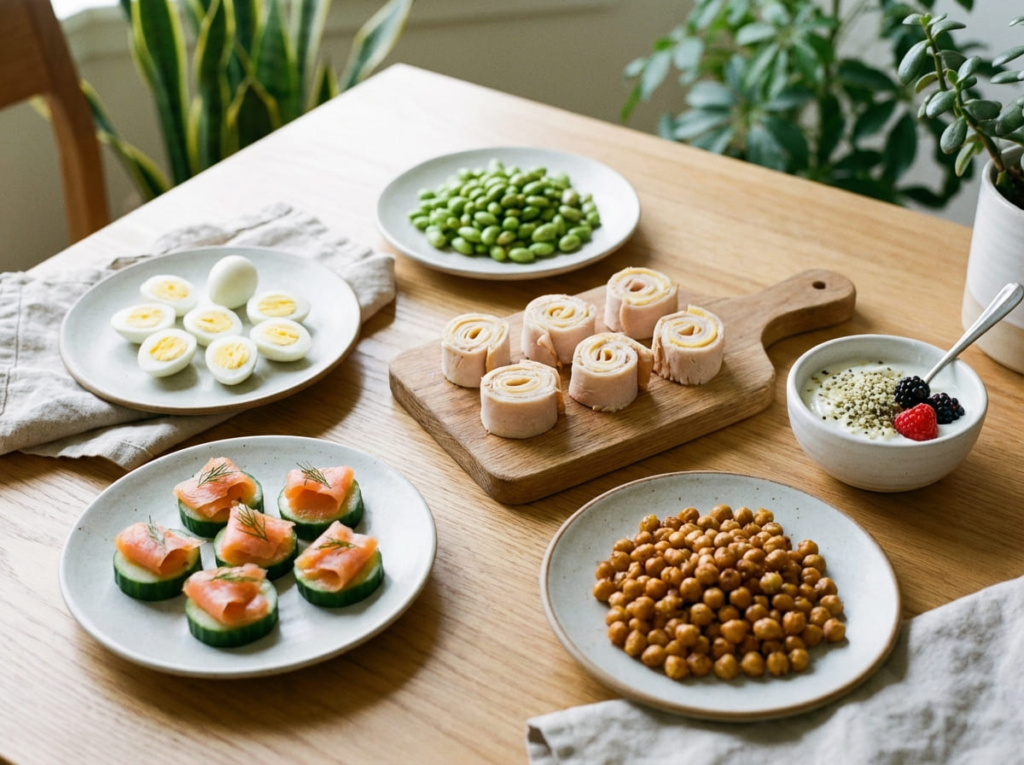
Snack Portions
Keep snacks small and protein-focused when possible.
- 1/2 cup Greek yogurt
- String cheese with 5-6 whole grain crackers
- 1/4 cup nuts
- Apple slices with 1 tablespoon nut butter
- 1/2 cup cottage cheese with berries
- Hard-boiled egg
- 2-3 oz deli turkey roll-ups
Tips for Eating Smaller, Frequent Meals on GLP-1s
The traditional three-meals-a-day approach doesn’t work well for most people on GLP-1s. Eating smaller amounts more frequently keeps you nourished without overwhelming your slow stomach.
Plan for 5-6x a Day
Instead of breakfast, lunch, and dinner, think: breakfast, mid-morning snack, lunch, afternoon snack, dinner, and optional evening snack if needed. This will make it easier to get all the nutrition you need and digest it fully — no heavy meals sitting in your stomach for hours (or going undigested, which can cause gastrointestinal problems).
Sample daily schedule:
- 7:00 AM: Breakfast (1-1.5 cups)
- 10:00 AM: Snack (1/2 cup)
- 1:00 PM: Lunch (1.5-2 cups)
- 4:00 PM: Snack (1/2 cup)
- 7:00 PM: Dinner (1.5-2 cups)
- Optional 9:00 PM: Small snack if needed
Total daily food volume: About 5-7 cups, which is roughly half what you probably ate before starting medication.
Use Time Instead of Hunger
Set eating reminders on your phone every 2-3 hours. Your appetite signals are gone, so you’ll forget to eat. Scheduled eating ensures you get adequate nutrition even when you have zero hunger.
Stop at the First Sign of Fullness
That gentle pressure or slight turning-away feeling is your cue to stop. It’s not the obvious “I’m stuffed” sensation you’re used to. It’s subtle. When you notice it, stop eating immediately, even if food remains.
Pushing past early fullness to “finish your plate” or “get more protein” will backfire. You’ll feel sick for hours. Better to eat less now and have a snack in 2-3 hours.
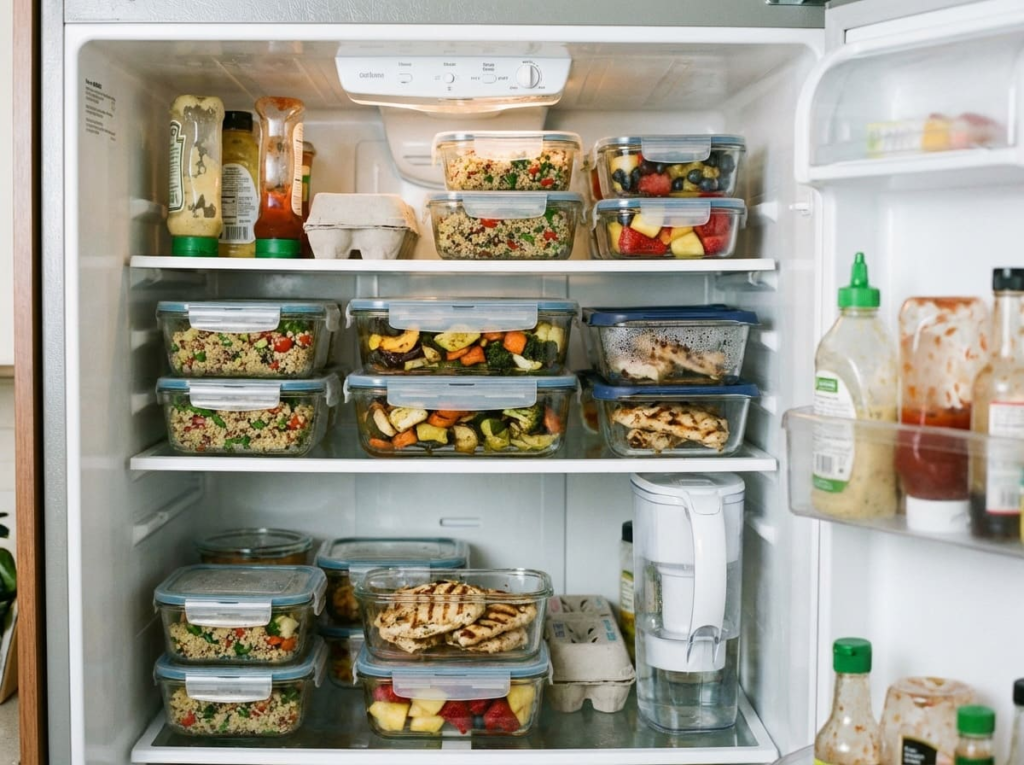
Prep Portions in Advance
When you’re feeling good, portion out proteins, cut vegetables, and prep simple meals. Store them in small containers. Having the right portions ready to grab eliminates decision-making when you don’t feel well.
Save Everything
Get used to eating half your meal and refrigerating the rest for later. Restaurant portions will feed you 2-3 times now. Home-cooked dinners become lunch tomorrow. This is your new normal, not waste.
Adjust Based on Your Body
These portion guidelines are starting points. Some people tolerate more, some need less. Pay attention to how you feel:
- Still hungry after finishing? Wait 20 minutes. If still hungry, add a small amount more.
- Feeling too full or nauseated? Eat less next time, even if it seems ridiculously small.
- Skipping meals because you’re still full from the last one? Reduce portions.
Quick Reference Portion Guide for Your GLP-1 Meal Plan
Total meal size: 1-2 cups (fits on salad plate)
Plate breakdown:
- ¼ plate = Protein (3-4 oz, palm-sized)
- ½ plate = Vegetables (1 cup cooked)
- ¼ plate = Smart carbs (1/2 cup)
Eating schedule:
- Meal/snack every 2-3 hours
- 5-6 eating occasions daily
Protein at each meal:
- Breakfast: 15-20g
- Lunch: 20-25g
- Dinner: 20-25g
- Snacks: 10-15g each
- Daily total: 60-80g minimum
Stop eating when:
- You feel gentle pressure
- Food becomes less appealing
- You notice yourself slowing down
- You feel even slightly full
Red flags you ate too much:
- Uncomfortable fullness
- Nausea
- Feeling “stuck”
- Still full 4-5 hours later
Red flags you’re not eating enough:
- Constant fatigue
- Less than 60g protein daily
- Total daily calories under 1,000
- Dizziness or weakness
Making Portions Work for Your GLP-1 Diet
Getting portions right on GLP-1 medications takes practice. You’re relearning how to eat and how to recognize fullness signals that feel completely different from before.
Start with these guidelines, then adjust based on your individual experience. The right portion is the one that:
- Provides adequate protein and nutrition
- Doesn’t trigger nausea or discomfort
- Keeps you satisfied for 2-3 hours
- Supports steady, healthy weight loss
Use small plates to make appropriate portions look more normal. Measure initially until you develop a good sense of what proper portions look like. Meal prep food in advance so correct portions are ready when you need them.
Most importantly, listen to your body’s new fullness signals and stop when you hit them, even if it seems like you barely ate anything. On GLP-1 medications, less really is more. Your stomach will thank you.
Healthy Recipes to Try When You're On GLP-1s