Frozen Protein Banana Pops (GLP-1 Friendly Frozen Dessert)
- February 4, 2026
- 0
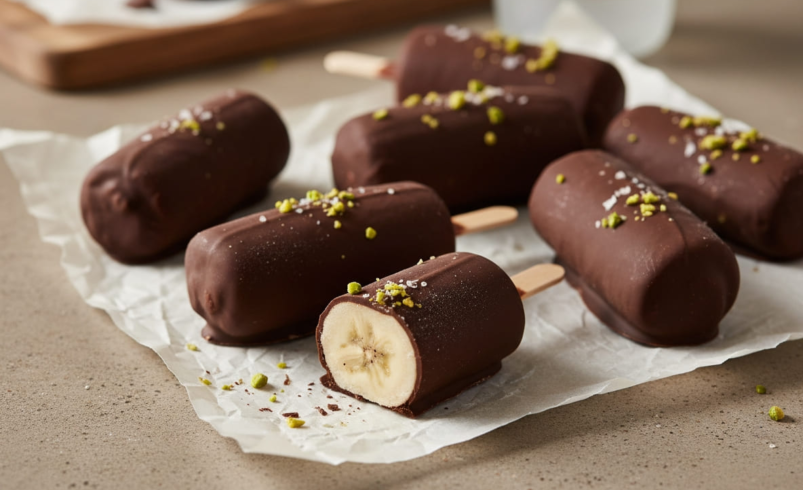
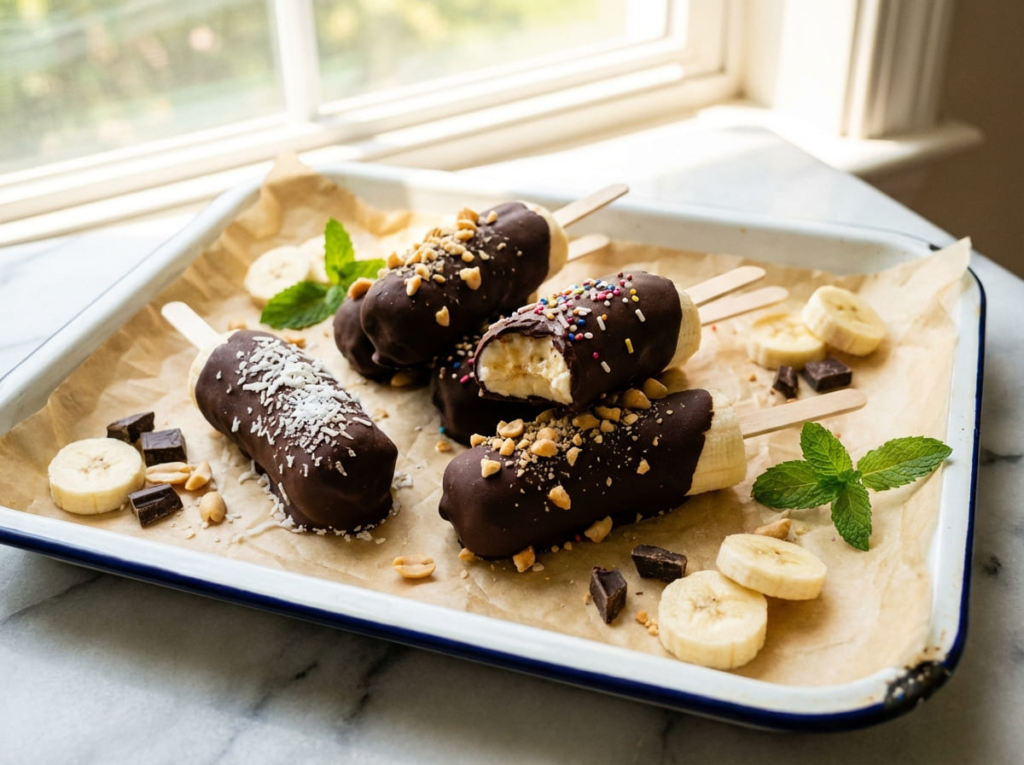
These frozen protein banana pops are soothing, lightly sweet, and easy to eat while on GLP-1s, especially when appetite or nausea is a factor.
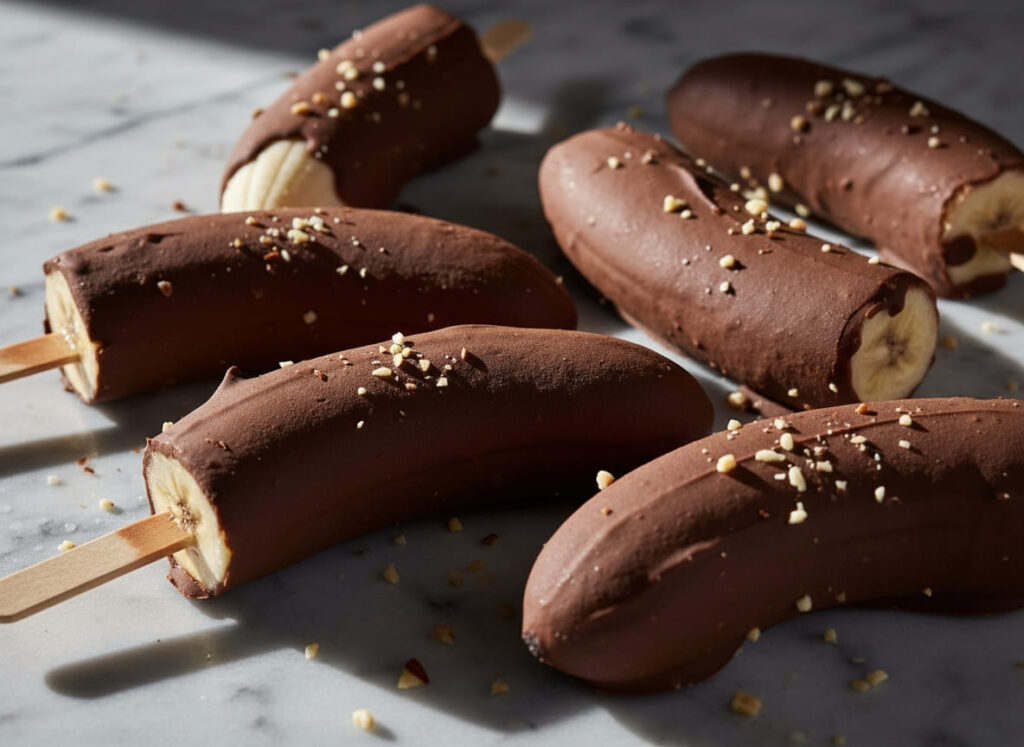
What can you eat when nausea makes warm food unappealing? These frozen banana pops coat bananas in Greek yogurt and dark chocolate to create a soothing cold snack with built-in portion control. Keep them in the freezer for gentle calories and protein whenever regular meals sound overwhelming.
Quick Recipe Info:
What makes these perfect for dessert when you’re on GLP-1s is how they trick your brain into thinking you’re having a treat while actually giving your body protein and nutrients. They taste like a frozen chocolate-covered banana from the fair, but each pop has 6 grams of protein and won’t send your blood sugar through the roof. The cold temperature is soothing when you’re nauseous, and the small size means you’re not committing to a huge portion.
I keep a batch of these in my freezer at all times now. Some days I eat one for breakfast when nothing else sounds remotely edible. Other days they’re an afternoon snack or an evening dessert. The flexibility is what makes them so useful when your appetite is unpredictable.
Table of Contents
Toggle
Per Banana Pop
Cold foods are often easier to tolerate when you’re dealing with GLP-1 side effects, particularly nausea. There’s something about the frozen temperature that’s soothing rather than challenging for your stomach. I’ve had days where I couldn’t imagine eating a regular meal, but a frozen banana pop went down easily and actually stayed down.
The protein from Greek yogurt helps you maintain muscle mass during weight loss without requiring you to eat another piece of chicken or drink another protein shake. Six grams might not sound like a lot, but when you’re struggling to eat anything, every bit counts. Some days I’d eat two of these and get 12 grams of protein without even trying.
Bananas are naturally gentle on your digestive system and provide potassium, which can be important when you’re eating less overall. The natural sweetness satisfies sugar cravings without the processed sugar overload that can trigger nausea or blood sugar spikes. Combined with the protein from yogurt, the sugar from the banana is released more slowly into your bloodstream.
The portion size is built right in. One pop is one serving. You’re not standing at the freezer with a pint of ice cream wondering if you should have another spoonful. You take out one pop, eat it slowly, and you’re done. That kind of automatic portion control is incredibly helpful when your hunger cues are all over the place.
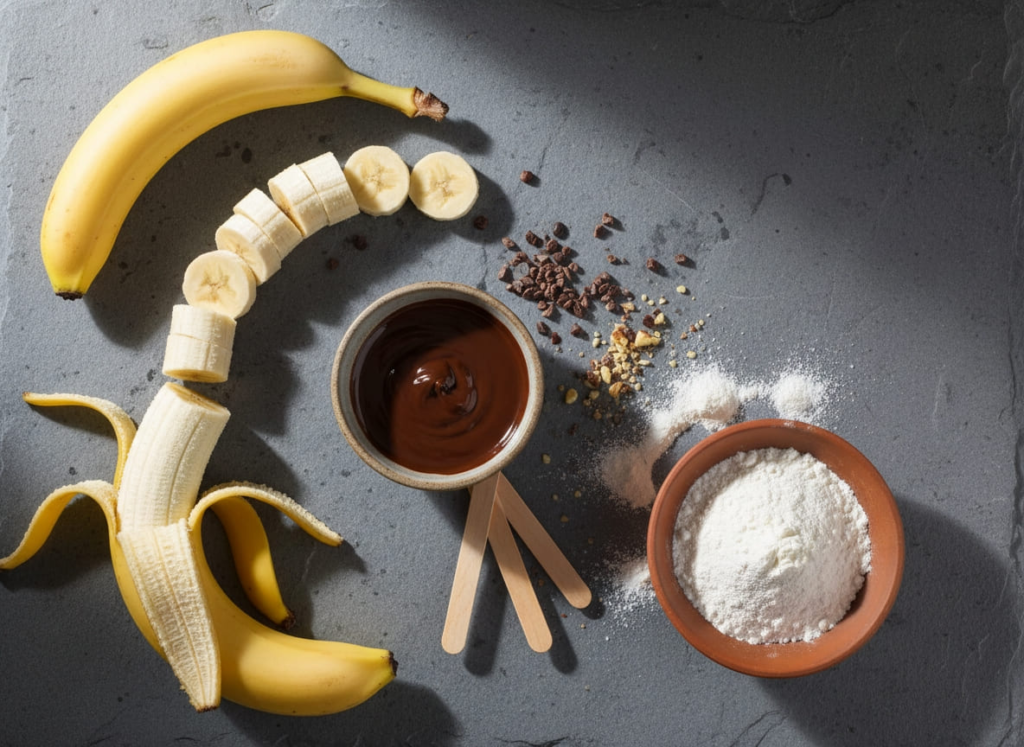
Bananas are one of those universally tolerated foods that rarely upset anyone’s stomach. They’re naturally sweet, easy to digest, and provide quick energy when you need it. The potassium and fiber are bonuses, but honestly, the main reason I use bananas is because they taste good and create the perfect base for the yogurt and chocolate coating.
One thing I’ve learned: don’t use overly ripe bananas for this. You want them yellow with maybe a few small brown spots, but not completely brown. Really ripe bananas get too soft when frozen and can be mushy. Firmer bananas hold their shape better and create a nicer texture.
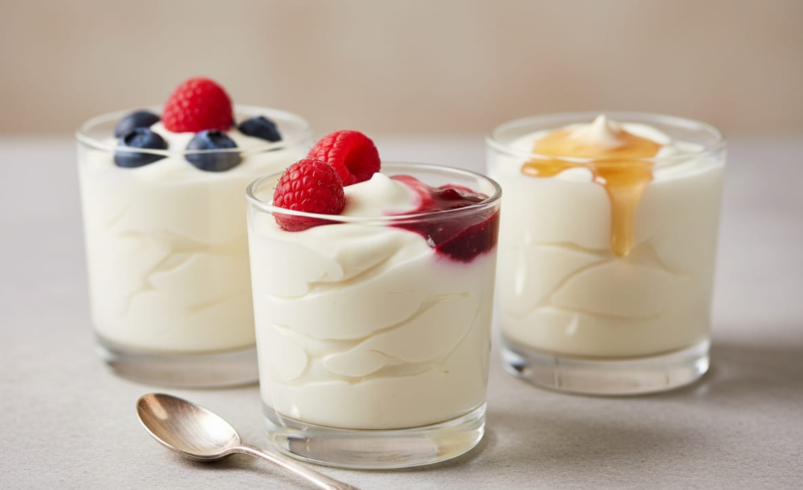
This is where most of the protein comes from. The yogurt coating adds creaminess and tanginess that balances the sweetness of the banana and chocolate. I prefer using 2% Greek yogurt because it’s creamy enough to coat well but not so high in fat that it feels heavy. The probiotics in yogurt also support gut health, which can be beneficial when your digestion is altered by medication.
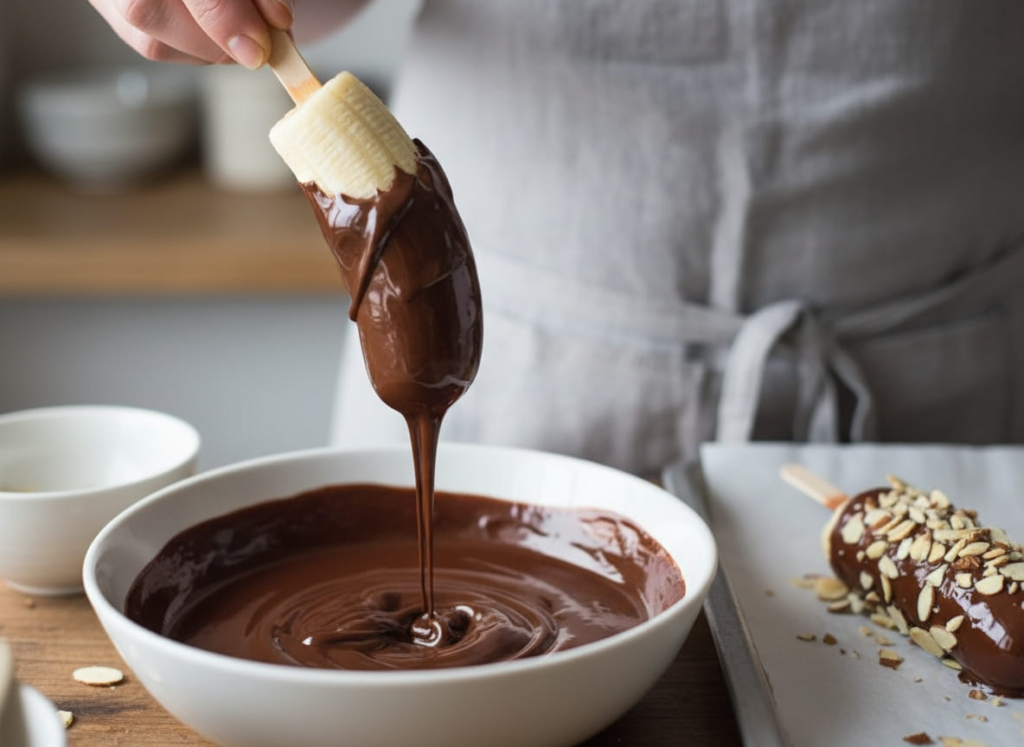
Dark chocolate provides antioxidants and creates that satisfying chocolate shell that makes these feel like a real treat rather than just frozen fruit. The small amount of coconut oil helps the chocolate stay smooth and spreadable while also making it easier to bite through when frozen. You’re not getting a ton of chocolate per pop, just enough to make it feel indulgent.
Eat them slowly: These are frozen solid, so you kind of have to eat them slowly anyway. But seriously, take small bites and let the cold soothe your mouth and throat as you go. I usually take 10-15 minutes to eat one pop, which feels ridiculous but prevents brain freeze and gives my stomach time to process.
Perfect for nausea days: On days when the thought of eating anything warm makes you feel sick or nauseous, pull out one of these. The cold temperature can actually help settle your stomach while giving you nutrients and protein. I’ve eaten these for breakfast on rough mornings more times than I can count.
Customize the coating: If nuts or coconut don’t sound good, skip them. If dark chocolate is too bitter, use milk chocolate. If chocolate at all sounds heavy, skip the chocolate coating entirely and just do the yogurt layer. These are flexible.
Size matters: If a half banana feels like too much, cut your bananas into thirds instead of halves. You’ll get 9 smaller pops with slightly less protein each (about 4 grams), but sometimes smaller is better when your appetite is minimal.
Time it right: I find these easiest to eat in the afternoon when I’ve been awake for a few hours and my stomach has settled. Eating them first thing in the morning can be too cold and shocking for some people, though others love starting their day this way.
Keep a stash ready: Make a double batch and keep them in the freezer. When you’re having a tough day and can’t imagine preparing food, having these ready to grab makes all the difference.
Freezer Storage: These keep in the freezer for up to 2 months in an airtight container or freezer bag. I layer them with parchment paper between each pop to prevent them from sticking together. After the first week, the chocolate coating might develop a slight white frost (chocolate bloom), but they’re still perfectly safe and tasty to eat.
Batch Making: This recipe is perfect for doubling or tripling. If you have the freezer space, make 12-18 pops at once. It takes the same amount of effort, and you’ll have a protein-packed frozen treat ready for weeks.
No-Chocolate Version: If you want to skip the chocolate step entirely to save time or calories, just do the yogurt coating and freeze. They’re still delicious and have the same protein content. I sometimes make half with chocolate and half without so I have options.
Wrapping for Storage: Once completely frozen, I individually wrap each pop in parchment paper and store them all in a large freezer bag. This makes it easy to grab one without the whole batch getting freezer-burned.
Do these really help with GLP-1 nausea symptoms?
They help me, but everyone’s different. The cold temperature and gentle ingredients make them easier to tolerate than most foods when I’m feeling queasy. The key is eating them slowly and stopping if they don’t feel good. Don’t force it.
Can I use regular yogurt instead of Greek yogurt?
Regular yogurt will work but won’t coat as well because it’s thinner, and you’ll get less protein. If that’s all you have, mix in a tablespoon of protein powder to thicken it up and boost the protein content.
What if I don’t like bananas?
Then this recipe probably isn’t for you, and that’s okay. Check out the other frozen dessert recipes like the Greek Yogurt Cheesecake Cups or Dark Chocolate Cottage Cheese Mousse instead. Not every recipe works for everyone.
Are these good for kids?
Absolutely. My friend’s kids love these because they think they’re getting ice cream. The protein and nutrients make them way better than regular popsicles. Just skip the nuts if you’re worried about allergies.
How do I prevent them from falling off the stick?
Make sure you’re pushing the stick far enough into the banana (about halfway through). Also, freeze the yogurt layer completely before adding chocolate. The frozen yogurt layer helps everything stay together. If one does fall off, just eat it with a spoon. Problem solved.
Can I add protein powder to boost the protein content?
Yes! Mix 1-2 tablespoons of vanilla or unflavored protein powder into the yogurt mixture. You might need to add a teaspoon of milk to thin it out slightly, but this can bump each pop up to 8-10 grams of protein.
Why do mine get icy instead of creamy?
This usually happens if there’s too much moisture or if they’ve been in the freezer too long. Make sure you’re using thick Greek yogurt, not regular yogurt. Also, the yogurt layer should be relatively thin. Too thick and it gets icy.
Have you tried this recipe? Share your experience in the comments below and let us know how it worked with your GLP-1 journey!