What Meal Planning Actually Means on GLP-1 Medications
Traditional meal planning assumes you’ll eat consistent portions throughout the week and that your appetite will stay relatively stable. GLP-1 meal planning assumes the opposite. Your appetite will fluctuate wildly. What sounds tolerable Monday might repulse you by Wednesday. You’ll have days where eating anything feels impossible.
Meal planning on semaglutide or tirzepatide is about creating flexibility, not rigidity. You’re not assigning specific meals to specific days and forcing yourself to eat them no matter what. You’re stocking versatile proteins and simple sides you can mix and match based on how you feel each day.
Here’s what meal planning actually involves:
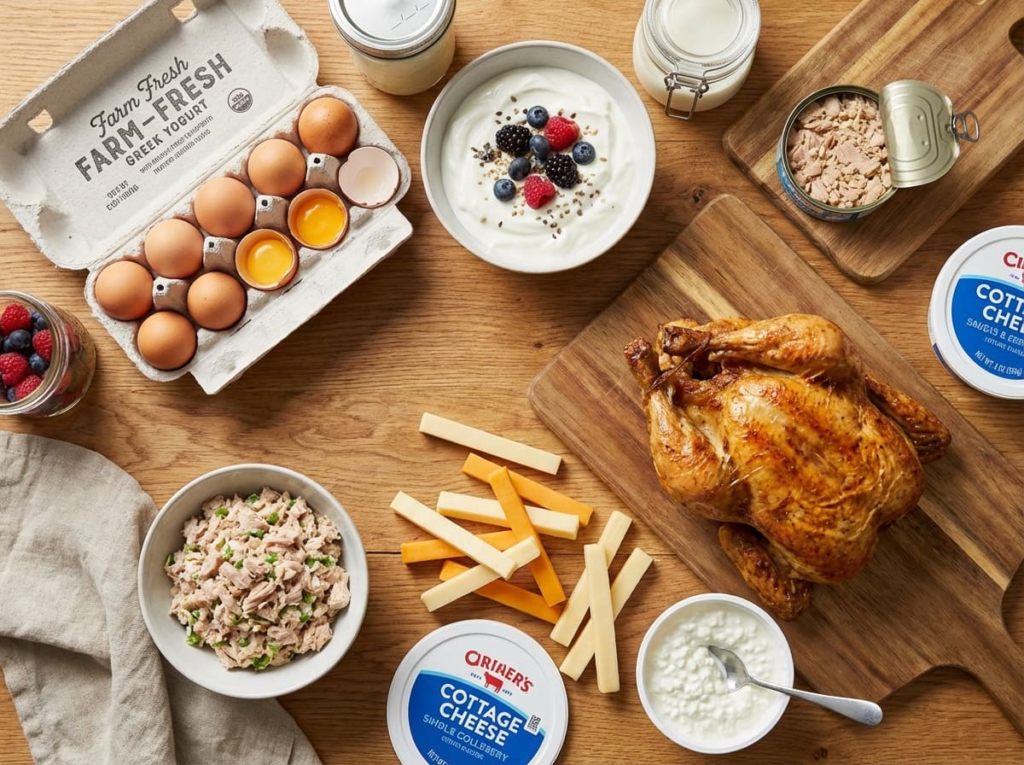
Making a list of 5-7 proteins you can tolerate. For me, that’s eggs, Greek yogurt, chicken thighs, ground turkey, canned tuna, cottage cheese, and string cheese. These rotate through my meals in different combinations depending on what sounds least unappealing.
Choosing 3-4 vegetables that last all week. I buy fresh broccoli and bell peppers for the first few days, then rely on frozen vegetables for the second half of the week. This prevents waste when my appetite crashes and I can’t eat what I bought.
Having quick carbs available but not prioritizing them. A bag of rice, some whole wheat bread, crackers, and tortillas cover most carb needs without taking up much mental energy or budget.
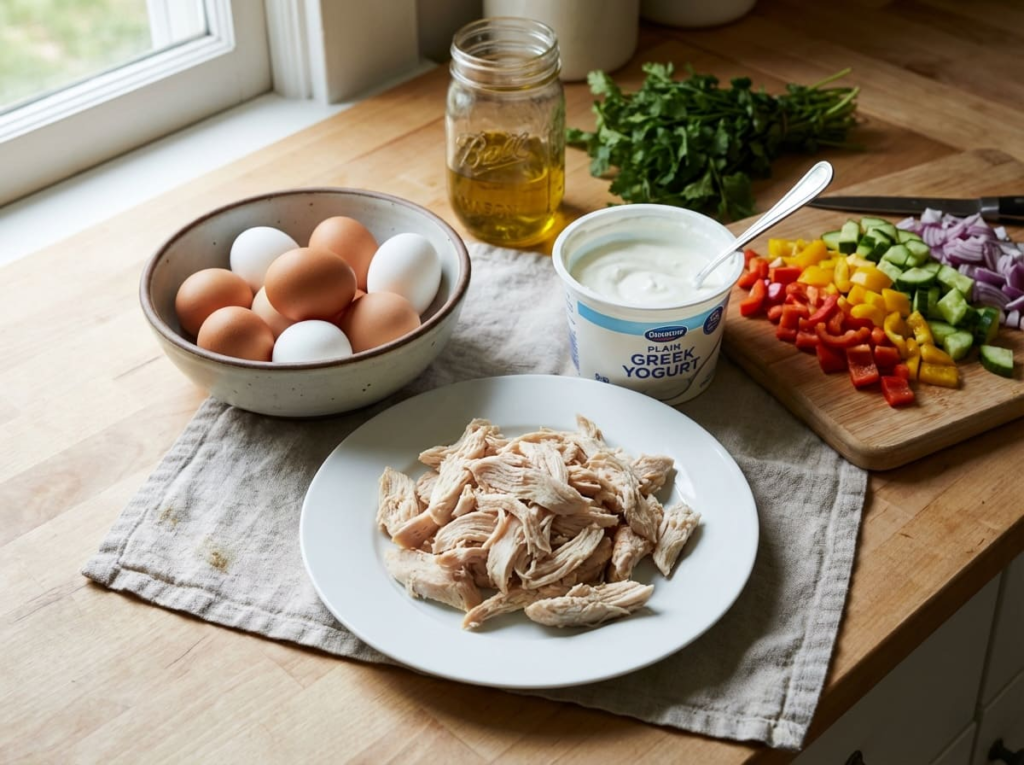
Prepping 2-3 things on Sunday that make weekday eating easier. I hard-boil eggs, cook a batch of chicken, and portion Greek yogurt into smaller containers. That’s it. Nothing Instagram-worthy, just functional food ready to grab.
The goal isn’t creating a perfect weekly schedule. The goal is removing barriers between you and adequate nutrition when your appetite is gone and food feels like a chore.
3 Simple Rules for GLP-1 Meal Planning
These three rules have kept me consistently hitting my protein targets without spending hours cooking or forcing down food I don’t want.
Rule 1: Plan for Protein First, Everything Else Second
Your body needs 80-120g of protein daily to preserve muscle mass during weight loss on GLP-1 medications. Research published in The New England Journal of Medicine found that patients on semaglutide who maintained adequate protein intake retained significantly more lean muscle than those who didn’t. Everything else in your meal plan exists to help you hit that protein target.
This means when you’re planning meals, you start by asking: “What protein will I eat?” Not “what sounds good” or “what’s healthy” but specifically what protein. Once you answer that, the rest of the meal builds around it.
Breakfast protein options: Eggs, Greek yogurt, cottage cheese, protein smoothies
Lunch protein options: Chicken, tuna, turkey, leftover dinner protein
Dinner protein options: Chicken thighs, ground turkey, salmon, shrimp, lean beef
Snack proteins: String cheese, hard-boiled eggs, Greek yogurt, protein bars
If you build your meal plan around hitting protein at every eating occasion, the rest falls into place naturally. Vegetables and carbs become supporting players, not the main focus.
Rule 2: Buy Ingredients That Work Multiple Ways
Single-use ingredients are budget killers and create food waste when your appetite changes unexpectedly. Instead, buy versatile ingredients that combine into different meals throughout the week.
Chicken thighs become: Chicken and broccoli, chicken salad, shredded chicken tacos, chicken with rice, chicken and vegetables
Eggs become: Scrambled eggs, hard-boiled snacks, omelets, egg salad, breakfast sandwiches
Greek yogurt becomes: Breakfast with fruit, smoothie base, parfait, savory sauce, protein boost in oatmeal
Ground turkey becomes: Taco bowls, turkey chili, turkey meatballs, turkey pasta sauce, turkey and rice
When you buy this way, you’re not locked into eating specific meals on specific days. If Wednesday you can’t stomach the chicken you planned, you make tuna salad instead. If Friday you’re too exhausted to cook the turkey chili, you scramble some eggs. The ingredients work together in dozens of combinations, so you’re never stuck.
Rule 3: Prep Only What You’ll Actually Eat in 3-4 Days
I used to meal prep full seven-day plans every Sunday. By Thursday, half the containers sat untouched in my fridge because my appetite had shifted or I couldn’t face eating the same thing again. Now I prep for 3-4 days maximum and reassess mid-week.
Sunday prep (30-40 minutes):
- Hard-boil 6 eggs
- Cook 4-5 chicken thighs
- Wash and chop vegetables for the first half of the week
- Portion Greek yogurt if you prefer smaller containers
Wednesday or Thursday mini-prep (15-20 minutes):
- Cook remaining protein for the week (more chicken, ground turkey, or whatever)
- Prep fresh vegetables if needed
- Hard-boil more eggs if you ran out
This approach prevents food waste and acknowledges that you genuinely don’t know Wednesday if you’ll want the meal you planned Sunday. Shorter prep cycles give you flexibility to adjust based on how you’re actually feeling and eating.
Week 1 Starter Meal Plan on GLP-1s: Keep It Simple
This plan assumes you’re new to meal planning and possibly new to GLP-1 medications. It focuses on familiar foods, simple preparation, and realistic portions for someone with suppressed appetite.
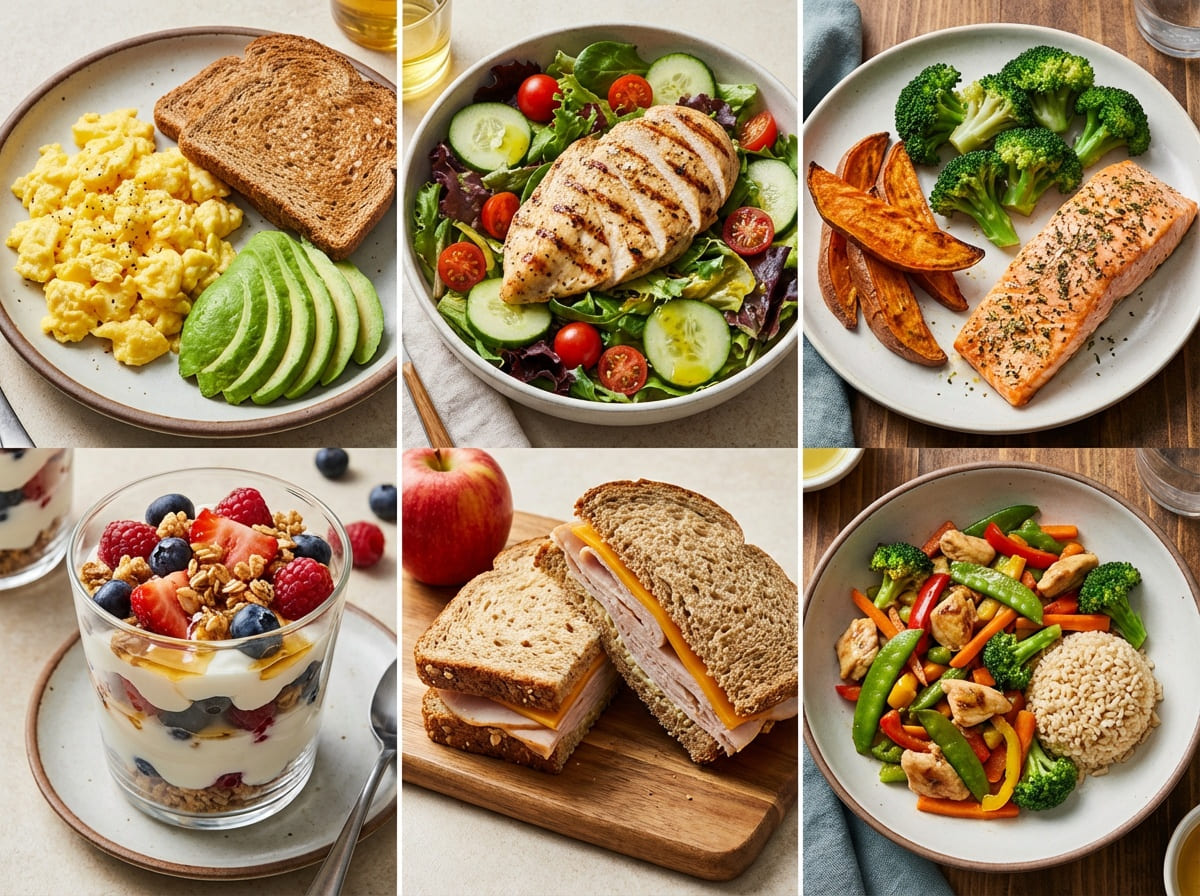
Daily Meal Framework
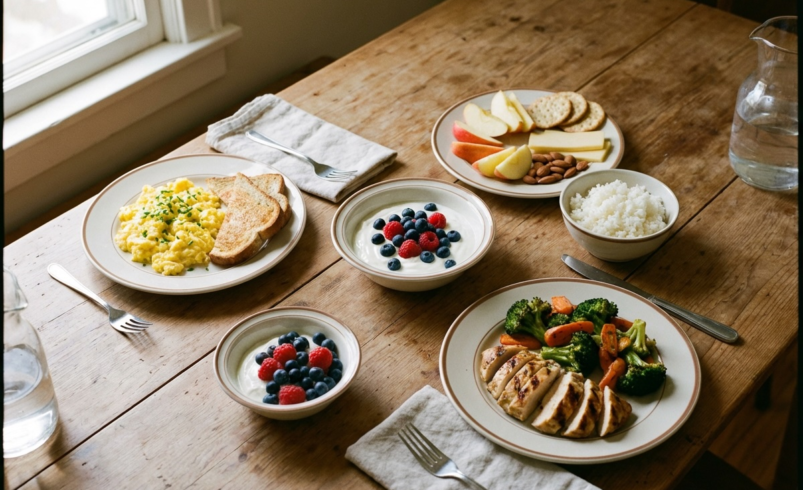
Breakfast (25-30g protein):
- Option A: 2 scrambled eggs with cheese and 1/2 cup cottage cheese
- Option B: Greek yogurt (3/4 cup) with 1/3 cup granola and berries
- Option C: 2 hard-boiled eggs with whole grain toast and peanut butter
Lunch (25-35g protein):
- Option A: 4 oz grilled chicken with mixed greens and vegetables
- Option B: Tuna salad (3 oz tuna) on crackers or lettuce
- Option C: Turkey and cheese wrap with vegetables
Dinner (30-40g protein):
- Option A: Baked chicken thighs with roasted broccoli and rice
- Option B: Ground turkey taco bowl with black beans and salsa
- Option C: Scrambled eggs with vegetables and cheese
Snacks (10-15g protein total):
- String cheese
- Greek yogurt
- Hard-boiled eggs
- Apple with peanut butter
How to use this framework: Pick one option from each category daily based on what sounds tolerable. Some days you’ll eat all three meals plus snacks. Other days you’ll manage breakfast and dinner with one snack. Both are fine. The goal is hitting 80-100g protein most days, not eating perfectly every day.
Sample Week 1 Schedule
Monday:
- Breakfast: Greek yogurt with berries and granola
- Lunch: Chicken and vegetables
- Dinner: Ground turkey taco bowl
- Snack: String cheese
Tuesday:
- Breakfast: Scrambled eggs with cheese
- Lunch: Leftover turkey taco bowl
- Dinner: Baked chicken thighs with broccoli
- Snack: Hard-boiled egg
Wednesday:
- Breakfast: Greek yogurt with granola
- Lunch: Tuna salad on crackers
- Dinner: Leftover chicken with vegetables
- Snack: Apple with peanut butter
Thursday:
- Breakfast: 2 hard-boiled eggs with toast
- Lunch: Turkey wrap
- Dinner: Egg scramble with peppers and cheese
- Snack: Greek yogurt
Friday:
- Breakfast: Cottage cheese with berries
- Lunch: Leftover chicken
- Dinner: Ground turkey with marinara over pasta
- Snack: String cheese
Saturday:
- Breakfast: Scrambled eggs with vegetables
- Lunch: Tuna salad
- Dinner: Chicken thighs with frozen vegetables
- Snack: Greek yogurt
Sunday:
- Breakfast: Greek yogurt parfait
- Lunch: Turkey and cheese roll-ups
- Dinner: Simple turkey chili
- Snack: Hard-boiled eggs
Notice the repetition. You’re eating similar proteins in different combinations throughout the week. This isn’t boring when you have no appetite. It’s manageable.
Simple Week 1 Grocery List for GLP-1 Meal Plan
This list covers everything you need for the starter plan above. Prices are approximate based on Walmart or Aldi shopping.
Proteins ($38-42):
- Eggs, 18 count – $4.50
- Greek yogurt, plain (32 oz) – $4.50
- Cottage cheese (24 oz) – $3.50
- Chicken thighs, bone-in (3 lbs) – $7.50
- Ground turkey (2 lbs) – $7.00
- Canned tuna (3 cans) – $3.00
- String cheese, 12 pack – $4.00
- Deli turkey slices (1 lb) – $5.00
Vegetables ($14-16):
- Broccoli (2 crowns) – $3.00
- Mixed salad greens – $2.50
- Bell peppers (3) – $3.00
- Cherry tomatoes (1 container) – $2.50
- Frozen mixed vegetables (2 bags) – $3.00
- Frozen berries (1 bag) – $3.50
Grains & Staples ($12-15):
- Whole wheat bread (1 loaf) – $2.00
- Brown rice (1 bag) – $2.50
- Whole wheat pasta (1 box) – $1.50
- Whole grain crackers – $3.00
- Whole wheat tortillas – $2.50
- Black beans (2 cans) – $1.50
- Crushed tomatoes (1 can) – $1.00
- Shredded cheese (8 oz) – $3.00
Other ($8-10):
- Granola (1 bag) – $3.50
- Peanut butter – $3.00
- Salsa – $2.50
- Marinara sauce – $2.00
- Apples (4) – $2.00
Total: $72-83 depending on location and sales
This assumes you have basic pantry staples like olive oil, salt, pepper, and garlic powder. If you don’t, add another $10-15 for those essentials.
What to Do on Week 2 of Your Meal Plan While on GLP-1s
Week 2 builds on what you learned about your appetite and preferences in Week 1. Don’t just repeat the same plan blindly. Adjust based on what actually happened.
Assess What Worked and What Didn’t
Ask yourself:
- Which proteins did I actually eat? (Buy more of those)
- What’s still sitting in my fridge untouched? (Skip that next week)
- Did I run out of anything early? (Buy extra)
- What sounded good when nothing else did? (Stock more of that)
I learned in my first few weeks on semaglutide that I consistently ate all the eggs and Greek yogurt but barely touched the cottage cheese. Now I buy two containers of yogurt and skip cottage cheese entirely. You’ll develop similar patterns.
Make One Small Change
Don’t overhaul your entire meal plan. Change one thing based on what you learned.
Possible Week 2 adjustments:
- Swap chicken thighs for a rotisserie chicken (easier, no cooking required)
- Add canned salmon or shrimp if you want more variety
- Replace ground turkey with lean ground beef if that sounds better
- Buy more eggs if you ran out quickly
- Add protein powder for smoothies if solid food felt too hard some days
The goal is incremental improvement, not perfection. Each week you fine-tune based on your actual eating patterns, not what you think you should be eating.
Try One New Recipe
Pick one recipe from our collection and work it into your Week 2 rotation. This prevents meal fatigue without overwhelming you with too many new things at once.
Good starter recipes for Week 2:
Adding one recipe weekly keeps things interesting without requiring you to learn a completely new way of eating.
Common Beginner Mistakes to Avoid When Meal Planning for Your GLP-1 Diet
Mistake 1: Planning meals that require too much energy
When your appetite is gone and you’re exhausted from medication side effects, elaborate recipes don’t happen. Plan for low-energy days by having ultra-simple options: scrambled eggs, Greek yogurt, rotisserie chicken, canned tuna. These become your default when cooking feels impossible.
Mistake 2: Buying too much fresh produce
Fresh vegetables spoil quickly, especially when you’re eating smaller portions than expected. Buy what you’ll eat in 2-3 days fresh, then rely on frozen vegetables for the rest of the week. This prevents guilt and waste when you can’t eat everything you bought.
Mistake 3: Not tracking protein for the first few weeks
You probably think you’re eating more protein than you actually are. Track it for 10-14 days using a simple notes app or MyFitnessPal. Most people discover they’re consistently 30-50g short of their target. The awareness alone helps you adjust.
Mistake 4: Comparing your portions to “normal” serving sizes
Recipe blogs and nutrition labels show serving sizes for people with normal appetites. You don’t have a normal appetite anymore. A serving of chicken might be 2-3 oz instead of 6 oz. A serving of rice might be 1/4 cup instead of 1 cup. That’s fine. Adjust recipes to match your reality.
Building Your Meal Planning Confidence
Week 1 will feel awkward. You’re learning what your new appetite looks like, what foods you can tolerate, how much prep is realistic. Week 2 gets easier. By Week 4, you’ll have a system that works for your specific situation.
The meal planning framework I use now looks nothing like what I started with. I’ve learned that I need eggs available at all times, that I eat better when chicken is already cooked, that Greek yogurt works for me every single day without getting boring. You’ll develop your own patterns.
Start simple. Use the Week 1 plan as written, make one small adjustment for Week 2, then another for Week 3. In a month, you’ll have a personalized system that fits your preferences, budget, and energy levels.