Why Constipation Is So Common When You’re On GLP-1s
GLP-1 medications work by mimicking a natural hormone that slows gastric emptying. This mechanism creates the feeling of fullness that helps with weight loss, but it doesn’t just slow your stomach. The medication affects your entire entire gastrointestinal tract, reducing motility throughout your digestive system. Food and waste move more slowly through your intestines, giving your colon more time to absorb water from stool. This creates harder, drier stool that’s difficult to pass.
The problem compounds when you’re eating less food on GLP-1s. A lower appetite often means you’re eating a lot less food overall, which naturally results in less bulk moving through your intestines. A lot of people also inadvertently cut fiber when reducing calories, choosing easy-to-digest proteins and simple carbs while avoiding vegetables and whole grains that feel too filling. Additionally, some people reduce their fluid intake because they’re eating less and don’t feel as thirsty.
This combination of slower gut motility, reduced food volume, lower fiber intake, and inadequate hydration creates the perfect conditions for constipation.
Immediate Constipation Relief: What to Do Today
If you’re currently experiencing constipation and need relief now, these strategies can help get things moving within 24-48 hours. They work best when combined rather than relying on just one approach.
Increase Your Water Intake Immediately
Dehydration is one of the primary contributors to constipation, and it’s something you can address right away. When your body doesn’t have enough water, your colon absorbs more water from stool to compensate, making it harder and more difficult to pass.
Target water intake: Aim for at least 80-100 ounces (10-12 cups) of water daily when dealing with active constipation. This is higher than the standard recommendation because you need extra fluid to soften existing stool and support the fiber you’ll be adding.
Practical approach: Drink 8-16 ounces of water immediately upon waking, before coffee or breakfast. Then drink 8 ounces every hour throughout the day. Set reminders on your phone if needed. Keep a large water bottle with you and track your intake.
Warm water with lemon: Some people find that warm water, particularly first thing in the morning, stimulates bowel activity. Add lemon juice for flavor and a small amount of vitamin C. Drink 8-12 ounces of warm water 15-30 minutes before breakfast.
What counts: Water, herbal tea, and clear broths all contribute to hydration. Coffee and regular tea have mild diuretic effects but still provide net hydration. Avoid excessive caffeine, which can worsen dehydration if you’re not drinking enough water overall.
Try a Magnesium Citrate Supplement
Magnesium citrate is one of the most effective and gentle over-the-counter options for constipation relief. Unlike stimulant laxatives that can cause cramping and dependence, magnesium works by drawing water into your intestines, softening stool and promoting natural bowel movements.
Dosing: Start with 200-400mg of magnesium citrate before bed. Magnesium is best absorbed in the evening and often produces a bowel movement the following morning. You can increase to 400-600mg if needed, but start lower to assess tolerance.
Form matters: Magnesium citrate is specifically recommended for constipation. Other forms like magnesium oxide are poorly absorbed and more likely to cause diarrhea, while magnesium glycinate is better for muscle relaxation but less effective for constipation.
Additional benefits: Beyond constipation relief, magnesium supports muscle function, sleep quality, and stress management. Many people are mildly magnesium deficient, making supplementation beneficial beyond just digestive effects.
Precautions: If you have kidney disease, consult your doctor before taking magnesium supplements. Start with a lower dose if you’re prone to loose stools. Take magnesium at least 2 hours away from other medications, as it can interfere with absorption.
Get Moving: Walk for 15-30 Minutes
Physical movement stimulates intestinal contractions and helps move waste through your digestive system. Even gentle activity can make a significant difference when you’re constipated.
Walking is ideal: A 15-30 minute walk after meals encourages digestive motility through simple mechanical movement. You don’t need intense exercise. A casual pace while staying upright creates the right conditions for improved bowel function.
Timing matters: Walking within 30-60 minutes after eating is particularly effective. The combination of food in your stomach plus gentle movement signals your digestive system to keep things moving.
Gentle yoga or stretching: Specific yoga poses can help relieve constipation. Child’s pose, seated spinal twists, and gentle forward folds massage the abdomen and encourage movement through the intestines. Even 10 minutes of gentle stretching can help.
Consistency over intensity: A 20-minute walk daily is more effective than an hour-long workout once a week. Regular movement maintains better digestive function overall. If you’re experiencing active constipation, try walking 2-3 times throughout the day in shorter increments.
Avoid lying down: After eating, stay upright for at least 2-3 hours. Lying down immediately after meals works against gravity and can slow digestion further. Sit, stand, or walk, but don’t recline.
Long-Term Prevention: Stop GLP-1 Constipation Before It Starts
Immediate relief strategies help when you’re already constipated, but long-term prevention requires consistent daily habits. These approaches keep your digestive system functioning well throughout your GLP-1 treatment.
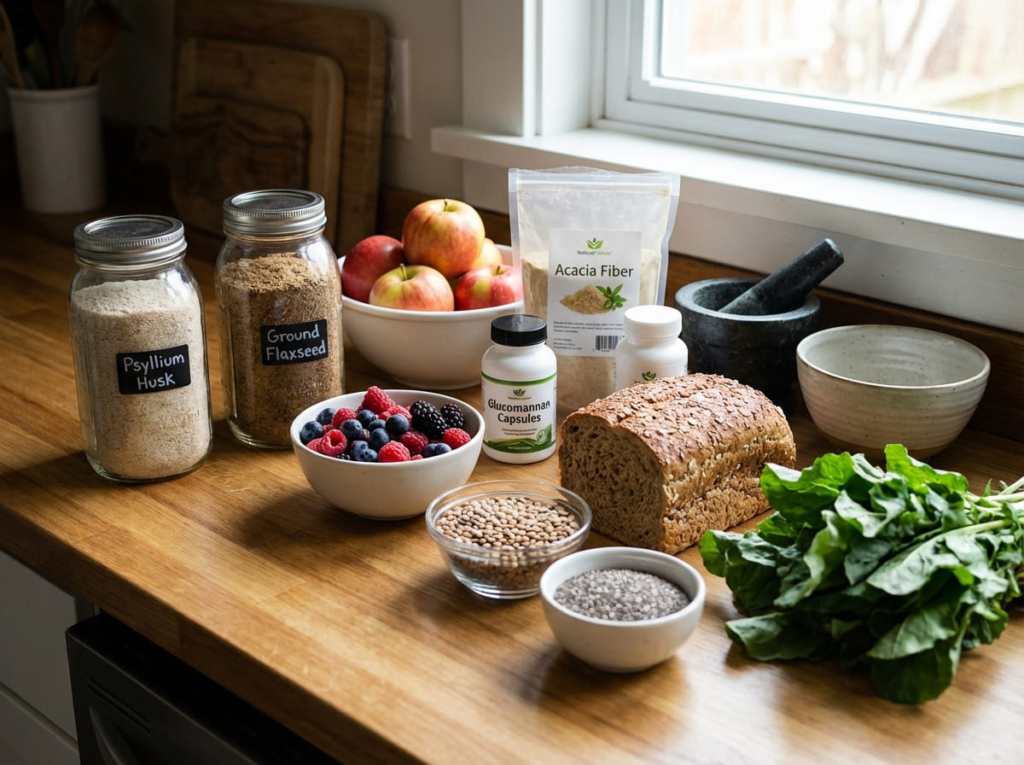
Fiber-Rich Foods: Your Daily Foundation
Fiber adds bulk to stool and helps it move through your intestines more efficiently. However, the type of fiber and how you add it matters significantly. Both soluble and insoluble fiber play important roles.
Target intake: Aim for 25-30 grams of fiber daily. Most people on GLP-1s consume only 12-15 grams, which isn’t enough to prevent constipation given the medication’s effects on gut motility.
High-Fiber Foods with Serving Sizes:
Vegetables (4-5g fiber per serving):
- 1 cup cooked broccoli: 5g fiber
- 1 medium sweet potato with skin: 4g fiber
- 1 cup cooked Brussels sprouts: 4g fiber
- 1 cup cooked carrots: 5g fiber
- 1 cup cooked spinach: 4g fiber
Fruits (3-8g fiber per serving):
- 1 cup raspberries: 8g fiber
- 1 cup blackberries: 8g fiber
- 1 medium pear with skin: 6g fiber
- 1 medium apple with skin: 4g fiber
- 1 medium banana: 3g fiber
Legumes (7-8g fiber per 1/2 cup cooked):
- 1/2 cup lentils: 8g fiber
- 1/2 cup black beans: 7g fiber
- 1/2 cup chickpeas: 6g fiber
- 1/2 cup pinto beans: 7g fiber
Whole Grains (4-5g fiber per serving):
- 1/2 cup cooked oats: 4g fiber
- 1 cup cooked quinoa: 5g fiber
- 2 slices whole wheat bread: 4g fiber
- 1/2 cup cooked brown rice: 2g fiber
Seeds (5-10g fiber per 2 tablespoons):
- 2 tablespoons chia seeds: 10g fiber
- 2 tablespoons ground flaxseed: 4g fiber
- 2 tablespoons hemp seeds: 2g fiber
Gradual increase is critical: Don’t jump from 15 grams to 30 grams of fiber overnight. This causes severe bloating, gas, and cramping. Increase by 5 grams per week over 3-4 weeks, allowing your digestive system to adjust.
Soluble vs. insoluble fiber: Soluble fiber (oats, beans, apples, chia seeds) absorbs water and creates softer stool. Insoluble fiber (vegetables, whole grains, seeds) adds bulk and speeds transit time. You need both types for optimal digestive health.
Cooking matters: Cooked vegetables are easier to digest and gentler on your system than raw vegetables when you’re dealing with GLP-1 side effects. Steaming, roasting, or sautéing breaks down fiber slightly, making it more tolerable while still providing benefits.
Daily Habits That Prevent Constipation
Consistency with these habits matters more than perfection on any single day. Build a routine that supports regular bowel movements.
Establish a bathroom routine: Try to have a bowel movement at the same time each day, ideally 15-30 minutes after breakfast or another meal. The gastrocolic reflex, your body’s natural urge to have a bowel movement after eating, is strongest in the morning.
Don’t ignore the urge: When you feel the need to have a bowel movement, go immediately. Delaying or ignoring the urge allows your colon to absorb more water from stool, making it harder and more difficult to pass later.
Stay consistently hydrated: Don’t just drink water when you remember. Build hydration into your routine: water upon waking, water with each meal, water between meals. Consistent hydration prevents the cycle of hard, dry stool.
Eat at regular times: Irregular eating patterns can disrupt your digestive rhythm. Try to eat around the same times each day, even if portions are small. This consistency helps regulate bowel function.
Include healthy fats: Don’t avoid fat completely in an effort to reduce calories. Healthy fats from olive oil, avocado, nuts, and fatty fish help lubricate your digestive tract and support bowel movements. Aim for 2-3 servings of healthy fats daily.
Prioritize sleep: Poor sleep disrupts digestive function and can worsen constipation. Aim for 7-9 hours of quality sleep. Your digestive system does significant repair and maintenance work during sleep.
Manage stress: Chronic stress affects gut motility and can contribute to constipation. Practice stress-reduction techniques like deep breathing, meditation, or gentle yoga. Even 5-10 minutes daily can help.
Position on the toilet: Use a small stool under your feet while sitting on the toilet to elevate your knees above your hips. This squatting position straightens your rectum and makes elimination easier and more complete.
Supplements vs. Food: What Works Best
Whole foods should always be your primary source of fiber and nutrients, but supplements have a place when food alone isn’t enough or when appetite is severely reduced.
When food is sufficient:
If you can consume 25-30 grams of fiber daily through whole foods and you’re having regular bowel movements (at least every 1-2 days without straining), you probably don’t need fiber supplements. Food provides fiber plus vitamins, minerals, and beneficial plant compounds that supplements don’t offer.
When supplements help:
Your appetite is so suppressed that you can’t eat enough high-fiber foods to reach 20-25 grams daily. You’re consistently constipated despite eating high-fiber foods and drinking adequate water. You need additional support during the first few weeks on GLP-1s or after dose increases when side effects are worst.
Effective fiber supplements:
Psyllium husk (Metamucil): Provides both soluble and insoluble fiber. Highly effective for constipation. Start with half the recommended dose and increase gradually. Must drink 8 ounces of water with each dose and another 8 ounces within the hour.
Methylcellulose (Citrucel): Pure soluble fiber that’s less likely to cause gas than psyllium. Gentler on the digestive system but may be less effective for severe constipation.
Acacia fiber: Soluble prebiotic fiber that dissolves completely in liquid. Well-tolerated with minimal gas. Works gradually rather than providing quick relief.
Inulin or chicory root fiber: Prebiotic fiber that feeds beneficial gut bacteria. Can cause significant gas and bloating in some people. Start with very small amounts (1-2 grams) and increase slowly.
Supplement guidelines:
Take fiber supplements at least 2 hours away from medications, as fiber can interfere with absorption. Drink plenty of water with all fiber supplements. Inadequate water intake with fiber supplements can worsen constipation rather than relieve it.
Start with half the recommended dose for any fiber supplement and increase gradually over 7-10 days. This prevents severe bloating and digestive discomfort.
If you don’t see improvement after 5-7 days at the full dose, try a different type of fiber supplement. Individual responses vary significantly.
Other helpful supplements:
Probiotics: May help improve overall gut health and regularity, though research is mixed on their effectiveness specifically for constipation. Look for products containing Bifidobacterium or Lactobacillus strains.
Vitamin C: In higher doses (500-2000mg), vitamin C can have a mild laxative effect by drawing water into the intestines. Start low and increase gradually to assess tolerance.
Prune juice: While not a supplement, prune juice contains both fiber and sorbitol, a natural sugar alcohol that draws water into the intestines. Try 4-8 ounces daily. Actual prunes (4-5 prunes) provide the same benefits with more fiber.
When to See a Doctor About GLP-1 Constipation Symptoms
Most constipation on GLP-1 medications responds well to the strategies outlined above within a few days to a week. However, certain situations require medical evaluation and intervention.
Contact your healthcare provider if:
No bowel movement for 4-5 days despite adequate fiber, water, and the immediate relief strategies. This level of constipation may require prescription medication or other interventions.
Severe abdominal pain or cramping that doesn’t improve with bowel movements or passing gas. While mild discomfort can accompany constipation, severe or sharp pain might indicate a more serious issue.
Blood in your stool either bright red or dark/tarry. This always requires evaluation, as it can indicate anything from hemorrhoids to more serious conditions.
Unexplained weight loss beyond what’s expected from your GLP-1 medication and diet changes, especially if accompanied by persistent constipation.
Nausea and vomiting along with severe constipation, particularly if you can’t keep down food or fluids. This combination can indicate bowel obstruction or other serious problems.
Constipation alternating with diarrhea or other significant changes in bowel patterns beyond typical GLP-1 effects.
Persistent constipation despite 2-3 weeks of consistent high fiber intake, adequate hydration, regular movement, and appropriate supplements.
New or worsening symptoms after months of stable, managed constipation. Changes in established patterns can indicate that something else is developing.
Your healthcare provider has several options:
They might reduce your GLP-1 dose temporarily to see if lower levels provide relief while still supporting your weight loss goals. They can prescribe prescription medications like polyethylene glycol (MiraLAX) for daily use, which is generally safe for long-term management.
In some cases, they might prescribe prescription-strength stool softeners or osmotic laxatives. They can also rule out other causes of constipation like thyroid issues or other medication interactions.
Rarely, if constipation is severe and unmanageable despite all interventions, they might switch you to a different GLP-1 medication. Individual responses vary, and some people tolerate one medication better than another.
Important considerations:
Don’t rely on stimulant laxatives (like senna or bisacodyl) regularly without medical guidance. These can cause dependence where your bowel stops functioning normally without them. Occasional use is fine, but if you need them more than once or twice a week, consult your doctor.
Constipation shouldn’t be something you just accept as an unavoidable part of GLP-1 treatment. While some digestive changes are normal, persistent severe constipation indicates that adjustments are needed.
The goal is sustainable weight loss with tolerable side effects. Most people find an effective combination of dietary strategies, hydration, movement, and possibly supplements that keeps their digestive system functioning reasonably well throughout their GLP-1 journey. Work with your healthcare team to find what works for you rather than suffering through debilitating constipation.
More Lifestyle Tips When You're On GLP-1s