Why Exercise Matters on GLP-1 Medications
GLP-1s handle appetite suppression and weight loss, but they can’t tell your body to burn fat instead of muscle. Without strength training, your body breaks down both. Exercise sends the critical signal: preserve this muscle, it’s being used.
The result is better body composition, maintained metabolism, more energy, and weight loss that comes from fat, not lean tissue. You don’t need hours in the gym. These 10 foundational exercises done consistently protect your muscle while you lose weight.
Top 10 Exercises for GLP-1 Weight Loss and Muscle-Building
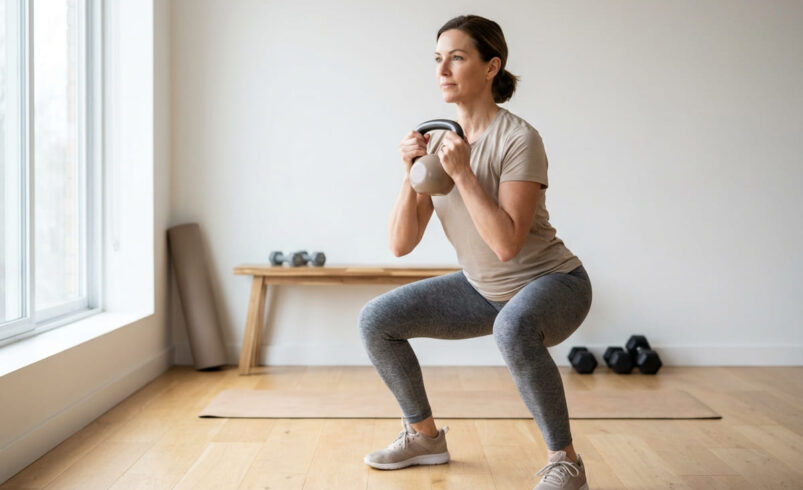
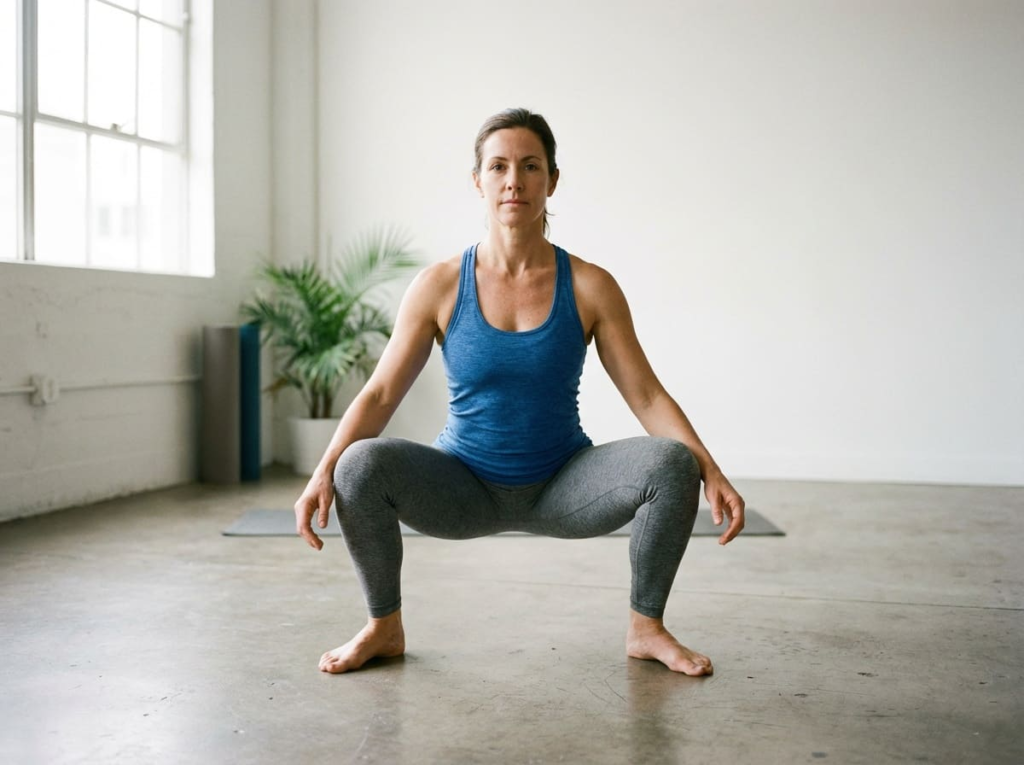
1. Squats – Build Legs, Burn Calories
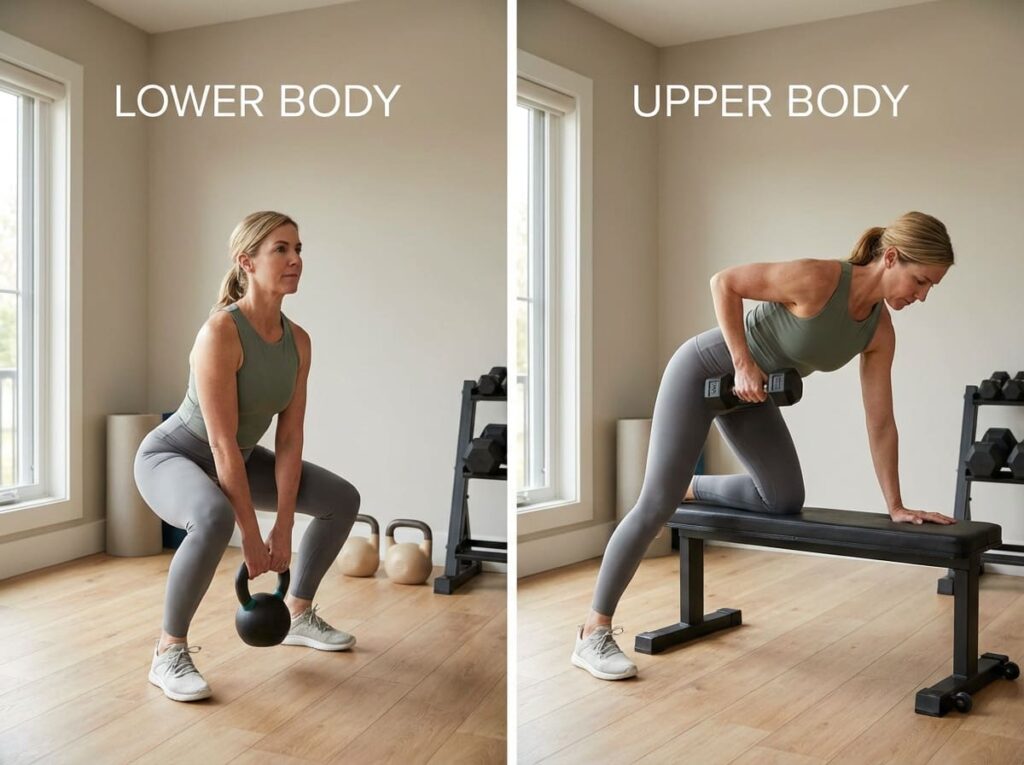
Why it works: Squats work your quadriceps, hamstrings, glutes, and core all at once. Your legs contain your largest muscle groups, so training them burns the most calories and has the biggest metabolic impact. This is the foundation exercise for lower body strength.
How to do it:
- Stand with feet shoulder-width apart, toes slightly pointed out
- Lower your hips back and down like sitting in a chair
- Keep chest up, weight in heels, knees tracking over toes
- Go as low as comfortable while maintaining form
- Drive through heels to stand back up
Modifications:
- Easier: Squat down to a chair and tap the seat before standing
- Harder: Hold dumbbells at chest height (goblet squat) or at your sides
Progression: Add pauses at the bottom, slow the tempo to 4 seconds down
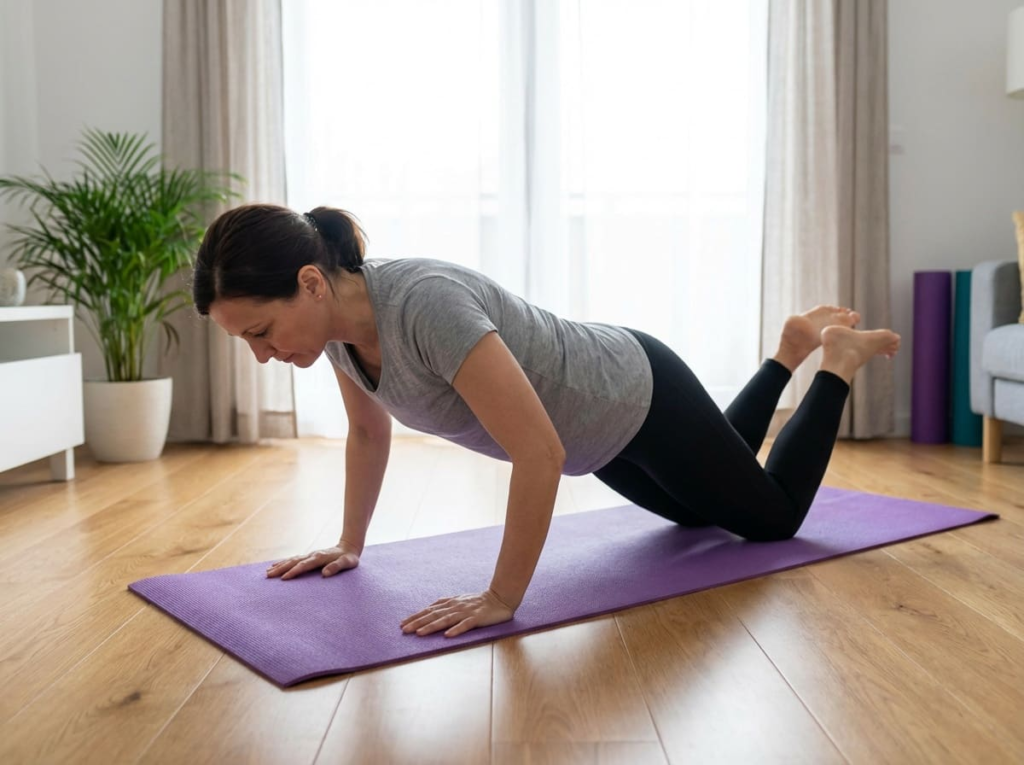
2. Push-ups – Upper Body Strength
Why it works: Push-ups build your chest, shoulders, triceps, and core without any equipment. They’re a fundamental upper body pushing movement that translates to real-world strength. Progressive variations keep them challenging as you get stronger.
How to do it:
- Start in plank position, hands slightly wider than shoulders
- Lower chest toward floor by bending elbows
- Keep body in straight line, core tight
- Push back up to starting position
- Elbows should track at about 45 degrees from body
Modifications:
- Easier: Hands on wall, hands on chair, or on knees
- Harder: Feet elevated on chair, add 3-second pause at bottom
Progression: Diamond push-ups for triceps, decline push-ups for more difficulty
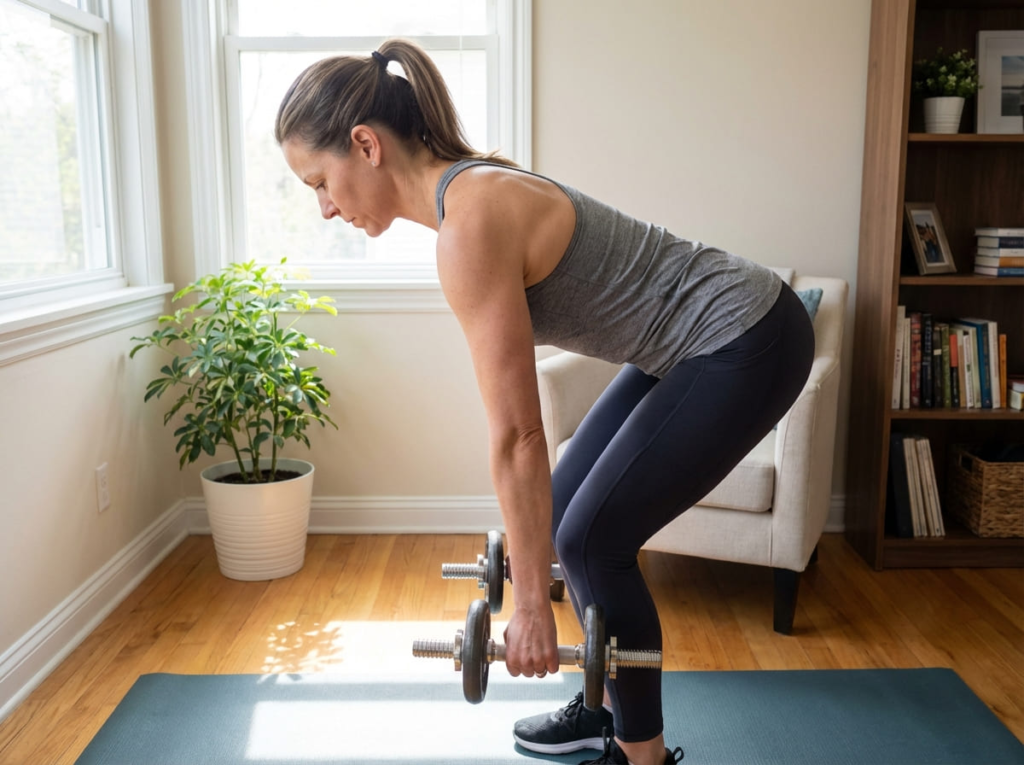
3. Deadlifts – Full Body Power
Why it works: Deadlifts work your entire posterior chain (hamstrings, glutes, back) plus core and grip strength. They’re one of the most efficient exercises you can do, engaging nearly every muscle in your body. Builds serious functional strength for daily activities.
How to do it:
- Stand with feet hip-width apart, weight in front of you on ground
- Bend at hips and knees to grip the weight, back flat, chest up
- Drive through heels to stand straight, pulling weight along your legs
- Keep weight close to body throughout
- Lower back down with control, maintaining flat back
Modifications:
- Easier: Romanian deadlifts (less range of motion), kettlebell deadlifts
- Harder: Single-leg deadlifts, slow eccentric (4 seconds down)
Progression: Increase weight gradually, trap bar deadlifts for easier form
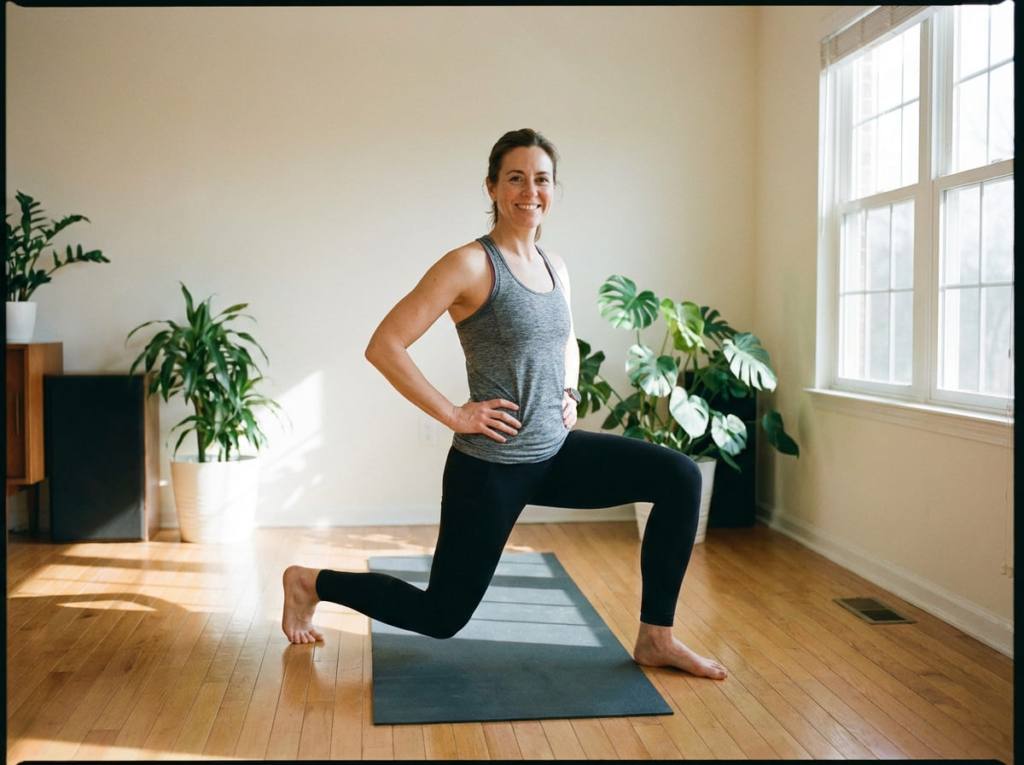
4. Lunges – Balance and Legs
Why it works: Lunges work the same muscles as squats but add a balance component and work each leg independently. This corrects strength imbalances and builds functional single-leg strength needed for walking, climbing stairs, and daily movement.
How to do it:
- Stand tall, step forward with one leg
- Lower back knee toward ground until front thigh is parallel to floor
- Keep torso upright, front knee tracking over toes
- Push through front heel to return to standing
- Alternate legs or complete all reps on one side first
Modifications:
- Easier: Reverse lunges (step back instead of forward), hold wall for balance
- Harder: Walking lunges, hold dumbbells at sides
Progression: Bulgarian split squats (back foot elevated), jumping lunges
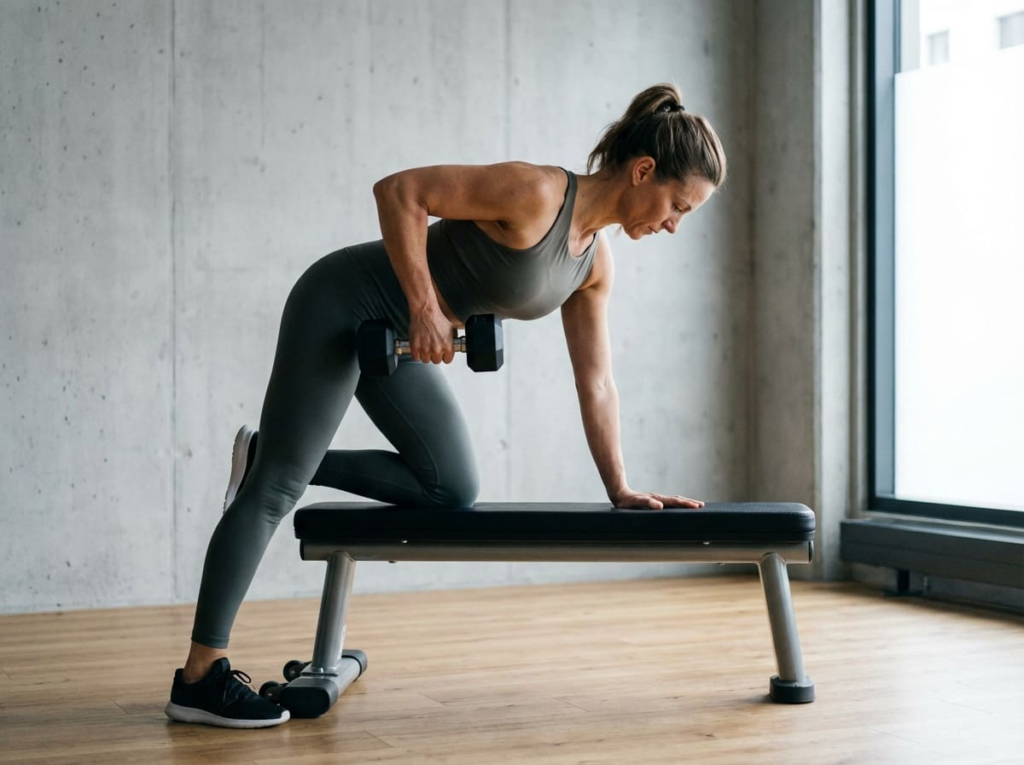
5. Rows – Back Strength
Why it works: Rows develop your back muscles, biceps, and rear shoulders. Essential for balanced upper body development and good posture. Counteracts the forward-hunched position many people develop from daily life and too much pushing exercise.
How to do it:
- Hinge forward at hips, holding dumbbells with arms hanging straight
- Pull weights toward hips by driving elbows back
- Squeeze shoulder blades together at top
- Keep core tight, back flat throughout
- Lower weights with control
Modifications:
- Easier: Single-arm rows with hand on bench for support, resistance band rows
- Harder: Bent-over barbell rows, pendlay rows (weight touches ground each rep)
Progression: Inverted rows under table, eventually progress toward pull-ups
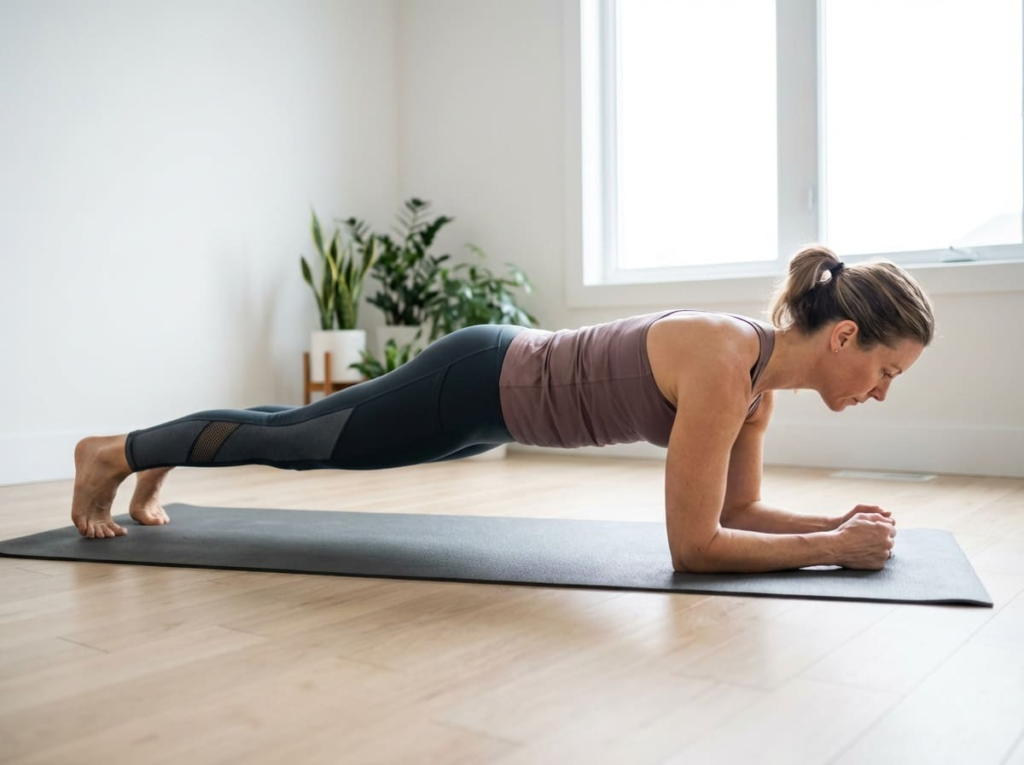
6. Planks – Core Stability
Why it works: Planks build core strength and stability that protects your lower back during other exercises and daily activities. Engages your entire core, including deep stabilizing muscles you can’t hit with crunches. Improves posture and overall body control.
How to do it:
- Get into forearm plank, elbows under shoulders
- Body forms straight line from head to heels
- Keep core tight, glutes engaged
- Breathe normally, don’t hold breath
- Hold position for time (30-60 seconds)
Modifications:
- Easier: Plank on knees instead of toes, hold for 15-20 seconds
- Harder: Lift one leg, side planks, plank shoulder taps
Progression: Weighted plank (plate on back), plank up-downs, walking planks
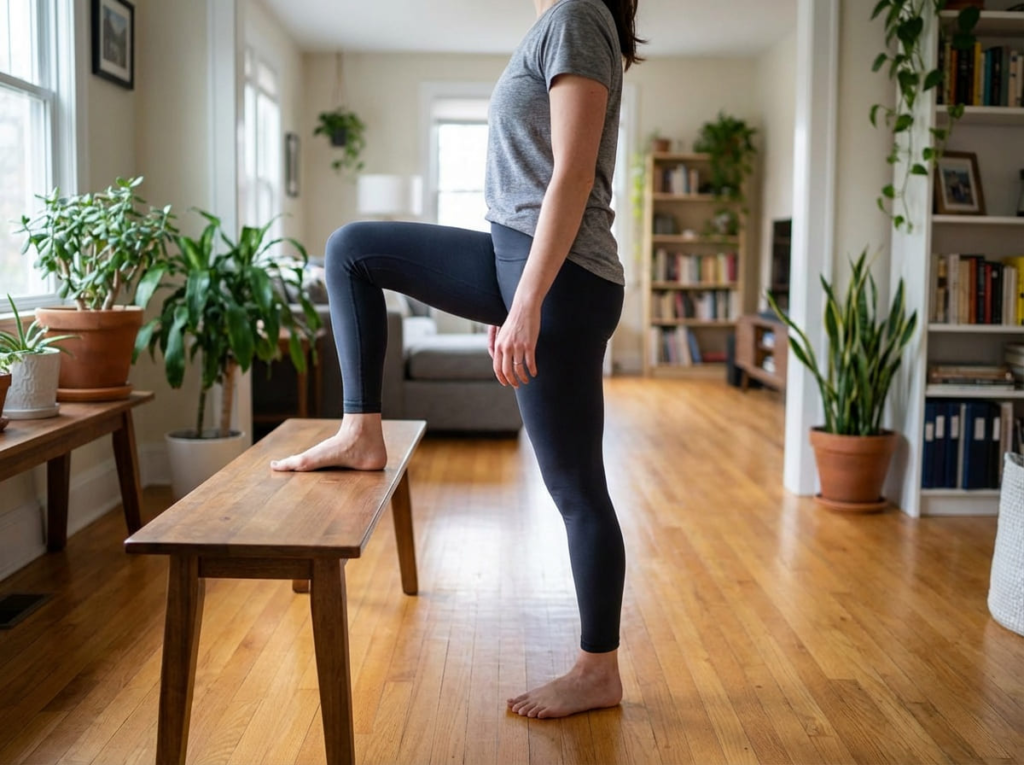
7. Step-ups – Functional Strength
Why it works: Step-ups mimic real-world movements like climbing stairs. Works each leg independently, builds glutes and quads, improves balance and coordination. Easily scalable by adjusting step height or adding weight.
How to do it:
- Stand facing a sturdy bench, box, or step
- Place one foot on elevated surface
- Push through elevated heel to step up, bringing other foot up
- Step back down with control
- Complete all reps on one leg before switching
Modifications:
- Easier: Lower step height (use stairs), hold railing for balance
- Harder: Hold dumbbells at sides, use higher step, add knee drive at top
Progression: Explosive step-ups (drive up quickly), lateral step-ups
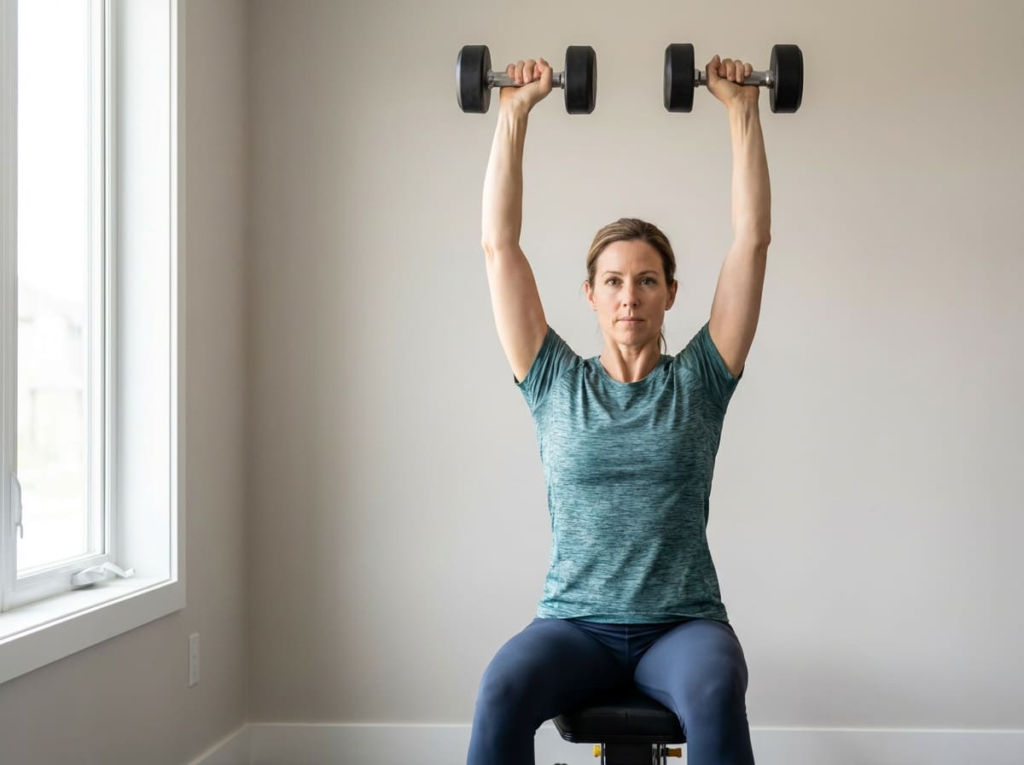
8. Shoulder Press – Upper Body Power
Why it works: Shoulder press builds strength in shoulders, upper chest, and triceps. Improves overhead mobility and functional pushing strength. Critical for balanced upper body development and healthy shoulder joints.
How to do it:
- Stand or sit holding dumbbells at shoulder height, palms forward
- Press weights straight overhead until arms fully extended
- Lower back to shoulder height with control
- Keep core tight, avoid excessive lower back arch
- Weights should move in straight line up and down
Modifications:
- Easier: Seated with back support, use lighter weights, single-arm variations
- Harder: Standing barbell press, push press (use slight leg drive)
Progression: Increase weight gradually, tempo variations (3 seconds down)
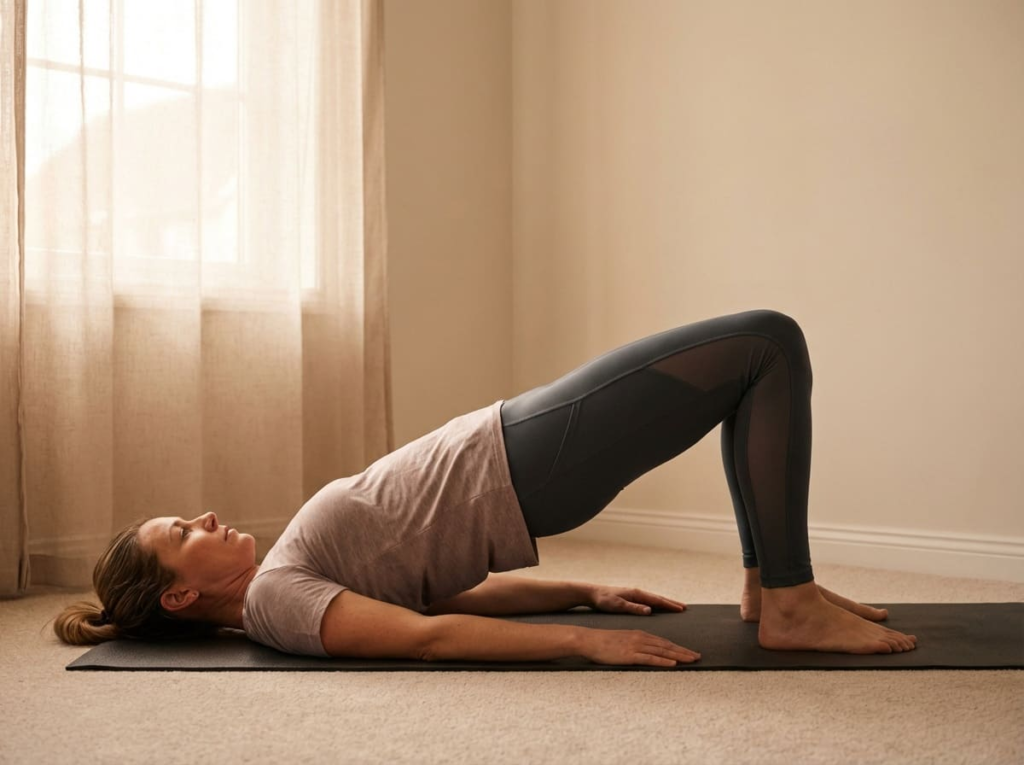
9. Glute Bridges – Posterior Chain
Why it works: Glute bridges target glutes and hamstrings, the muscles on the back of your body that are often undertrained. Improves hip extension strength, helps with lower back health, and builds a strong posterior chain. No equipment needed.
How to do it:
- Lie on back, knees bent, feet flat on floor hip-width apart
- Press through heels to lift hips toward ceiling
- Squeeze glutes hard at top, body forms straight line from knees to shoulders
- Hold briefly at top
- Lower back down with control
Modifications:
- Easier: Reduce range of motion, hold top for shorter time
- Harder: Single-leg glute bridges, hold top for 5 seconds, add weight on hips
Progression: Hip thrusts on bench (greater range of motion), banded bridges
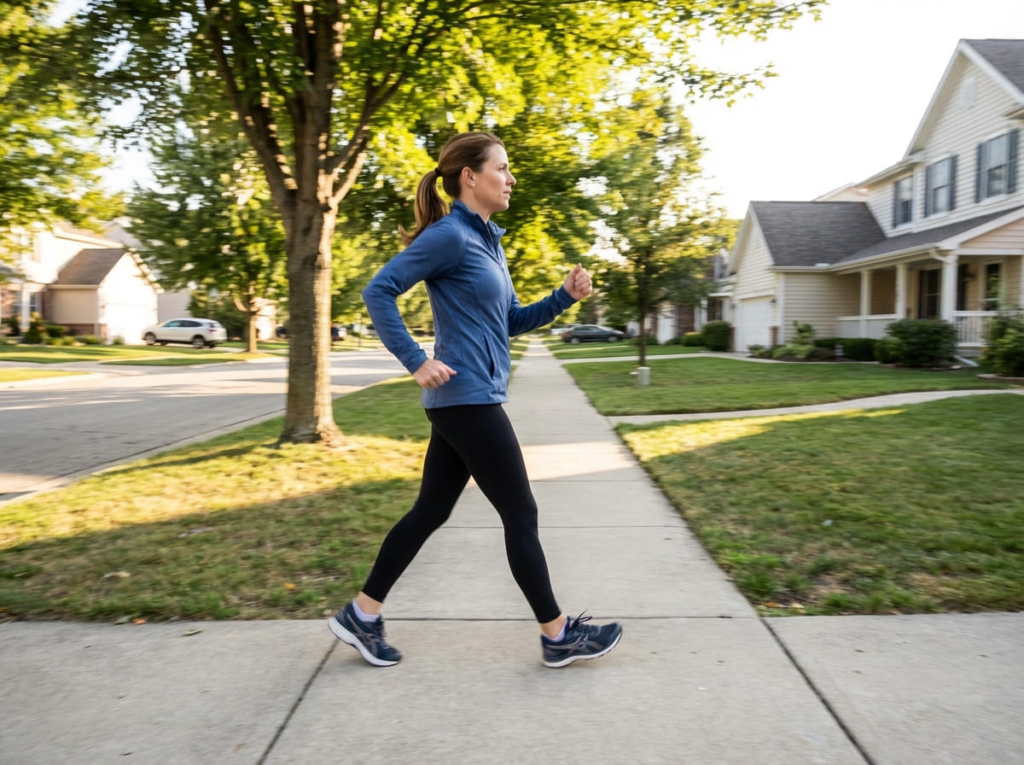
10. Walking – Low-Impact Cardio on GLP-1s
Why it works: Walking provides cardiovascular benefits without the intensity that can feel overwhelming when energy is low on GLP-1s. Aids digestion, helps with constipation, improves mood, and burns calories without breaking down muscle tissue. Perfect daily movement habit.
How to do it:
- Walk at a brisk pace where you can talk but not sing
- Maintain upright posture, engage core slightly
- Swing arms naturally
- Aim for 20-30 minutes daily minimum
- Increase duration or add incline as fitness improves
Modifications:
- Easier: Slower pace, shorter duration (10-15 minutes), flat surfaces
- Harder: Add incline (hills or treadmill), increase pace, extend to 45-60 minutes
Progression: Weighted vest, walking lunges mixed in, interval walking (fast/slow)
How to Combine These Exercises on GLP-1 Medications
Pick 4-5 exercises per workout session. Hit all major muscle groups twice per week minimum. Here’s a simple structure:
Day 1: Lower body focus Squats, Lunges, Glute Bridges, Planks
Day 2: Upper body focus Push-ups, Rows, Shoulder Press, Planks
Day 3: Full body Deadlifts, Step-ups, Push-ups, Glute Bridges
Daily: Walking 20-30 minutes minimum
Do 3 sets of 8-12 reps for strength exercises. Hold planks for 30-60 seconds. Rest 60-90 seconds between sets.
The Bottom Line on Best Exercises for GLP-1 Users
These 10 exercises provide everything you need to preserve muscle, burn fat, and maintain strength while losing weight on GLP-1 medications. Focus on compound movements that work multiple muscle groups. Start with easier modifications if needed, then progress as you get stronger.
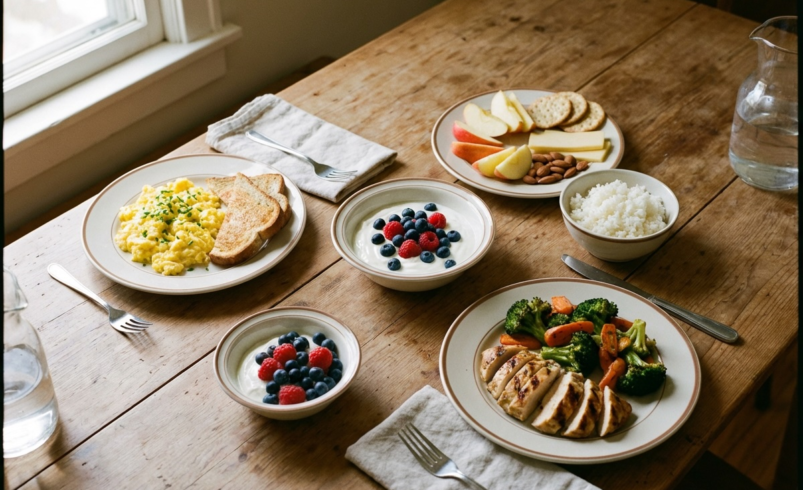
Combined with adequate protein intake (60-100g daily), these exercises prevent the significant muscle loss that occurs when people rely on appetite suppression alone. You don’t need fancy equipment or complicated programs. Just consistency with these foundational movements three times per week.
Related Articles: