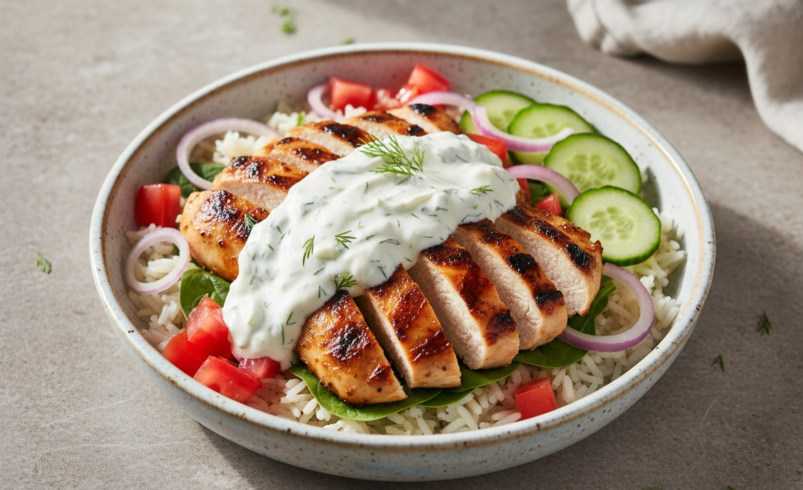
Greek Chicken Bowl with Tzatziki (GLP-1 High-Protein Lunch)
- December 21, 2025
- 0
This Greek chicken bowl with tzatziki is designed specifically for GLP-1 users who want a high-protein, flexible meal that’s easy to portion and tolerate.
What’s a high-protein lunch that works with GLP-1 medications like Ozempic or Mounjaro? This Greek chicken bowl delivers 35g of protein with a light yogurt-based tzatziki that won’t trigger nausea. The bowl format lets you eat as much or as little as your appetite allows, and it tastes great at any temperature.
Quick Recipe Info:
Bowl meals saved me during those first few months on my GLP-1 weight loss journey when I had no idea what my appetite would be like from one day to the next. Some days I could eat a full meal. Other days I’d take three bites and be done. The beauty of a bowl is that you can see everything at once and make decisions in real time. Eat all the chicken and skip half the rice. Add extra cucumber if that’s what sounds good. There’s no pressure to finish anything.
This Greek chicken bowl became my weekly staple because it delivers 35 grams of protein without feeling heavy. The tzatziki adds this creamy richness that makes everything taste better without the heaviness of ranch or mayo. Everything can be prepped ahead and assembled when you’re ready.
Table of Contents
Toggle
Per Serving
Bowl meals solve the biggest problem I’ve faced on GLP-1 medications: not knowing how much I can actually eat until I start eating.
You can see all your food at once and make decisions as you go. Start with the chicken. See how you feel. Add some vegetables. Check in with your body. Maybe skip the grain entirely if you’re already getting full.
The 35 grams of protein here is roughly one-third of what most people need daily. That’s significant. The chicken is lean and well-seasoned without heavy sauces that might trigger nausea. When you’re trying to preserve muscle while losing weight, getting this much protein in one meal that you can actually finish is huge.
What I love about this format is the flexibility. Having a rough day with your appetite? Eat half the chicken and all the cucumber because that’s what sounds good. Feeling stronger? Add an extra chicken breast. The separate components mean you’re never stuck forcing down something that doesn’t appeal to you in that moment.
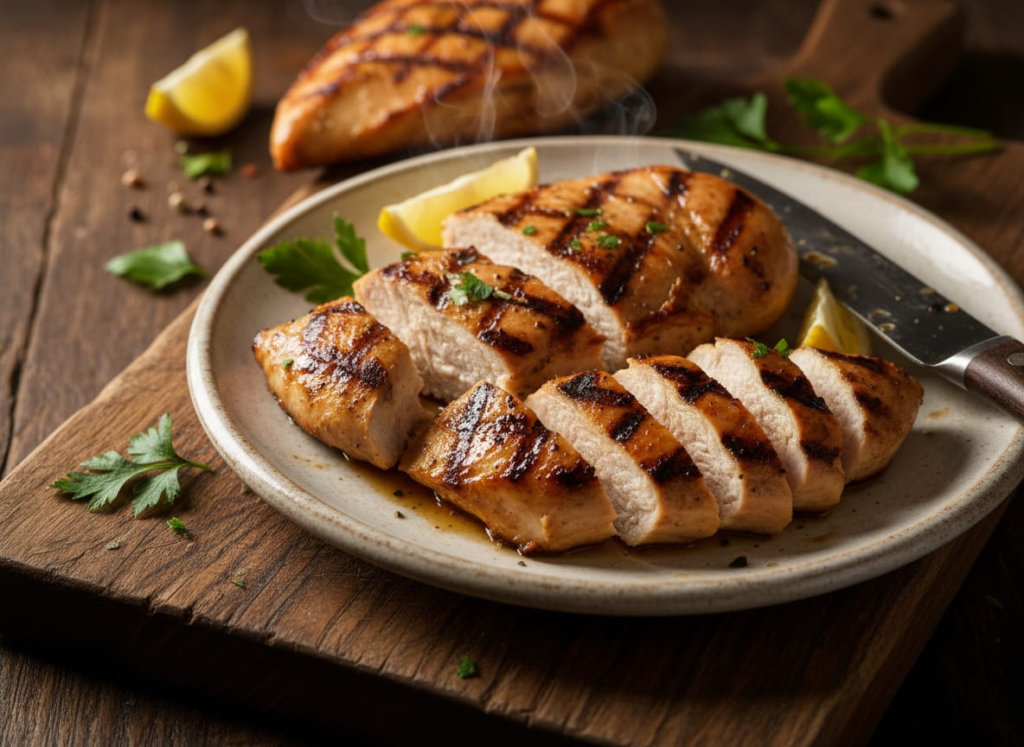
Grilled chicken is also one of the easiest proteins to digest. It’s lean and tender when cooked properly. The tzatziki adds moisture and creaminess without grease. Greek yogurt-based sauces have been way easier on my stomach than cream-based or mayo-based options.
One pound gives you about 100 grams of lean protein total, split into two servings. Chicken is a complete protein with all the amino acids you need for muscle preservation. The minimal fat content makes it easier to digest when your stomach is emptying slowly.
I always buy boneless, skinless because it’s the leanest cut and the most versatile. The neutral flavor means it takes on whatever marinade you use, and it reheats well without getting dry if you store it properly.
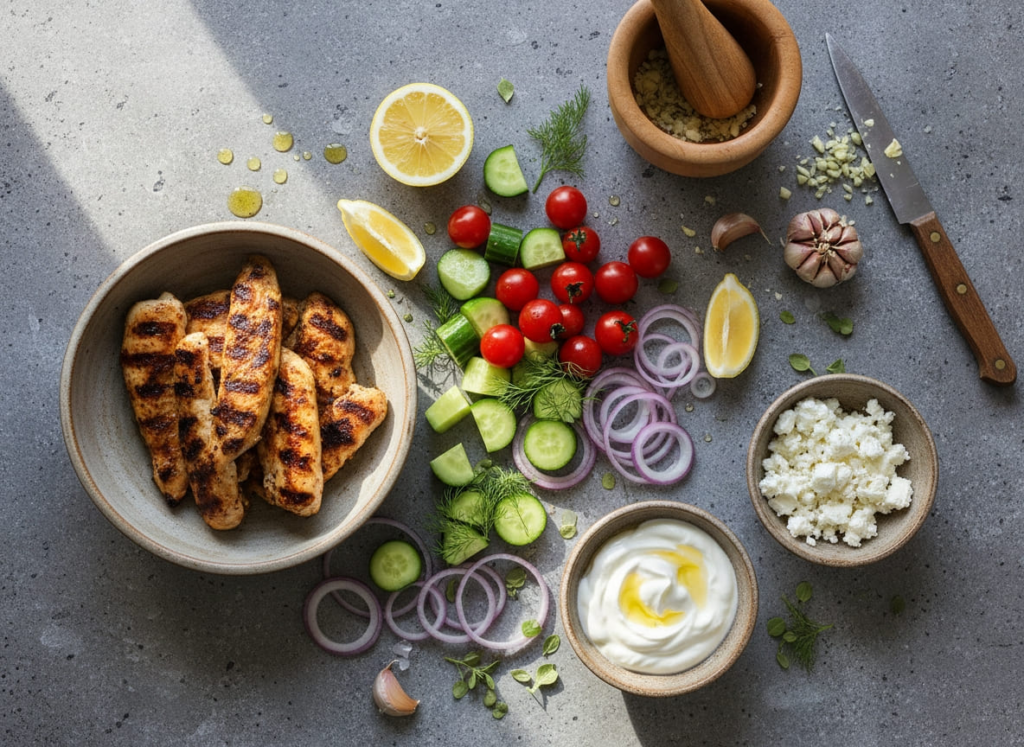
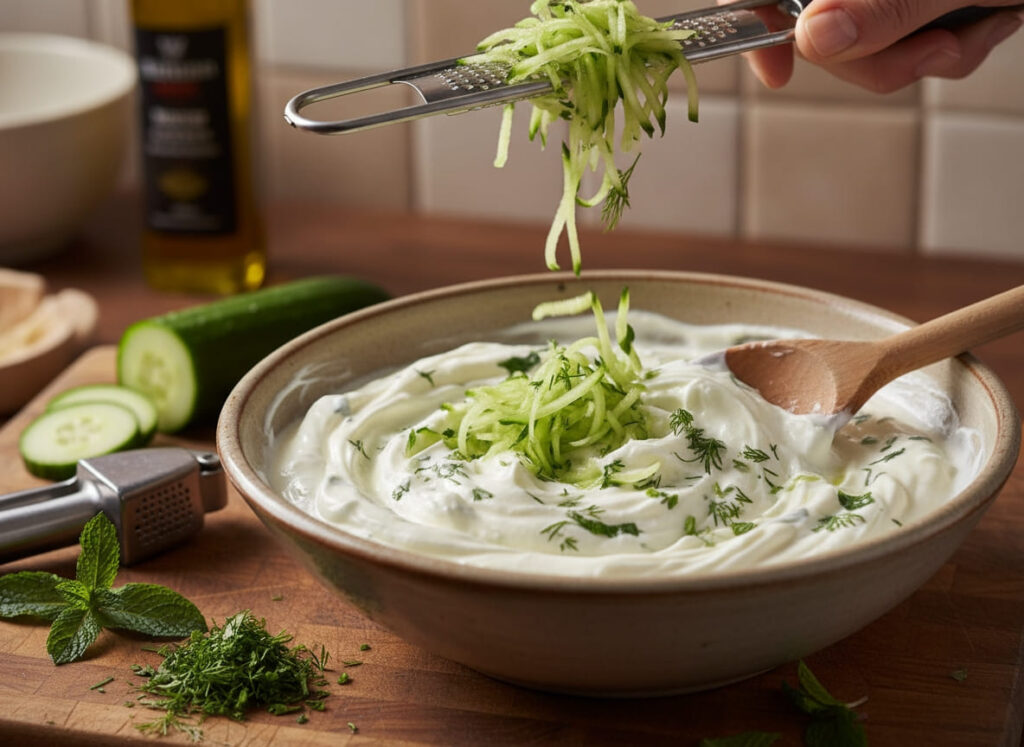
The cup of Greek yogurt in the tzatziki adds 15-20 grams of protein plus probiotics. Using Greek yogurt instead of sour cream or mayo keeps the sauce protein-rich while maintaining that creamy texture you want. The probiotics might help with gut health, which matters when medications are affecting your digestion.
The tangy flavor is perfect here. It brightens everything and cuts through the richness of the feta. Plus, it’s cooling and soothing if you’re dealing with any stomach discomfort.
Fresh blueberries bring more than just flavor. At only 40 calories per half-cup, they add fiber, vitamin C, and powerful antioxidants that support overall health during weight loss.
The fiber is particularly valuable when you’re on GLP-1s. These medications slow gastric emptying, which helps you feel full, but some people experience constipation as a side effect. The natural fiber in blueberries supports digestive regularity without being harsh or uncomfortable. Plus, blueberries provide natural sweetness without added sugar.
Both provide complex carbs for sustained energy without blood sugar spikes. Quinoa is technically a seed and contains all nine essential amino acids, adding an extra 4 grams of protein per half-cup. Brown rice offers fiber and B vitamins.
The portion here is moderate because I’ve learned that most people on GLP-1s fill up on protein and vegetables before finishing their grains. That’s fine. The grain is there if you want the energy and satisfaction, but it’s not required.
Start with less grain than you think. If you’re early in your journey or just increased your dose, use 1/4 cup cooked quinoa instead of 1/2 cup. You can always add more. I’ve thrown away too much leftover rice because I overestimated what I could eat.
Eat the chicken first. Prioritize protein. Eat most or all of your chicken before moving to the grain and vegetables. This ensures you get adequate protein even if you can’t finish the bowl. I learned this after too many meals where I filled up on rice and barely touched my protein.
Temperature is totally flexible. This bowl works cold from the fridge, at room temperature, or with slightly warmed chicken and cold vegetables. Choose based on what sounds appealing. I go through phases where cold food is all I can handle, and this bowl accommodates that perfectly.
Skip what doesn’t appeal. If red onion sounds too strong, leave it out. If olives don’t do it for you, skip them. The core components are chicken, grain, vegetables, and tzatziki. Everything else is customizable based on your preferences and tolerance.
Make extra tzatziki. It’s useful for way more than just this bowl. Use it as a dip for vegetables, spread it on wraps, or sauce other proteins. Having versatile components makes meal planning so much easier when you’re already dealing with reduced appetite.
Watch your portion sizes. Start smaller than you think you need. You can always get more from the fridge 20-30 minutes later if you’re still hungry. Overfilling your bowl can feel overwhelming before you even start eating.
Component storage: Store everything separately in airtight containers. Cooked chicken keeps for 4 days, tzatziki for 3-4 days, cooked grains for 5 days, and prepped vegetables for 3-4 days.
Chicken prep: Grill or bake 3-4 chicken breasts at once. Slice one for immediate use and store the others whole. Whole breasts retain moisture better than pre-sliced.
Tzatziki prep: Make a double batch. It keeps well and you’ll use it throughout the week for multiple meals.
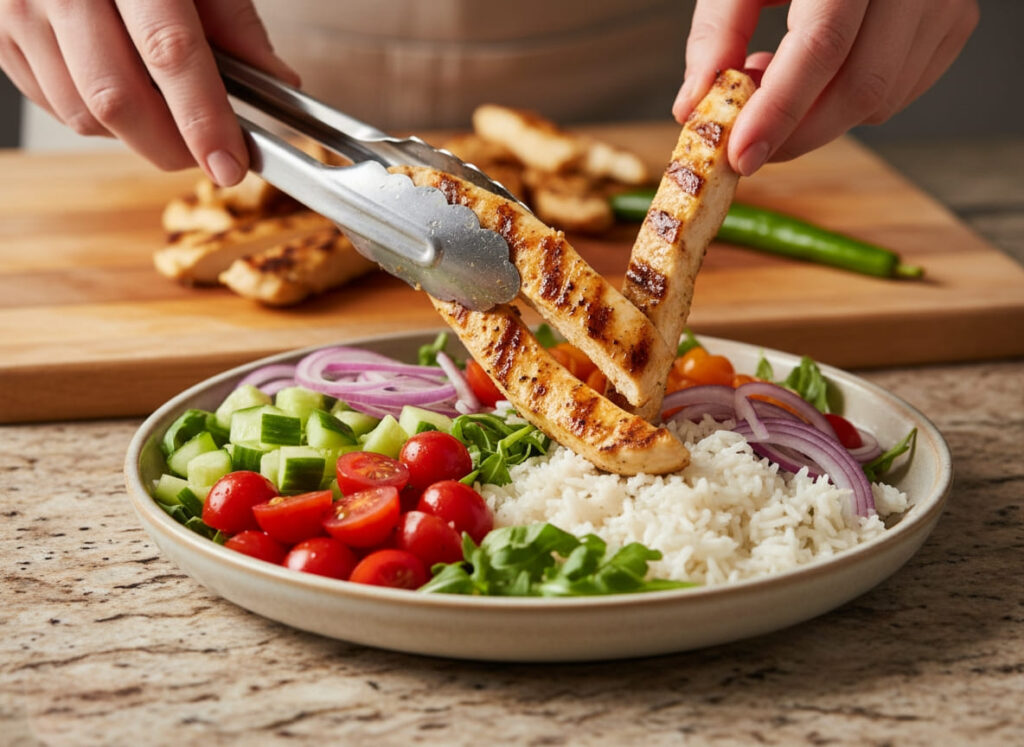
Assembly strategy: Prep all components on Sunday. Each day, assemble fresh bowls in 5 minutes. This prevents soggy vegetables and maintains the best texture and flavor.
Freezer note: Cooked chicken freezes well for up to 2 months. Tzatziki does not freeze well because of the cucumber and yogurt. Grains freeze okay but the texture changes slightly.
Grab and go: Pack components in a divided container for work lunches. Keep tzatziki in a separate small container to prevent everything from getting soggy.
Can I eat chicken bowls on Ozempic?
Yes. Chicken bowls are excellent for GLP-1 users because you control portions of each component. The high protein supports muscle maintenance, and the separate elements let you adjust based on appetite and tolerance each day.
Is Greek food good for people on semaglutide?
Greek food tends to be very GLP-1 friendly. It emphasizes lean proteins, vegetables, and healthy fats without heavy cream sauces or fried foods. The bright, fresh flavors are often well-tolerated even when taste preferences change on medication.
Can I meal prep this for the week?
Yes, but store components separately. Cooked chicken keeps 4 days, so if you want 5 days of meals, cook chicken twice a week on Sunday and Wednesday. Assemble fresh each day for best quality.
What if I don’t like quinoa?
Use brown rice, white rice, cauliflower rice, or skip the grain entirely. Some people on GLP-1s fill up on protein and vegetables before finishing grains. That’s perfectly fine and still gives you a complete, balanced meal.
How can I add more vegetables?
Add roasted red peppers, spinach, artichoke hearts, or roasted zucchini. All work well with Mediterranean flavors. Roasted vegetables are often easier to digest than raw for some people.
Is this too much food for one meal?
It might be, especially early in treatment. Start with half portions and save the rest. Or eat the chicken and vegetables first, then see if you have room for the grain. Listen to your body.

Have you tried this recipe yet? Share your experience in the comments below and let us know how it worked with your GLP-1 journey!