Sesame Ginger Salmon with Rice (GLP-1 High-Protein Meal)
- December 27, 2025
- 0
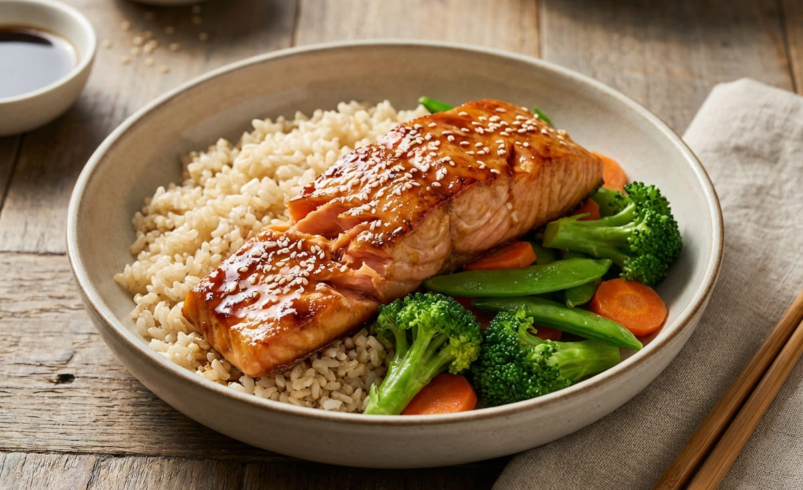
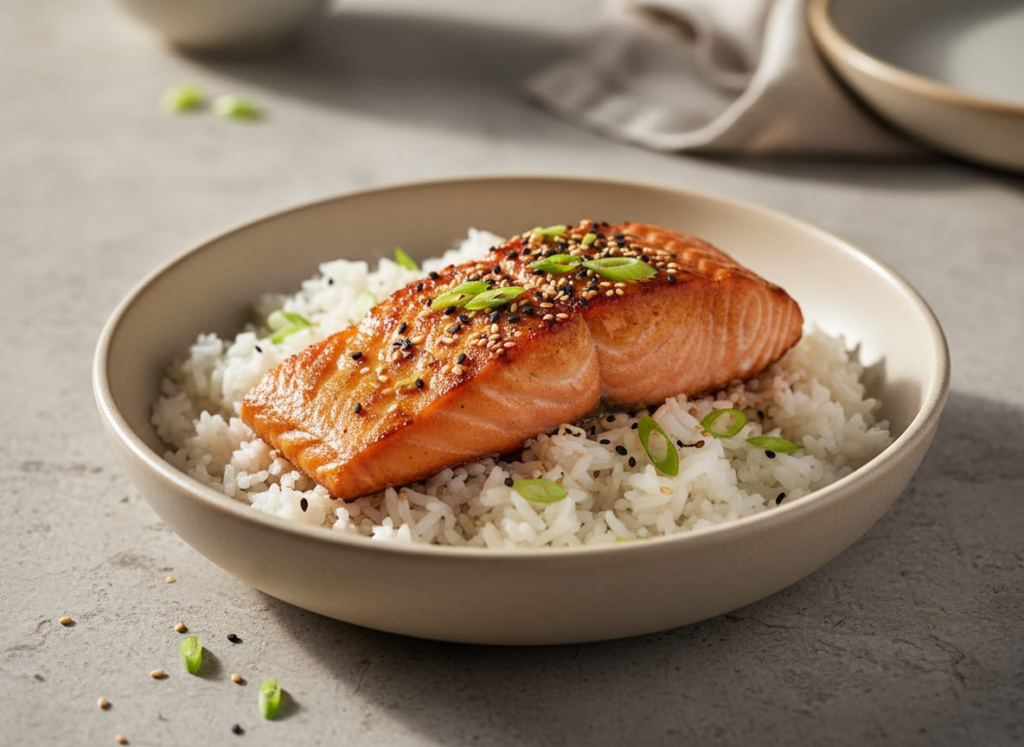
This sesame ginger salmon with rice is ideal for GLP-1 users who need a high-protein, omega-3 rich meal that feels light and satisfying.
Is salmon okay to eat on GLP-1 medications? Salmon is one of the best proteins for GLP-1 users thanks to its soft, flaky texture and 2,000mg of anti-inflammatory omega-3s per serving. This sesame ginger version delivers 32g of protein in 25 minutes, and the fresh ginger may actually help settle nausea rather than make it worse.
Quick Recipe Info:
About a month into my GLP-1 weight loss journey, I had this revelation: not all proteins are created equal when your stomach is running on low power mode. Red meat made me feel like I’d swallowed a brick. Chicken was hit or miss. But salmon? Salmon was the protein my body actually wanted.
The combination of tender, flaky fish with bright ginger flavor creates a meal that’s actually appealing when nothing else sounds good. The whole thing takes 25 minutes, gives you 32 grams of protein, and looks restaurant-quality without requiring you to eat a massive portion. Plus, that ginger might actually help settle your stomach instead of making things worse.
Table of Contents
Toggle
Per Serving – (Per Serving)
Here’s the thing about salmon when you’re on GLP-1s. It’s one of those rare foods that checks every box you need without making you feel terrible afterward. The texture is soft and flaky, so you’re not sitting there chewing forever. The omega-3s are doing actual work for your body during weight loss. And unlike chicken breast that can feel dry and boring, salmon has enough natural fat to be satisfying without that greasy, heavy feeling.
I’ve noticed that the ginger in this recipe does something interesting. Some days when I’m dealing with low-grade nausea, that bright, slightly spicy flavor actually cuts through it instead of making it worse. Your mileage may vary, but fresh ginger has this way of waking up your taste buds when everything else tastes like cardboard.
The portion size here is strategic. Four ounces of salmon looks substantial on the plate, but it’s not overwhelming. Add the rice and broccoli, and you’ve got a complete meal that doesn’t require you to eat until you’re uncomfortable. That’s the sweet spot we’re all trying to find on these medications.
The star here is obviously the omega-3 content. Each serving gives you about 2000mg, which matters when you’re losing weight and need all the anti-inflammatory support you can get. Salmon is also ridiculously easy to digest compared to other proteins. The protein quality is excellent, and unlike red meat, it doesn’t sit in your stomach for hours.
Wild-caught versus farmed is your call. The nutritional difference is minimal, so buy what fits your budget. I’ve used both and honestly can’t tell the difference when it’s covered in this marinade.
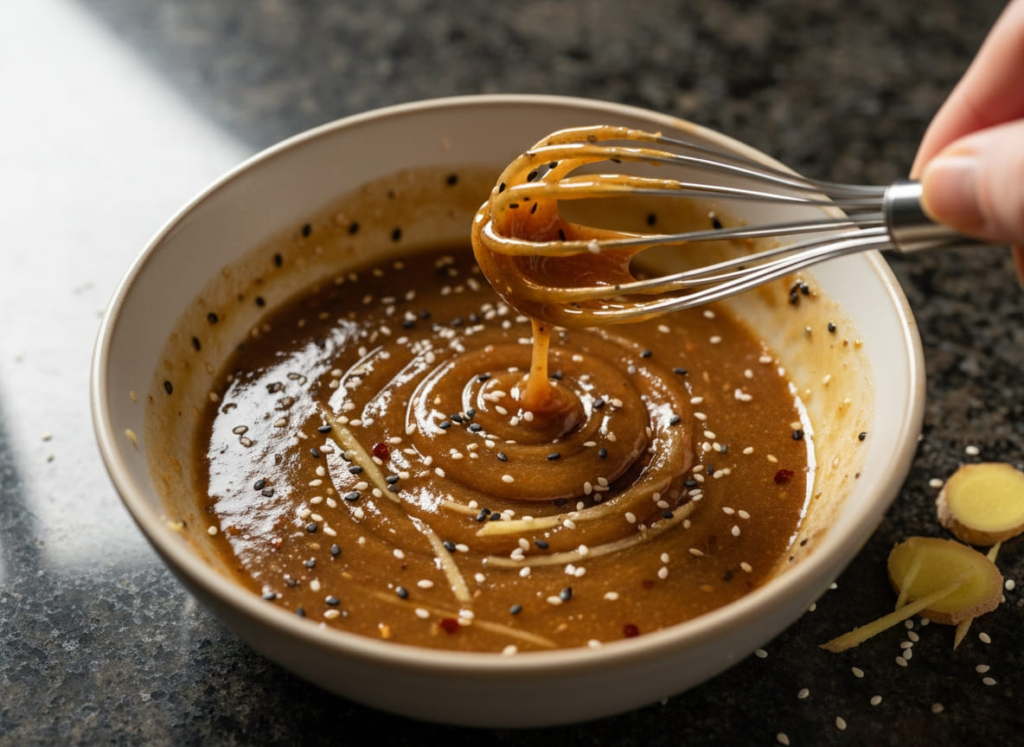
Fresh ginger is non-negotiable here. The bottled stuff just doesn’t have the same bright, clean flavor. Ginger contains compounds that may help with nausea, though everyone responds differently. What I can tell you is that the flavor is distinctive enough to make this meal interesting without being overwhelming or spicy.
Brown rice digests slower and has more fiber. White rice is easier on your stomach and still gives you energy. I’ve gone back and forth depending on how I’m feeling. Neither is wrong. Choose based on what your body tolerates better that day.
Start smaller than you think. Four ounces might sound reasonable, but three ounces of salmon might be plenty. You can always eat more broccoli if you’re still hungry. I learned this after cooking full portions and then staring at half a fillet I couldn’t finish.
Temperature matters more than you’d expect. Some weeks, hot salmon sounds amazing. Other weeks, I let it cool to room temperature before eating because that’s what my body wants. Cook it fully, then adjust to your preference.
The rice is optional. I’m serious about this. Many days I eat the salmon and vegetables and skip the rice entirely because I’m full. That’s completely fine. The rice is there if you want the energy and satisfaction it provides, but it’s not required to make this meal work.
Don’t marinate too long. Fifteen minutes is enough. Any longer and the acid starts “cooking” the fish and changing the texture. I’ve made this mistake, and it’s not the end of the world, but fresh salmon tastes better.
Skin-on or off depends on you. The skin has extra omega-3s and gets crispy, which is delicious. But if you find it harder to digest, skip it. The nutritional difference won’t make or break your day.
Watch your ginger tolerance. If ginger sometimes bothers you, use half a tablespoon instead of a full tablespoon. You can always add more next time. Fresh ginger is generally gentler than dried, but everyone’s different.
Refrigerator: Cooked salmon keeps for 2-3 days in an airtight container. Store the rice and vegetables separately for best quality.
Reheating: Use 50% power in the microwave for 60-90 seconds, or warm gently in a skillet. High heat will dry it out. Honestly, I usually eat leftover salmon cold over salad because it’s easier and tastes great.
Freezer: Freeze uncooked marinated salmon for up to 2 months. Thaw overnight in the fridge before cooking. Cooked salmon technically freezes, but the texture gets weird.
Meal prep strategy: Cook the salmon fresh when you plan to eat it since it only takes 10 minutes. Make the marinade ahead and store it in a jar. Cook rice and vegetables in advance so you’re just cooking the fish day-of.
Leftover magic: Cold salmon works beautifully in lettuce wraps or over greens. This gives you multiple meal options from one batch without getting bored.
Is salmon good for people on Ozempic, Wegovy or semaglutide?
Yes. The high-quality protein supports muscle maintenance while you’re losing weight, and the omega-3s provide anti-inflammatory benefits your body needs. The healthy fats are easier to digest than saturated fats from red meat.
How much salmon should I eat on semaglutide?
Start with 3-4 ounces and see how you feel. The standard serving is 4-6 ounces, but you might find less is plenty. The protein and fats are filling, so trust your body’s signals.
Can I use frozen salmon?
Absolutely. Thaw it overnight in the fridge and pat it very dry with paper towels before marinating. This helps the marinade stick and the fish brown properly when cooking.
What if I don’t like salmon?
Try cod, halibut, or mahi-mahi with this marinade. Chicken breast works too, though you’ll lose the omega-3 benefits. Adjust cooking time based on thickness.
Why is my salmon dry?
You’re overcooking it. Salmon continues cooking after you remove it from heat, so take it off when it’s slightly underdone in the center. It will finish cooking as it rests.
Can I use bottled ginger?
Fresh tastes significantly better, but bottled minced ginger or ginger paste works if needed. Use about 2 teaspoons to replace 1 tablespoon fresh.

Have you tried this recipe? Share your experience in the comments below and let us know how it worked with your GLP-1 journey!