Sheet Pan Chicken with Roasted Vegetables (GLP-1 Dinner)
- January 2, 2026
- 0
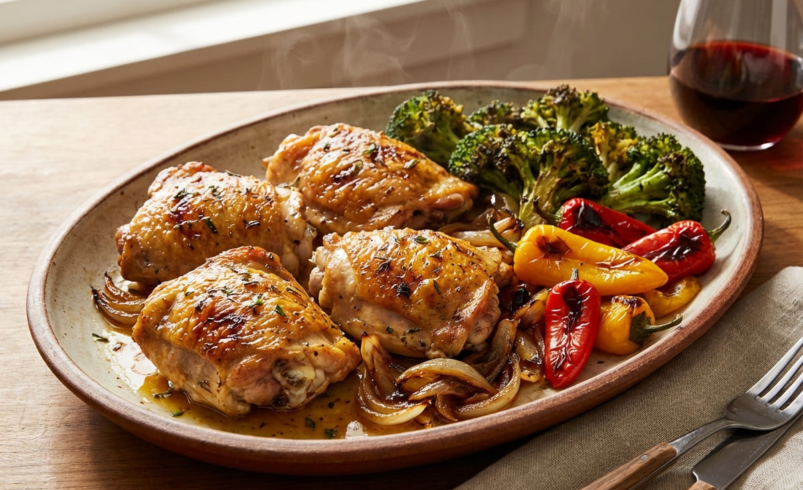
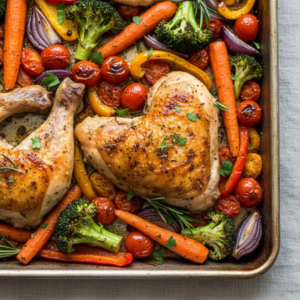
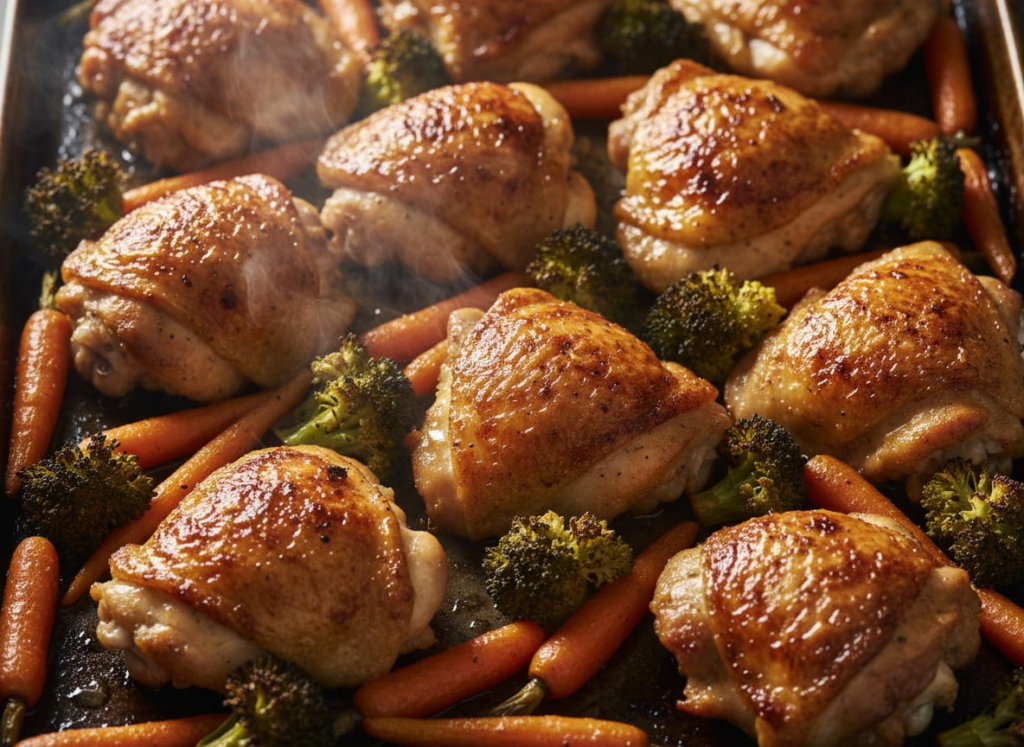
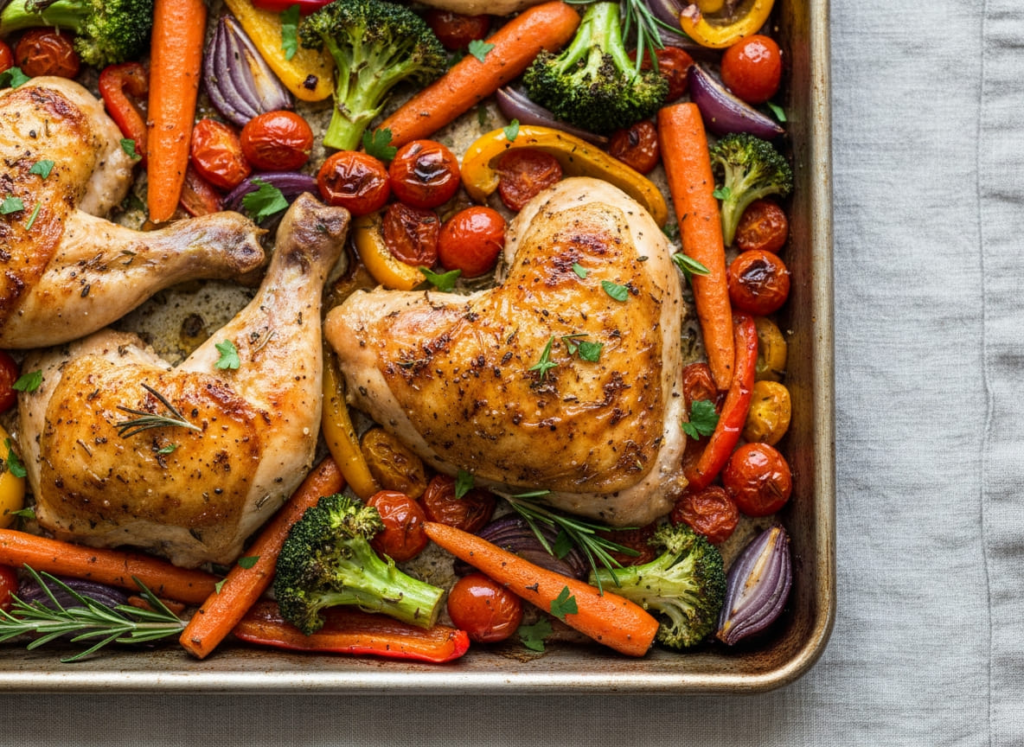
This sheet pan chicken with roasted vegetables recipe makes a great dinner for your GLP-1 diet.
What’s the easiest high-protein dinner to meal prep on GLP-1 medications? This sheet pan chicken with roasted vegetables gives you four complete meals from 15 minutes of prep, delivering 38g of protein per serving. Everything goes on one pan, the oven does the work, and the chicken thighs stay juicy even on day four of reheating.
Quick Recipe Info:
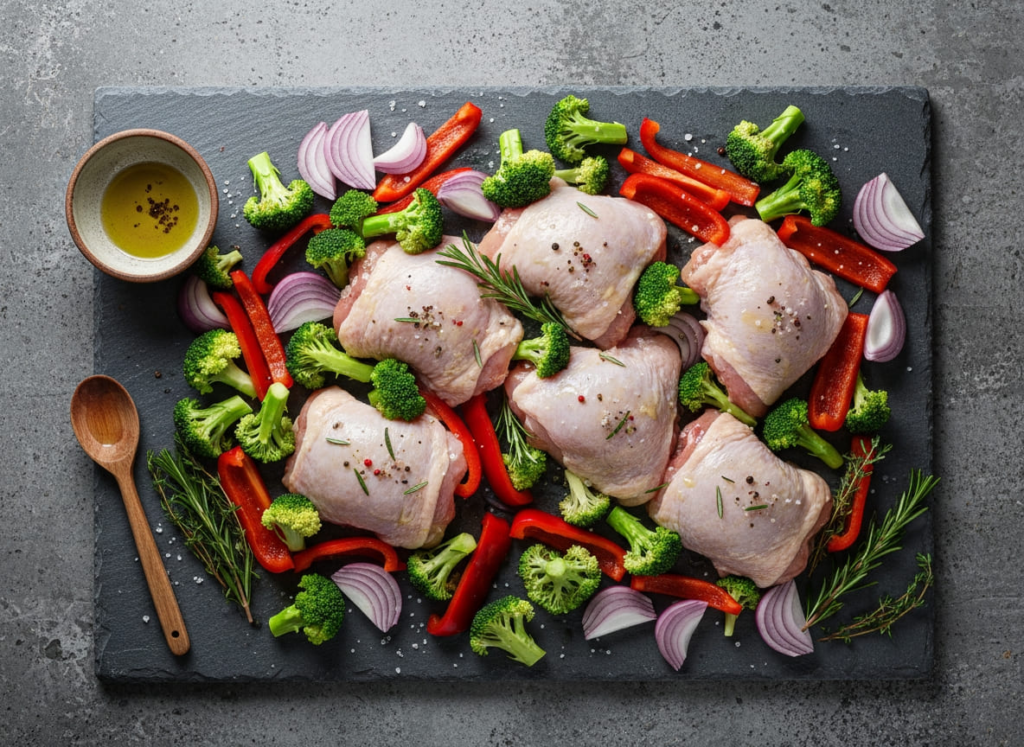
As GLP-1s get to work, you might notice you’re more exhausted some days than others. When this happened to me, the thought of cooking multiple components for dinner made me want to cry. Then I remembered sheet pan meals exist. Fifteen minutes of prep, throw everything in the oven, and you’re done. No stirring, no monitoring, no multiple pans to wash.
What makes this perfect for your GLP-1 meal planning is you get four complete meals out of one effort. Having protein and vegetables already cooked in your fridge removes all the decision-making when you’re too tired or nauseous to think about food. Plus, chicken thighs stay moist and tender even if you overcook them slightly (unlike chicken breasts that turn into cardboard). And the roasted vegetables actually taste good!
Table of Contents
Toggle
Per Serving
Calories: 380
Protein: 38g
Carbohydrates: 15g
Fat: 18g
Fiber: 5g
Sugar: 7g (naturally occurring)
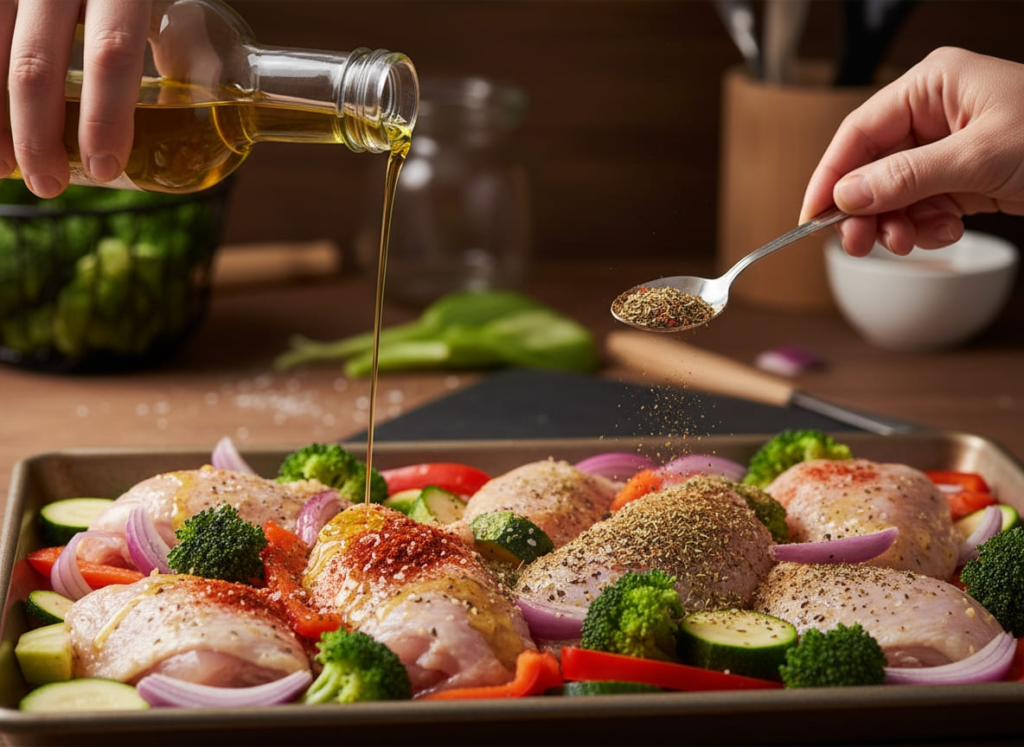
Once everything goes in the oven with this GLP-1 dinner recipe, you’re done. No stirring, no flipping, no babysitting. This passive cooking method requires minimal energy while producing consistent results. On days when standing in the kitchen feels exhausting, this matters more than you’d think.
The chicken thighs are key here. They contain more fat than chicken breast, which keeps them juicy even with longer cooking times. Each thigh provides roughly 38 grams of protein, meeting a huge chunk of your daily protein needs. The richer flavor also stands up to reheating better than white meat, so your meal prep lunches actually taste good on day four.
Roasting transforms vegetables in a way that steaming or boiling never will. The dry heat caramelizes natural sugars, creating sweet, complex flavors that make vegetables genuinely appealing instead of feeling like something you have to force down. The crispy broccoli edges, tender pepper pieces, and sweet caramelized onions create interest in every bite.
When your appetite is basically nonexistent, interesting food is more likely to actually get eaten. This recipe makes four servings with the same effort as one!
Chicken thighs have slightly more fat than breasts, but that’s what keeps them moist and flavorful. The dark meat has a richer taste that doesn’t dry out during reheating. They also provide more iron and zinc than white meat, plus B vitamins that support energy production when you’re eating less food overall.
Boneless thighs cook evenly and quickly. Skinless reduces the fat content while still maintaining moisture. They’re the perfect balance of lean protein and flavor.
Roasting reduces that sulfur smell that steaming produces, making broccoli way more appealing. The crispy, caramelized edges add textural interest that steamed broccoli can’t match. Plus, broccoli is packed with vitamin C, vitamin K, folate, and fiber without many calories.
Red and yellow peppers are sweeter than green ones and caramelize beautifully when roasted. The different colors make the plate look appealing, which matters when your appetite is reduced and food needs to look good to motivate you to eat. They add volume and nutrients without many calories.
Choose your portion size based on how you’re feeling. One chicken thigh with vegetables is a complete meal, but if that feels like too much, eat half the chicken and save the rest. There’s no rule saying you must finish an entire serving.
Lead with protein. Eat the chicken first to ensure adequate protein intake. If you can’t finish the vegetables, that’s less concerning than not getting enough protein for muscle maintenance. I learned this after too many meals where I filled up on vegetables and barely touched my protein.
Customize your vegetables freely. If any of these don’t appeal, substitute others. Cauliflower, Brussels sprouts, zucchini, or asparagus all roast beautifully. Use what sounds good to you on any given day.
Reduce the spices if flavors are overwhelming. If strong flavors trigger nausea, cut the seasonings by half. You can always add more at the table, but you can’t remove them once they’re cooked in.
Serve at whatever temperature appeals. This is delicious hot, warm, or room temperature. If hot food doesn’t sound good, let it cool before eating. The flavors stay vibrant at any temperature.
Add lemon juice before eating. A squeeze of fresh lemon brightens flavors and can aid digestion. The acidity cuts through the richness of the chicken and makes everything taste fresher.
Refrigerator storage: Cool completely before storing. Divide into individual portions in airtight containers. Keeps for 4-5 days refrigerated.
Freezer storage: Freezes well for up to 3 months. Portion into freezer-safe containers, leaving space for expansion. Thaw overnight in the refrigerator before reheating.
Reheating in oven: Preheat to 350°F. Place chicken and vegetables in an oven-safe dish, cover with foil, and heat for 15-20 minutes. This maintains the best texture.
Reheating in microwave: Use 70% power to prevent overcooking. Heat in 90-second intervals, stirring between, until hot. Add a tablespoon of water to prevent drying.
Meal prep strategy: Cook the full recipe on Sunday. Portion into four containers with chicken and mixed vegetables in each. Grab and reheat throughout the week for effortless meals when cooking feels impossible.
Keeping vegetables crisp: Vegetables will soften during storage. To restore some crispness, reheat in the oven uncovered for the last 5 minutes rather than keeping them covered the entire time.
Can I use chicken breasts instead of thighs?
You can, but reduce cooking time to 25-30 minutes and check temperature earlier. Breasts dry out more easily and don’t reheat as well. The nutrition will be slightly different with less fat and similar protein.
What if my vegetables are burning before the chicken is done?
Remove vegetables and continue cooking chicken. Some vegetables like broccoli can char quickly. If this happens, reduce oven temperature to 400°F and cook a bit longer.
Is this recipe appropriate for people taking Mounjaro?
Absolutely. The balanced combination of lean protein, fiber-rich vegetables, and healthy fats works perfectly for anyone on tirzepatide medications. The meal is satisfying without being heavy.
Can I add other vegetables?
Yes. Cauliflower, Brussels sprouts, carrots, and zucchini all work. Cut vegetables to similar sizes so they cook evenly. Denser vegetables like carrots may need a 10-minute head start.
How do I know when the chicken is done without a thermometer?
Cut into the thickest part. Juices should run clear, not pink, and the meat should be opaque throughout. However, a thermometer is the most reliable method and costs less than $10.
Can I make this dairy-free?
This recipe is already dairy-free. No modifications needed.

Have you tried this recipe? Share your experience in the comments below and let us know how it worked with your GLP-1 journey!