GLP-1 Weight Loss Numbers from Clinical Trials
Clinical trials give us the best data on average weight loss, but remember that “average” means half the people lost more and half lost less.
Semaglutide (Ozempic, Wegovy): The landmark STEP trials showed that people taking semaglutide 2.4mg once a week lost an average of 15.1% of their body weight over 20 weeks.
For context, 15% weight loss for someone starting at 200 pounds means losing 30 pounds. At 250 pounds, it’s 37.5 pounds. At 300 pounds, it’s 45 pounds.
Tirzepatide (Mounjaro, Zepbound): The SURMOUNT-1 trial demonstrated even higher average weight loss. Participants lost an average of 22 – 28% of their body weight over 72 weeks.
Using the same starting weights: at 200 pounds, 20% equals 40 pounds lost. At 250 pounds, it’s 50 pounds. At 300 pounds, it’s 60 pounds.
Liraglutide (Saxenda): The older GLP-1 medication shows more modest results. The SCALE trial found average weight loss of 5 to 10% over the trial period.
At 200 pounds, 8% means 16 pounds. At 250 pounds, it’s 20 pounds. At 300 pounds, it’s 24 pounds.
Why your results will vary from these numbers:
Clinical trial participants are carefully selected, monitored closely, and provided with lifestyle counseling. They’re typically highly motivated and adherent to the medication schedule. Real-world results often differ from trial results.
Some people are “super responders” who lose significantly more than average. Others lose less despite doing everything right. Your individual biology, metabolism, hormones, and how your body responds to the medication play a huge role that we can’t predict in advance.
The trial averages also include people who dropped out early due to side effects or stopped losing weight and quit. So the numbers represent everyone who started, not just those who made it through the full trial period.
Starting weight matters too. Someone with 150 pounds to lose will typically lose more total pounds than someone with 30 pounds to lose, even if the percentage is similar.
Weight Loss Timeline: Month By Month
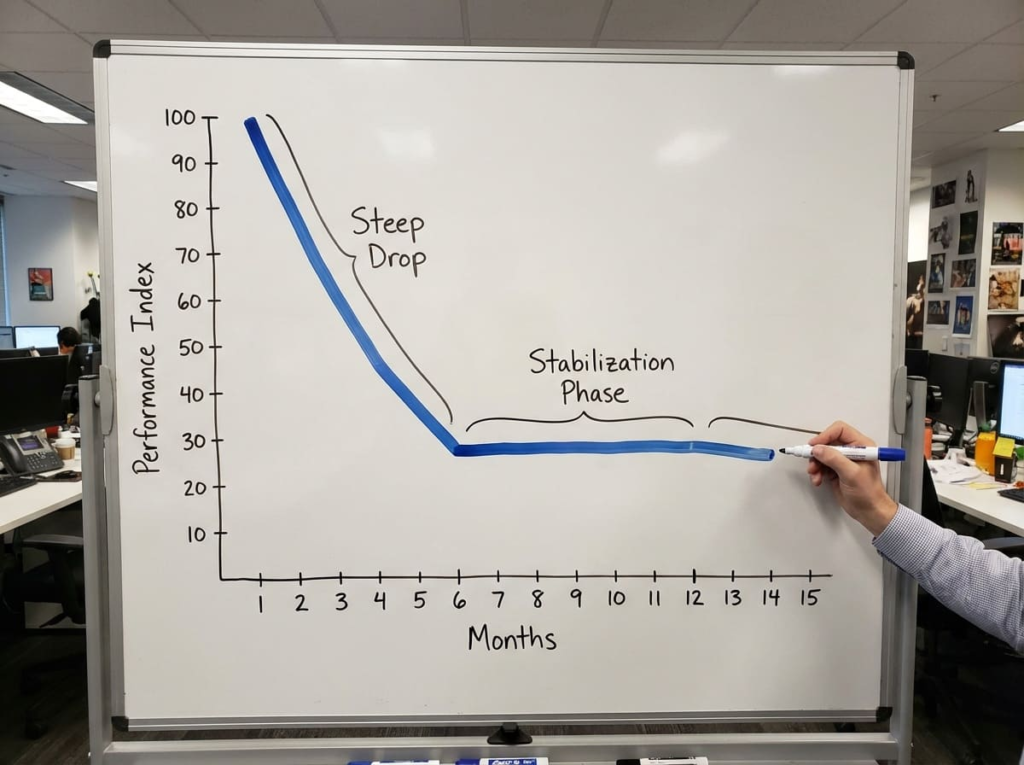
Weight loss on GLP-1 medications isn’t linear. You don’t lose the same amount each month. Understanding the typical pattern helps you avoid panic when the scale slows down.
Months 1-2: The exciting start. Most people lose 5-12 pounds in the first month, though this varies widely. Some of this is water weight, especially in the first week or two. You’re on the lowest dose during month 1, so weight loss might be more modest (3-6 pounds), then pick up as your dose increases in month 2.
Don’t get discouraged if you “only” lose 4 pounds the first month. You’re on a starter dose that’s meant to minimize side effects, not maximize weight loss. Don’t get overconfident if you lose 10 pounds the first month either. That pace won’t continue forever.
Months 3-6: Peak loss period. This is when most people see their most consistent, significant weight loss. You’re on higher doses, your body has adjusted to the medication, and you’ve established eating patterns that work. Losing 2-4 pounds per week isn’t unusual during this phase, especially if you started at a higher weight.
By the end of month 6, many people have lost 50-70% of the total weight they’ll ultimately lose. If you’re going to lose 40 pounds total, you might have lost 25-30 of those pounds by month 6.
Months 6-12: The plateau phase. Weight loss slows considerably, and some weeks the scale doesn’t move at all. This is completely normal and expected. Your body is adjusting to your new weight. You might lose 1-2 pounds per month during this phase, or you might maintain your current weight for several weeks before losing a few more pounds.
The plateau doesn’t mean the medication stopped working. It means your body is finding its new equilibrium. Some people continue losing slowly through months 12-18. Others maintain their weight loss with no further decrease.
Visual timeline pattern: Imagine a graph that drops steeply in months 1-6, then flattens out significantly in months 6-12, with a gentle continued decline or flat line after that. That’s the typical pattern.
What Affects Your GLP-1 Weight Loss Results
Multiple factors influence how much weight you lose beyond just taking the medication. Understanding these helps explain why your results might differ from someone else’s.
Starting weight matters significantly. Generally, people with more weight to lose lose more total pounds, though the percentage might be similar. Someone starting at 300 pounds might lose 60 pounds (20%), while someone starting at 180 pounds might lose 27 pounds (15%). Both are successful outcomes, but the absolute numbers look different. People who are closer to a healthy weight range typically lose less than those with more significant obesity.
Dosage and how you increase it affects results. Staying at the lowest dose won’t produce the same results as reaching the full therapeutic dose. People who can’t tolerate dose increases due to side effects generally lose less weight than those who reach higher doses. The titration schedule matters too. Slower increases minimize side effects but might delay optimal weight loss. Faster increases can be harder to tolerate but might produce faster results if you can manage the side effects.
Lifestyle factors still matter, they just matter less. GLP-1 medications do most of the heavy lifting, but what you eat and how you move still influence results. People who prioritize protein, stay active, and build sustainable habits generally lose more weight and maintain it better than those who rely solely on appetite suppression. You don’t need perfect diet and exercise, but completely ignoring these factors will limit your results.
Individual biology is the wild card. Some people’s bodies are just more responsive to GLP-1 medications. Genetic factors, baseline metabolism, hormone levels, gut microbiome composition, previous dieting history, medications you take for other conditions, sleep quality, stress levels, and age all play roles. Two people doing everything the same can have different results because their individual biology responds differently.
Setting Realistic Expectations for Weight Loss with GLP-1s
Social media has created wildly unrealistic expectations about GLP-1 weight loss. Here’s what you need to know to set yourself up for success instead of disappointment.
Why social media misleads: People post their most dramatic results. Someone who lost 100 pounds goes viral. The person who lost 25 pounds doesn’t make a TikTok. You’re seeing the outliers, not the average experiences. Before and after photos are also often taken at misleading angles, with different lighting, clothing, and poses that exaggerate results.
The people posting spectacular results are often the ones who lost the most weight the fastest. Confirmation bias means you remember the dramatic stories and forget the modest ones.
Individual variation is massive. In the clinical trials, some people lost 30-40% of their body weight while others lost only 5%. Both were taking the same medication at the same dose. The range of responses is enormous, and you won’t know where you’ll fall until you try it.
Comparing yourself to someone else’s results is pointless. Their biology isn’t your biology. Focus on your own progress, not someone else’s timeline.
What counts as “successful”? Medical professionals generally consider 5-10% body weight loss successful because that amount produces meaningful health improvements: better blood sugar control, reduced blood pressure, improved cholesterol, decreased inflammation, better sleep, reduced joint pain.
If you lose 15-20% of your body weight, that’s considered excellent. If you lose 25%+ like some trial participants, that’s exceptional but not the standard to expect.
The plateau is normal and doesn’t mean failure. Your weight loss will slow down and eventually stop. This happens to everyone. It doesn’t mean you did something wrong or the medication stopped working. Your body adapts to its new weight, and maintaining that loss is still a success.
The Bottom Line on Losing Weight with GLP-1s
Based on clinical trial data, most people lose 15-20% of their body weight on semaglutide and 15-25% on tirzepatide over 12-18 months. Liraglutide produces more modest losses around 5-10%.
For real-world expectations: if you start at 200 pounds, losing 30-40 pounds over a year is a realistic goal. If you start at 250 pounds, 37-50 pounds is reasonable. If you start at 300 pounds, 45-60 pounds is achievable.
But these are averages. You might lose more. You might lose less. Both outcomes are okay.
The most important thing is setting realistic expectations, being patient with the process, and focusing on your individual progress rather than comparing yourself to others. Weight loss on GLP-1s takes time, requires consistency, and produces variable results.
Work with your healthcare provider to monitor your progress and adjust your expectations based on how your body actually responds, not what you hoped would happen based on someone’s Instagram post.
More Resources for Losing Weight with GLP-1s